If your book club specifically wants Fairtrade herbal tea, check the certification claim on the individual product: Clipper names its peppermint and chamomile infusions Fairtrade Organic and describes both as naturally caffeine-free. If the group accepts a different fair-trade certification, Pukka says its teas are Fair for Life certified; that is not the same claim as the Fairtrade Mark. Check the ingredients on each pack before serving a mixed group.
Who is choosing the tea?
Hosts with a specific Fairtrade requirement
Choose an infusion with a Fairtrade claim on the individual product. Clipper names its peppermint and chamomile infusions Fairtrade Organic and describes both as naturally caffeine-free. Other ethical or organic wording does not establish the same certification.
Hosts offering guests a choice
Peppermint and chamomile give guests two distinct herbal options. Keep the packs available so people can check ingredients for themselves, particularly if they avoid a botanical or have a question about suitability.
Groups open to another certification
Pukka says its teas are Fair for Life certified and identifies FairWild among its certifications. That may meet a group’s broader sourcing preference, but describe it by its own name rather than calling it Fairtrade.
What should you check?
Settle what the group means by Fairtrade before choosing flavours; then check the exact tea’s caffeine statement and ingredients.
A Fairtrade-labelled infusion
Choose when: The group specifically asks for Fairtrade herbal tea; Clipper names peppermint and chamomile infusions Fairtrade Organic.
Consider: Those two named products offer different herbs, rather than a mixed-herbal blend.
Pukka’s Fair for Life route
Choose when: The group accepts Fair for Life certification instead of requiring the Fairtrade Mark; Pukka says all its teas carry Fair for Life certification.
Consider: Fair for Life and Fairtrade are different claims, so do not present a Pukka blend as Fairtrade on that basis.
| Priority | What to check | Your needs |
|---|
| Certification |
Read the mark and exact wording on the product. The Fairtrade Foundation says the classic Fairtrade Mark indicates that ingredients eligible for Fairtrade certification are Fairtrade-certified; Fair for Life is a different certification. |
I need to be able to tell the group which certification applies to the tea I serve, not just describe it as ethical. |
| Caffeine |
Check the statement for the exact infusion. Clipper describes its Fairtrade Organic Peppermint and Chamomile infusions as naturally caffeine-free. |
For an evening meeting, I want an option for guests who avoid caffeine. |
| Ingredients |
Read the current pack’s full ingredient and allergy information, especially for blends. Keep it available for guests to inspect. |
Someone may need to avoid a particular ingredient, so a flavour name alone is not enough for me to serve it confidently. |
| Flavour and format |
Compare the named herbs and the number of envelopes or sachets. The Clipper peppermint and chamomile products each contain 25 envelopes; the Joybuy Pukka options below each list 20 sachets. |
I would like guests to have a choice of flavours and enough individual portions for the meeting. |
Mistakes to avoid
-
Calling every ethically sourced tea Fairtrade
The Fairtrade Foundation defines its mark by a specific certification claim. Pukka’s stated Fair for Life and FairWild certifications have different names and should not be presented as the Fairtrade Mark.
Use the wording on the individual pack. If the group specifically requires the Fairtrade Mark, agree any alternative certification with them before buying.
-
Assuming a whole range has the same certification
A brand’s organic collection or sourcing statement does not identify the certification of every herbal infusion it sells.
Check the exact blend and pack rather than applying a range-level claim to an individual product.
-
Using wellbeing wording as serving advice
A tea’s name or marketing description cannot establish that it is suitable for every guest. NHS guidance cautions that herbal products are not suitable for everybody.
Offer the ingredient list and avoid treatment promises. Guests with concerns about pregnancy, breastfeeding, medicines or a medical condition can seek appropriate professional advice.
-
Relying on a product title alone
Joybuy listings headed Pukka Night Time and Pukka Organic Three Mint also contain marketing text referring to Three Ginger, which makes the description unsuitable for identifying the blend on its own.
Cross-check the current pack, ingredients and product name before ordering or serving a tea.
Brand references
Clipper
Clipper Tea Shop names Fairtrade Organic Peppermint and Fairtrade Organic Chamomile infusions, each in a pack of 25 envelopes.
- Both named products are described as naturally caffeine-free.
- Check each other Clipper infusion individually rather than extending these products’ certification claims across the range.
Pukka
Pukka says all its teas are Fair for Life certified and identifies FairWild among its certifications.
- Its herbal range includes blends with different named ingredients.
- Fair for Life is not the Fairtrade Mark; check each blend’s ingredients and caffeine statement separately.
Twinings
Twinings has an organic-and-Fairtrade collection as well as herbal infusions.
- Do not assume a particular herbal infusion carries the collection’s Fairtrade claim; check its own pack.
teapigs
The teapigs herbal range includes peppermint, chamomile and lemon-and-ginger options.
- Check an individual product’s certification wording before describing it to the group as Fairtrade.
Yogi Tea
Yogi Tea describes its blends as organic and states that it is a member of the Ethical Tea Partnership.
- Neither statement on its own establishes a Fairtrade claim for a particular herbal blend.
Tesco
Tesco lists fruit and herbal teas from several brands alongside its own-label products.
- A category listing does not establish an individual tea’s certification; check its product label and ingredients.
Pukka options on Joybuy
These Pukka herbal teas are options if your book club accepts the brand’s stated Fair for Life certification rather than specifically requiring the Fairtrade Mark. Check each current pack for ingredients and caffeine information before serving.
 No image available
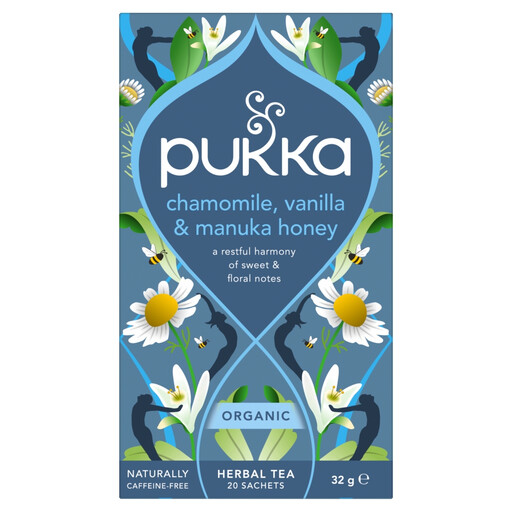
Pukka Chamomile Vanilla & Manuka Honey, 20 sachets, 32g
A chamomile-named blend for guests who prefer that flavour. The pack lists 20 sachets; check its full ingredients and caffeine statement before serving.
View on Joybuy
 No image available
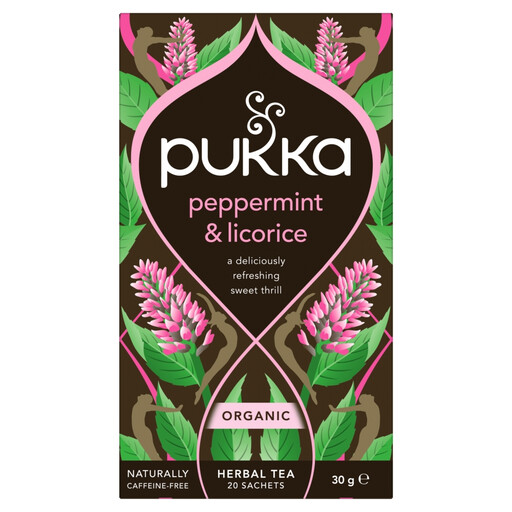
Pukka Peppermint & Liquorice Organic, 20 sachets, 30g
A peppermint-and-liquorice option for guests choosing between named flavours. The pack lists 20 sachets; make its full ingredient information available, particularly to guests checking whether liquorice is suitable for them.
View on Joybuy
 No image available
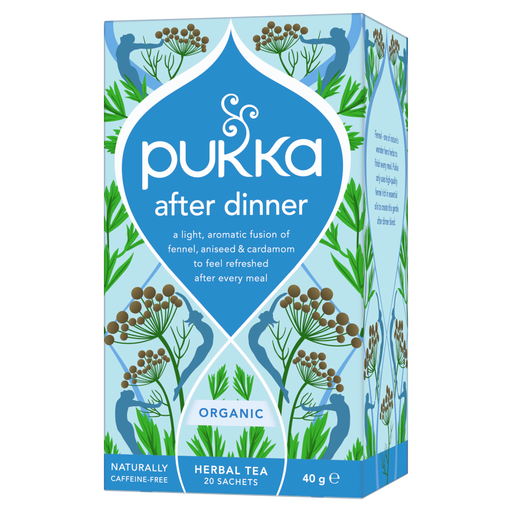
Pukka Feel New Organic, 20 sachets, 40g
A named Pukka blend if the group accepts the brand’s Fair for Life route. The pack lists 20 sachets; check the current ingredients and allergy information before offering it to guests.
View on Joybuy
 No image available
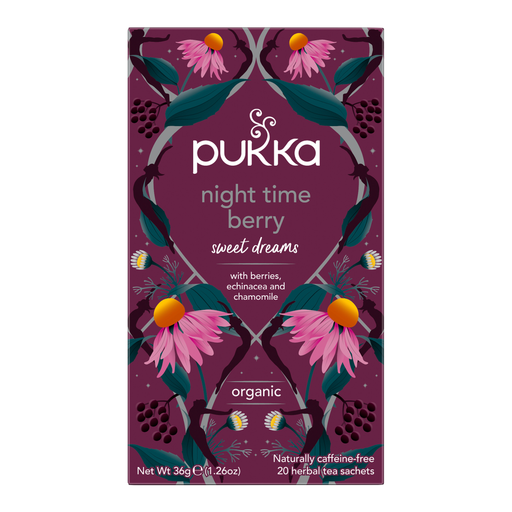
Pukka Night Time Berry Organic, 20 sachets, 36g
A berry-named blend for a second flavour choice at the meeting. The pack lists 20 sachets; confirm its caffeine statement and full ingredients before offering it to guests avoiding caffeine or particular botanicals.
View on Joybuy
Frequently asked questions
Does organic or ethically sourced mean Fairtrade?
No. The Fairtrade Foundation describes what its Fairtrade Mark signifies, while Pukka names Fair for Life and FairWild as distinct certifications. Read the claim on the individual tea rather than treating these terms as interchangeable.
Which herbal teas can I consider for a Fairtrade-focused book club?
Clipper Tea Shop names its Peppermint Infusion and Chamomile Infusion Fairtrade Organic and describes both as naturally caffeine-free. Check the current pack for the certification wording and ingredients when you buy them.
Can I offer a Pukka tea instead?
Yes, if the group agrees that Pukka’s stated Fair for Life certification meets its aim rather than requiring the Fairtrade Mark. Check the exact blend’s ingredients and caffeine statement before choosing one for the meeting.
What should I tell guests about the ingredients?
Make the current pack and its ingredient and allergy information available so guests can decide whether to have the tea. Avoid making treatment claims; NHS guidance cautions that herbal products are not suitable for everybody, so guests with individual health or medicine concerns can seek appropriate professional advice.


