What should you check before buying?
Settle the certification requirement first, then choose a flavour and serving style that suit the guests.
| Priority |
What to check |
Your needs |
| Fairtrade certification |
Read the exact pack mark and product wording. The Fairtrade Foundation says the classic Fairtrade Mark covers all ingredients that can be Fairtrade certified; its Sourced Ingredient Mark identifies a Fairtrade-sourced ingredient. |
If the Fairtrade Mark is essential for my cream tea, an organic claim or a different ethical-trade scheme will not answer that requirement. |
| Caffeine and flavour |
Check caffeine status and ingredients on the chosen pack. Clipper describes its Fairtrade peppermint as crisp and cooling and its chamomile as mellow; both are naturally caffeine-free. |
For guests avoiding caffeine, I can offer a labelled infusion and let them choose between a mint and a chamomile flavour. |
| Milk and conventional tea |
Clipper says its Fairtrade rooibos can be served with or without milk. If black tea is wanted too, verify its Fairtrade status separately; an infusion is not black tea. |
Some guests may want milk in their cup, while others may expect conventional tea alongside their scones. |
| Ingredients |
Read the full ingredient list, particularly for a blend. Guests with questions about herbs and prescribed medicines should seek advice from a pharmacist or prescriber; Guy’s and St Thomas’ NHS Foundation Trust notes that herbal products can interact with medicines. |
When serving several people, I want guests to know what is in each infusion rather than assuming a herbal blend suits everyone. |
| Exact pack and stock |
Confirm the flavour, pack size, certification wording and current availability before planning the menu. Clipper’s Fairtrade rooibos listing was marked sold out on its shop when reviewed in October 2026. |
I need enough of the chosen infusion for the gathering, with another suitable option if the pack I planned to serve is unavailable. |
Brand and retailer references
These references help distinguish product-level Fairtrade wording from other certifications; a brand name or retailer listing alone does not certify every herbal tea it offers.
Clipper
Clipper’s shop names Fairtrade Organic peppermint and chamomile infusions in 25-envelope packs, as well as an Organic and Fairtrade rooibos in 20 pyramid bags.
- The peppermint and chamomile product names explicitly state Fairtrade, and Clipper describes both as naturally caffeine-free.
- Check certification and availability for the exact flavour and pack; the rooibos listing was marked sold out in October 2026.
Pukka
Pukka says its teas are certified to the Fair for Life standard and that its packs identify certified ingredients and their percentage.
- Pack declarations can help shoppers compare products under Pukka’s stated Fair for Life scheme.
- Fair for Life is not the Fairtrade Mark; check the pack if the latter is required.
Twinings
Twinings has an Organic & Fairtrade tea collection that includes named blends and collections.
- The collection provides a starting point for checking individual products.
- Do not assume a particular Twinings herbal infusion carries Fairtrade certification from the collection heading alone; check its own pack.
Yogi Tea
Yogi Tea describes its ingredients as coming from controlled ecological cultivation and provides preparation guidance for its herbal and spice blends.
- Its stated preparation guidance is to use 100°C water and steep its herbs and spices for at least 5–7 minutes.
- Ecological cultivation does not itself establish Fairtrade certification; check an individual product’s label if that is required.
Tesco
Tesco’s herbal-tea listings include products from its own range and other brands, including Clipper and Pukka.
- A retailer listing lets shoppers compare the named flavours and formats offered there.
- A search listing does not establish Fairtrade status for every product; inspect the exact product and pack.
Joybuy herbal tea options
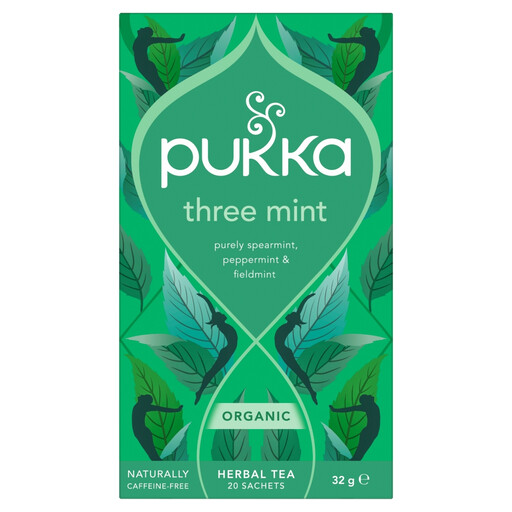
This Pukka mint tea is a caffeine-free herbal option for a cream tea where Fair for Life is acceptable instead of the Fairtrade Mark. Check the pack’s certification declaration if the distinction matters to your purchase.
 No image available
Pukka Organic Three Mint Herbal Tea, 20 sachets, 32g
For guests who want a caffeine-free mint infusion rather than conventional black tea. The pack contains 20 sachets and is labelled organic. Pukka says its teas are Fair for Life certified, a different scheme from the Fairtrade Mark; check this pack’s declaration if you need its certified-ingredient percentage.
View on Joybuy
Questions about serving Fairtrade herbal tea
Does a Fairtrade mark mean every ingredient in a herbal blend is certified?
Not necessarily. The Fairtrade Foundation says its classic Fairtrade Mark covers all ingredients that can be Fairtrade certified, while its Fairtrade Sourced Ingredient Mark identifies a Fairtrade-sourced ingredient. Check which mark appears on the exact pack.
Which Fairtrade infusion could I serve to guests avoiding caffeine?
Choose by flavour and serving preference. Clipper describes its Fairtrade peppermint as crisp and cooling and its Fairtrade chamomile as mellow; both are naturally caffeine-free. Clipper also describes its Fairtrade rooibos as caffeine-free and suitable with or without milk, so check its current availability if that serving style appeals.
Is Pukka’s Fair for Life label the same as the Fairtrade Mark?
No. Pukka says its teas follow the Fair for Life standard and that its packs state certified ingredients and their percentage. That may suit a shopper open to a different ethical-trade scheme, but it does not replace a requirement for the Fairtrade Mark.
Should I serve only herbal infusions at a cream tea?
Serve only infusions if they suit your guests’ preferences. If some guests expect conventional tea with their scones, offer black tea separately; Clipper lists a Fairtrade Everyday black tea, while its Fairtrade peppermint and chamomile provide distinct caffeine-free options.
What if a guest takes medicines and asks about a herbal blend?
Let them see the ingredients rather than suggesting the tea is suitable for their circumstances. Guy’s and St Thomas’ NHS Foundation Trust notes that herbal products can interact with medicines; a guest with a specific concern should ask their pharmacist or prescriber.


