Start with the certification on the exact pack: an ethical-sourcing statement does not establish that a herbal tea carries the FAIRTRADE Mark. Clipper Organic and Fairtrade Lemon & Ginger offers a ginger-led option for a winter meal, but contains liquorice; Clipper’s Fairtrade peppermint and chamomile infusions offer naturally caffeine-free flavours instead. Pukka’s teas follow a different route, Fair for Life, for shoppers whose requirement is not specifically the FAIRTRADE Mark.
Who is choosing a herbal tea?
Shoppers looking for the FAIRTRADE Mark
If that specific certification matters to you, check the exact pack rather than relying on a brand’s broader sourcing statement. The Fairtrade Foundation explains that tea sold on Fairtrade terms can be mixed with non-certified tea under mass balance, so the mark does not necessarily mean physical separation.
Tea drinkers pairing a cup with winter food
Choose by flavour as well as certification: Clipper’s Lemon & Ginger is ginger-led, while its rooibos is a naturally caffeine-free alternative to black tea that the manufacturer says can be served with or without milk.
Evening caffeine-free drinkers
Clipper describes its Fairtrade peppermint and chamomile infusions, and its Organic and Fairtrade Rooibos, as naturally caffeine-free. Peppermint has a crisp mint taste; chamomile is mellow and floral.
What should you check before buying?
Decide which certification you require, then narrow the choice by flavour, caffeine status and ingredients.
| Priority | What to check | Your needs |
|---|
| Certification |
Look for the FAIRTRADE Mark or explicit Fairtrade wording on the exact product. Fairtrade International says the mark applies when a product’s ingredients meet the relevant Fairtrade Standards; Fair for Life is a different certification system. |
I want this particular blend to meet my Fairtrade requirement, rather than relying on a general ethical-sourcing statement. |
| Flavour |
Compare the named blend and ingredients: Clipper Lemon & Ginger lists ginger root at 47% and lemongrass at 30%. Clipper describes its peppermint as crisp and its chamomile as mellow. |
After a rich winter meal, I might prefer a pronounced ginger flavour; on another occasion, a mint or floral cup may appeal more. |
| Caffeine |
Check the statement on the exact variant. Clipper describes its Fairtrade peppermint and chamomile, and its Organic and Fairtrade Rooibos, as naturally caffeine-free. |
For an evening cup, I want a blend whose caffeine status is clear on the product I buy. |
| Ingredients |
Read the current ingredient list and warnings. Clipper Lemon & Ginger contains liquorice root and warns that people suffering from hypertension should avoid excessive consumption. |
If liquorice is unsuitable for me, I need to check the formulation rather than assume all ginger infusions contain the same herbs. |
What is easy to overlook?
-
Assuming ethical sourcing means Fairtrade certification
Pukka says its teas are Fair for Life certified, but that does not establish that an individual blend carries the FAIRTRADE Mark. Twinings has both an Organic & Fairtrade collection and a separate herbal range; a collection name does not certify every herbal product.
Check the certification wording on the exact pack before choosing a tea for a specific Fairtrade requirement.
-
Overlooking liquorice in a ginger blend
Clipper Organic and Fairtrade Lemon & Ginger contains liquorice root. Its manufacturer warns that people suffering from hypertension should avoid excessive consumption.
Read the ingredients and warning on the current pack; if liquorice is unsuitable, consider a different flavour after checking its ingredients too.
-
Assuming the same rooibos pack is available everywhere
Clipper’s direct shop listed its Organic and Fairtrade Rooibos 20 Pyramid bags as sold out on 2 October 2026.
Check current stock, pack size and Fairtrade wording with the retailer before choosing a similarly named rooibos product.
-
Reading flavour descriptions as treatment claims
Words such as “calming” describe how a tea is marketed, not a reason to treat it as a remedy. GOV.UK food-labelling guidance says food must not claim or imply that it treats, prevents or cures a disease or medical condition.
Choose a blend for its stated flavour, ingredients, caffeine status and certification rather than an assumed medical effect.
Which brands are relevant?
Clipper
Clipper lists specific herbal infusions with Fairtrade wording, including Lemon & Ginger, Rooibos, Peppermint and Chamomile.
- Its peppermint, chamomile and rooibos products are described by Clipper as naturally caffeine-free.
- The Lemon & Ginger blend contains liquorice and carries a hypertension warning; check current stock for the rooibos pack.
Pukka
Pukka says its teas are organic and certified under the Fair for Life system. Its Three Ginger blend contains ginger root, galangal and turmeric.
- A distinct certification route for shoppers open to Fair for Life rather than specifically requiring the FAIRTRADE Mark.
- Do not assume a Pukka blend carries the FAIRTRADE Mark without checking its exact pack.
Twinings
Twinings lists an Organic & Fairtrade Tea collection and a separate herbal tea and infusions range.
- The ranges offer a starting point for checking individual tea and herbal products.
- Confirm certification on the exact herbal infusion; the existence of both ranges does not establish that every herbal product is Fairtrade-certified.
teapigs
The teapigs herbal range lists winter-oriented flavours, including spiced winter red tea and pumpkin spiced chai.
- Its named blends give shoppers several spiced flavour profiles to consider.
- If Fairtrade certification is essential, check the exact product’s certification wording before buying.
Joybuy herbal tea option
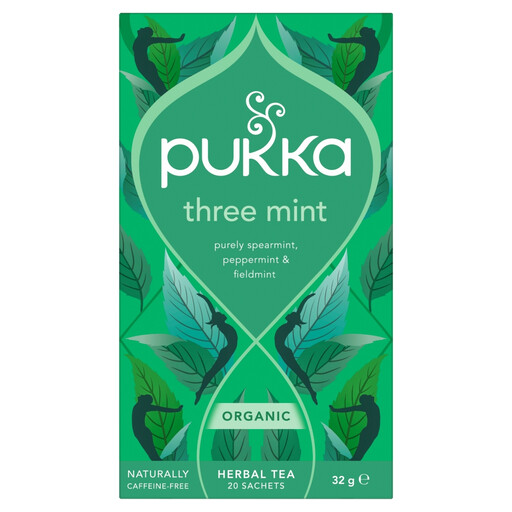
This Pukka mint tea is an option for shoppers considering the brand’s Fair for Life route; its listing does not establish that this pack carries the FAIRTRADE Mark.
 No image available
Pukka Organic Three Mint Herbal Tea, 20 sachets, 32g
Consider this named mint blend if you are open to Pukka’s Fair for Life certification rather than requiring the FAIRTRADE Mark. The listing also mentions Three Ginger, so confirm the blend and ingredients on the pack before ordering; check the exact pack’s certification and caffeine wording as well.
Joybuy
Questions about Fairtrade herbal tea
Does ethical sourcing mean a herbal tea is Fairtrade-certified?
No. Check the exact product for the FAIRTRADE Mark or explicit Fairtrade wording. Pukka says its teas are Fair for Life certified, which is a different system.
Why might certified Fairtrade tea be mixed with other tea?
The Fairtrade Foundation explains that tea can use mass balance: the corresponding quantity is bought on Fairtrade terms, although tea in a particular packet may have been mixed with non-certified tea during processing.
Which of these Fairtrade herbal infusions are naturally caffeine-free?
Clipper describes its Fairtrade Organic Peppermint and Chamomile infusions and Organic and Fairtrade Rooibos as naturally caffeine-free. Check the exact pack if you change product or variant.
Can herbal tea treat a winter illness or sleep problem?
Do not choose it as a treatment. GOV.UK food-labelling guidance says food must not claim or imply that it treats, prevents or cures a disease or medical condition; compare these teas by flavour, ingredients, caffeine status and certification instead.
What should I check about herbal tea during pregnancy?
Check the ingredients for liquorice root. The NHS advises pregnant people to avoid teas containing it and to drink no more than four cups of herbal tea a day; seek individual clinical advice if you have questions about a particular blend.


