For an afternoon herbal tea that must carry the FAIRTRADE Mark, check the exact pack: Clipper Fairtrade Organic Chamomile Infusion 25 Envelopes is a labelled, naturally caffeine-free example. If a different fair-trade certification meets your requirements, Pukka says its teas are Fair for Life certified, but that does not mean they carry the FAIRTRADE Mark. Choose the flavour and format you want, then check the selected pack’s certification, ingredients and caffeine information.
Who is this choice for?
The starting point is whether you require the FAIRTRADE Mark itself or would accept a different certification on your afternoon infusion.
Shoppers requiring the FAIRTRADE Mark
Check the exact herbal-tea pack, not just the brand’s wider range. Clipper Tea Shop identifies its Fairtrade Organic Chamomile Infusion 25 Envelopes as a Fairtrade product; that claim should not be extended to every Clipper infusion.
People avoiding caffeine in an afternoon cup
Look for an explicit caffeine statement on the infusion you choose. Clipper Tea Shop describes its Fairtrade Organic Chamomile Infusion as naturally caffeine free, giving you a product-specific statement to check alongside the certification.
Shoppers comparing certification schemes
You may be open to Fair for Life rather than requiring the FAIRTRADE Mark. Pukka says its teas are Fair for Life certified; check the selected pack’s logo and certified-ingredient information to understand the claim you are buying.
What should you check before choosing?
Decide which certification you require before narrowing the choice by caffeine information, flavour and ingredients. A label that answers one of those questions does not necessarily answer the others.
| Priority |
What to check |
Your needs |
| Certification |
Read the logo and claim on the exact pack. The Fairtrade Foundation distinguishes the classic FAIRTRADE Mark from the Fairtrade Sourced Ingredient Mark; Pukka describes Fair for Life as its tea certification. |
If I specifically want the FAIRTRADE Mark, an organic label or a different fair-trade logo will not answer that requirement. |
| Caffeine |
Look for an explicit caffeine statement for the selected infusion rather than relying on its flavour or the word ‘herbal’. Clipper Tea Shop labels its Fairtrade Organic Chamomile Infusion naturally caffeine free. |
For my afternoon cup, I want to confirm whether the particular tea fits my preference to avoid caffeine. |
| Flavour |
Check whether the product is a single-herb infusion or a blend, and read the named ingredients. Clipper’s labelled chamomile option and Pukka’s Three Mint blend offer different ingredient choices. |
A simple chamomile infusion may appeal to me, or I might prefer a mint blend; certification alone cannot decide which flavour I will enjoy. |
| Ingredients |
Read the full ingredient and allergen information on the selected pack, particularly for a multi-herb blend. Do not treat a flavour name as the complete ingredient list. |
If an ingredient matters to me or someone I am serving, I need to check the exact blend rather than assume all herbal teas are alike. |
| Pack format |
Confirm the flavour and pack size together so that a product claim applies to the version you intend to buy. Clipper Tea Shop’s Fairtrade chamomile example is a 25-envelope pack. |
I want a format that works for serving afternoon tea, without transferring a certification claim from one pack to another. |
What is easy to overlook?
-
Reading ‘organic’ or ‘ethically sourced’ as ‘Fairtrade’
Those words do not identify the certification scheme on an individual tea. Pukka’s Fair for Life claim, for example, is not a claim that its teas carry the FAIRTRADE Mark.
If the FAIRTRADE Mark is essential to your choice, look for that mark or an exact product-level Fairtrade claim. If another scheme is acceptable, name and assess it on its own terms.
-
Assuming every herbal tea from a familiar brand has the same label
Clipper Tea Shop identifies a specific Fairtrade Organic Chamomile Infusion, while also offering a wider herbal-infusion range. The chamomile product’s label does not establish the certification of every flavour or pack.
Recheck the selected flavour, pack size and label, especially if you are switching from a brand’s black tea to one of its herbal infusions.
-
Choosing a herbal blend for a health outcome
A tea’s botanical ingredients are not a reason to assume it will treat a condition. NHS guidance cautions that herbal medicines may not be suitable for everyone; that guidance should not be turned into an efficacy claim for an ordinary infusion.
Choose an afternoon tea by its flavour and stated ingredients. If you intend to use a herbal product for a health purpose, or have concerns about medicines or pregnancy, ask a pharmacist or clinician about the particular ingredients.
Which brands are relevant?
These brand references help you navigate herbal ranges and certification claims; a brand’s inclusion does not establish that every one of its products has the same label.
Clipper
A place to start when the FAIRTRADE Mark on a specific herbal infusion matters. Clipper Tea Shop identifies its Fairtrade Organic Chamomile Infusion 25 Envelopes as Fairtrade and naturally caffeine free.
- There is a named chamomile product whose Fairtrade and caffeine claims can be checked together.
- Check other Clipper flavours individually; the chamomile label does not establish their certification.
Pukka
An option if you accept Fair for Life certification instead of requiring the FAIRTRADE Mark. Pukka states that all its teas are certified to the Fair for Life standard.
- Pukka identifies Fair for Life as the certification scheme for its teas.
- Fair for Life is not the FAIRTRADE Mark; inspect the selected pack for its logo and certified-ingredient information.
Twinings
Twinings presents a range of herbal infusions that may be useful when flavour choice comes before the choice of certification scheme.
- Its herbal-infusion collection provides a starting point for comparing blends.
- Check the particular product label if a fair-trade certification is required.
Yogi Tea
Yogi Tea presents organic herbal blends for shoppers considering different botanical flavours.
- Its UK brand information identifies organic blends.
- Organic certification does not establish that a selected blend carries the FAIRTRADE Mark.
Teapigs
Teapigs has a herbal-tea range to consider when comparing flavours and formats for afternoon serving.
- Its herbal category gives shoppers several infusions to inspect by product.
- Do not treat a wider sourcing statement as a Fairtrade claim for an individual herbal tea.
Tesco
Tesco lists own-label fruit and herbal teas, including camomile and peppermint products.
- Its category listings give another route for checking familiar herbal flavours and pack formats.
- Check the exact own-label pack for any certification you require.
Joybuy options for a different fair-trade route
These Pukka herbal teas are options for an afternoon cup if you are open to the brand’s Fair for Life certification rather than requiring the FAIRTRADE Mark. Check each selected pack’s label, caffeine statement and ingredients before buying.
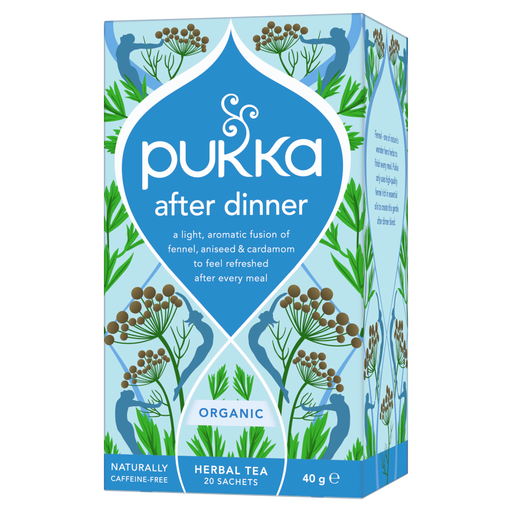 No image available
Pukka Feel New Organic, 20 sachets, 40g
Consider this herbal blend if you are open to Fair for Life rather than requiring the FAIRTRADE Mark. Check the pack’s caffeine statement and certified-ingredient information; the product information flags celery traces, which matter if you are checking allergens.
View on Joybuy
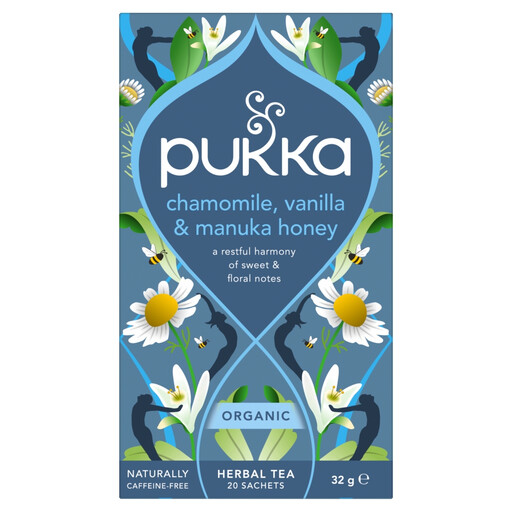 No image available
Pukka Chamomile Vanilla & Manuka Honey, 20 herbal tea sachets, 32g
This chamomile-named blend offers a different flavour choice from a single-herb infusion for shoppers who accept Pukka’s Fair for Life route. Review the full ingredients and the pack’s certification details; the product information also advises seeking professional advice before use if pregnant or concerned about health.
View on Joybuy
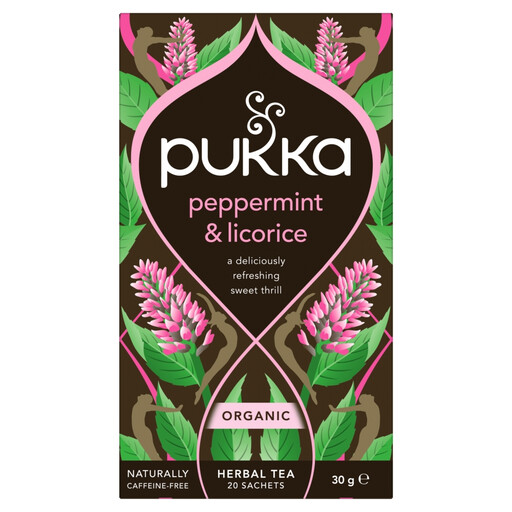 No image available
Pukka Peppermint & Liquorice Organic Herbal Tea, 20 sachets, 30g
If the peppermint-and-liquorice flavour appeals, confirm the exact blend on the pack before choosing it: the product information also contains a conflicting ginger-blend description. Check the liquorice warning if relevant to you, as well as the pack’s certification and caffeine information.
View on Joybuy
Questions about labels and ingredients
Does a brand’s ‘fair trade’ wording mean my herbal tea has the FAIRTRADE Mark?
No. Check the exact pack and the scheme named on it. The Fairtrade Foundation distinguishes the classic FAIRTRADE Mark from the Fairtrade Sourced Ingredient Mark, while Pukka identifies Fair for Life as the certification for its teas; these labels should not be treated as interchangeable.
Can I assume a herbal tea is caffeine free?
Check the selected product’s caffeine information rather than relying on ‘herbal’ alone. Clipper Tea Shop explicitly describes its Fairtrade Organic Chamomile Infusion as naturally caffeine free, so both claims can be checked for that particular product.
Does an organic label also confirm Fairtrade certification?
No. An organic claim does not identify the product’s fair-trade certification. Look separately for the relevant logo or claim on the exact pack; Pukka, for example, names Fair for Life as a distinct certification for its teas.
Should I check herbal-tea ingredients if I take medicines or am pregnant?
Yes. Read the ingredients of the particular blend, and ask a pharmacist or clinician if you are considering a herbal product for a health purpose or have concerns about medicines or pregnancy. NHS guidance cautions that herbal medicines are not suitable for everyone; an ordinary tea should not be assumed to provide a medical benefit.


