If the FAIRTRADE Mark is essential, check the exact herbal-tea pack rather than relying on an organic claim or a different ethical-sourcing scheme. Clipper’s UK shop lists Fairtrade Organic Peppermint and Chamomile Infusions in 25-envelope packs and describes both as naturally caffeine-free; choose between them by flavour, then check the current pack’s ingredients and labelling.
Who is this for?
Students requiring the FAIRTRADE Mark
If Fairtrade certification is a firm requirement for your new cupboard, look for the Mark on the individual tea pack. In a July 2025 survey of 666 higher-education students, Students Organising for Sustainability UK reported that 82% said buying Fairtrade or ethically certified products when they could described them to some extent. That response was not specific to herbal tea.
Students choosing an evening infusion
If you want to avoid caffeine later in the day, check the named product rather than assuming every herbal blend is caffeine-free. Clipper describes its Fairtrade Organic Peppermint and Chamomile Infusions as naturally caffeine-free.
Students stocking a shared kitchen
Envelope or sachet formats can be straightforward to keep in a shared cupboard. Compare the pack counts and ingredient lists of the teas you are considering so everyone knows which blend is being stored.
What should you check?
Start with the certification required, then check the exact tea’s caffeine statement, pack format and ingredients.
| Priority | What to check | Your needs |
|---|
| Fairtrade certification |
Look for the FAIRTRADE Mark on the exact pack and read any qualifying ingredient information. Fairtrade International says products bearing its Marks meet internationally agreed Fairtrade Standards; organic or Fair for Life certification is not the same label. |
I want the tea itself to meet my Fairtrade requirement, not just to come from a brand with a wider sourcing programme. In Students Organising for Sustainability UK’s July 2025 survey of 666 higher-education students, 82% said buying Fairtrade or ethically certified products when possible described them to some extent; this was an attitude, not a herbal-tea purchase rate. |
| Caffeine statement |
Read the statement for the particular blend. Clipper describes its named Fairtrade Organic Peppermint and Chamomile Infusions as naturally caffeine-free. |
For later-day cups, I would choose a product that explicitly states whether it contains caffeine. |
| Pack format |
Check whether the pack contains envelopes or sachets and how many. Clipper lists 25 envelopes for each of its named peppermint and chamomile infusions. |
A clearly labelled pack is easier for me to identify and store in a shared cupboard. |
| Ingredients |
Read the current ingredient list, allergen information and any precautionary statements, particularly for blends. The Food Standards Agency explains that UK food businesses must disclose regulated allergens added as ingredients or processing aids. |
Before bringing a new blend into a shared kitchen, I want to know what is in the exact pack. |
What is easy to overlook?
-
Treating every ethical-sourcing claim as Fairtrade certification
An organic label or another certification does not establish that a particular herbal tea carries the FAIRTRADE Mark. Pukka, for example, describes its teas as Fair for Life certified.
If the Mark is required, inspect the individual pack and any qualifying ingredient information rather than relying on a brand-wide statement.
-
Assuming every herbal blend is caffeine-free
A category name is not a caffeine statement for an individual product. Clipper specifically describes its named Fairtrade peppermint and chamomile infusions as naturally caffeine-free.
Check the caffeine wording on the exact blend you intend to buy.
-
Skipping the ingredients on a flavoured blend
A blend can contain ingredients beyond the flavour named on the front. Allergen information matters particularly when a tea will be kept in a shared kitchen.
Read the current pack’s ingredients, allergen information and precautionary statements before buying.
Brand references
A brand’s wider range does not establish the certification of every herbal tea it sells.
Clipper
Clipper’s UK shop lists Fairtrade Organic Peppermint and Chamomile Infusions in 25-envelope packs.
- Clipper describes both named infusions as naturally caffeine-free.
- Check the label of any other Clipper blend individually; these product pages do not establish its certification.
Pukka
Pukka says its products are organic certified and its teas are certified Fair for Life.
- Fair for Life gives shoppers a distinct ethical-sourcing scheme to consider.
- Fair for Life does not establish that an individual Pukka tea carries the FAIRTRADE Mark.
Twinings
Twinings has an Organic & Fairtrade tea collection.
- The collection provides a place to look for individually labelled teas.
- Check the exact herbal infusion: a collection label does not identify the certification of every product in it.
teapigs
teapigs lists herbal teas within its wider tea collection.
- Its range offers herbal flavours to consider.
- Do not assume a particular herbal tea carries the FAIRTRADE Mark without checking its pack.
Joybuy product options
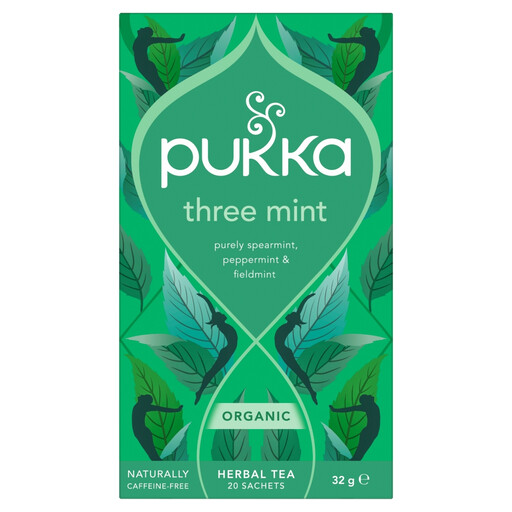
This Pukka mint tea is an option for a student cupboard if a broader ethical-sourcing scheme is acceptable; check the exact pack if the FAIRTRADE Mark is essential.
 No image available
Pukka Organic Three Mint Herbal Tea, 20 sachets, 32g
The product description calls this 20-sachet herbal tea naturally caffeine-free, which is relevant if you want a later-day drink. Pukka says its teas are Fair for Life certified, a different scheme from the FAIRTRADE Mark. Check the actual pack for its certification and ingredients: product descriptions disagree on whether the blend is mint or ginger.
Joybuy
Common questions
How can I tell whether a herbal tea is Fairtrade-certified?
Look for the FAIRTRADE Mark on the exact product pack and read any qualifying ingredient information. Fairtrade International says products bearing its Marks meet internationally agreed Fairtrade Standards; an organic claim or a different ethical certification does not establish that the tea bears the Mark.
Are all herbal teas caffeine-free?
Do not rely on the category name alone; check the individual product’s caffeine statement. Clipper describes its Fairtrade Organic Peppermint and Chamomile Infusions as naturally caffeine-free.
Can I choose herbal tea to treat a health problem?
Choose tea as a drink, not as a substitute for treatment. If you are concerned about a botanical ingredient alongside medicines or during pregnancy, ask a pharmacist or clinician about that ingredient and your circumstances.
What should I check before putting a blend in a shared kitchen?
Read the exact pack’s ingredient list, allergen information and precautionary statements, especially for flavoured blends. The Food Standards Agency explains that UK food businesses must disclose regulated allergens added as ingredients or processing aids.


