Families baking occasional chocolate treats
If children are helping to measure the ingredients, choose a powder whose Fairtrade mark, sweetness and milk ingredients you can check against the recipe and the current pack.


Start with the Fairtrade mark on the pack: a full FAIRTRADE Mark and a Fairtrade Sourced Ingredient Mark cover different sets of ingredients. For baking, compare the exact powder’s cocoa content, sugar information and milk ingredients rather than treating sweetened instant hot chocolate as plain cocoa. If you choose cocoa powder instead of an instant mix, check its own pack for the Fairtrade mark before relying on a Fairtrade sourcing claim.
If children are helping to measure the ingredients, choose a powder whose Fairtrade mark, sweetness and milk ingredients you can check against the recipe and the current pack.
The mark matters as much as a sourcing statement. Fairtrade Foundation guidance distinguishes the full FAIRTRADE Mark from a Fairtrade Sourced Ingredient Mark, which identifies a particular sourced ingredient.
The Sainsbury’s, M&S and Clipper instant mixes discussed here list milk-derived ingredients. Check the physical pack before using any powder in a bake intended for someone with a milk allergy.
Choose the certification scope first, then check whether the powder’s ingredients and label figures suit the bake you intend to make.
| Priority | What to check | Your needs |
|---|---|---|
| Fairtrade scope | Check the exact mark on the pack. The Fairtrade Foundation says the full FAIRTRADE Mark covers all ingredients that can be Fairtrade-certified; a Fairtrade Sourced Ingredient Mark covers the ingredient named beside it. | I want to know whether cocoa specifically is Fairtrade-sourced, rather than relying on a general ethical-sourcing statement. |
| Cocoa content | M&S lists 20% cocoa powder in its instant mix, Tesco lists 15% for Clipper, and Sainsbury’s lists 13% fat-reduced cocoa powder. These are declared ingredient proportions, not measures of flavour or baking results. | If the recipe calls for a chocolate powder, I want to compare the exact mixes without assuming that a higher cocoa percentage guarantees the result I have in mind. |
| Sugar and recipe quantity | Compare sugar figures on the same basis, such as per 100g, and measure the powder added to the recipe. A figure for a prepared mug does not state the sugars in a spoonful of dry mix. | I need to account for the powder alongside the recipe’s other sweet ingredients, especially if I am replacing unsweetened cocoa. |
| Milk ingredients | The Sainsbury’s, M&S and Tesco Clipper listings name milk-derived ingredients. Read the current pack’s ingredient and allergen information before baking. | For someone with a milk allergy, I cannot assume that a hot-chocolate powder—or a different cocoa product—is suitable without checking its label. |
A general sourcing statement does not tell you which ingredients a Fairtrade mark covers. The Fairtrade Foundation distinguishes the full FAIRTRADE Mark from the ingredient-specific Fairtrade Sourced Ingredient Mark.
Look at the mark on the pack. If it is an ingredient-specific mark and cocoa is your priority, check that cocoa is named beside it.
The instant mixes discussed here contain ingredients beyond cocoa, including milk-derived ingredients. Using the same amount as plain cocoa can change the bake’s sweetness and ingredients.
Measure the powder and consider the whole recipe before changing any other ingredients.
All three instant-mix candidates list milk-derived ingredients, and product information can change. An online description is not a substitute for the pack being used.
Read the current physical label before baking for a child or guest with an allergy.
M&S says its Instant Hot Chocolate should be consumed within four weeks of opening, which matters if you bake only occasionally.
Choose a pack size you expect to use and follow that product’s storage and post-opening instructions.
These are references for checking exact instant-mix labels, not a claim that every product from each brand has the same ingredients or certification.
Sainsbury’s lists Instant Fairtrade Hot Chocolate in a 350g pack.
M&S lists Fairtrade Instant Hot Chocolate in a 250g pack.
Clipper Fairtrade Instant Hot Chocolate 350g appears in UK supermarket listings.
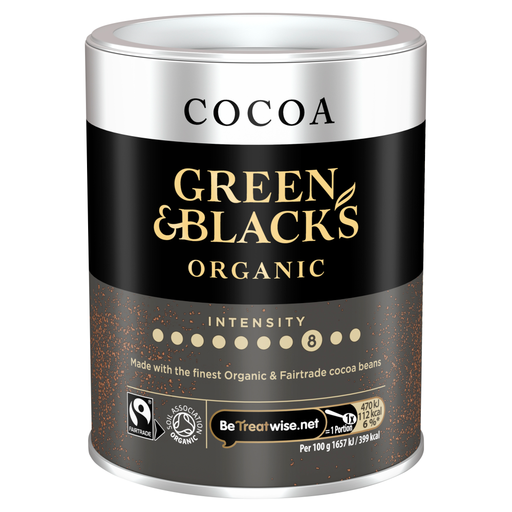
This cocoa powder is an option for a recipe that calls for cocoa rather than sweetened instant hot chocolate. For a Fairtrade-focused bake, check the mark on its pack and whether it covers cocoa.
 No image available
For baking with cocoa powder rather than an instant hot-chocolate mix. Check the pack for a FAIRTRADE Mark or a Fairtrade Sourced Ingredient Mark naming cocoa. This product may contain milk, so read its current allergen label before use.
Check the mark on the pack. The Fairtrade Foundation says the full FAIRTRADE Mark covers all ingredients that can be Fairtrade-certified. With a Fairtrade Sourced Ingredient Mark, check the ingredient named beside it: if cocoa is your priority, cocoa should be named.
Not as a like-for-like ingredient without checking the recipe. The Sainsbury’s, M&S and Clipper instant mixes discussed here contain milk-derived ingredients as well as cocoa, and a sweetened mix can change the bake’s sweetness. Measure what you use and consider the other ingredients before making adjustments.
Their product listings declare 20% cocoa powder for M&S Instant Hot Chocolate, 15% for Clipper Fairtrade Instant Hot Chocolate and 13% fat-reduced cocoa powder for Sainsbury’s Instant Fairtrade Hot Chocolate. Those label figures do not establish which mix will give a preferred flavour or baking result.
The Sainsbury’s, M&S and Clipper instant mixes discussed here list milk-derived ingredients, so do not use them as dairy-free substitutes. Read the current physical pack of any alternative before baking, because ingredient and allergen information can change.
Compare figures stated on the same basis and account for the quantity of powder used in the whole recipe. Sainsbury’s reports 16.1g total sugars per prepared mug of its instant mix; that is not the sugar content of an unspecified spoonful of powder. Total sugars on a product label should not automatically be treated as the same measure as free sugars in NHS guidance.