Older adults who value Fairtrade sourcing
Compare the mark and its accompanying wording as well as the drink itself. Sugar per prepared serving and whether the powder is made with water or milk remain separate choices.


Check what the Fairtrade claim covers, then choose a drink that fits the older person’s appetite, sugar considerations and usual preparation. A lower-sugar instant mix and a standard mix have different nutrition per prepared mug; cocoa powder lets you choose what to add. Ordinary hot chocolate is not a substitute for prescribed oral nutritional supplements or an individual texture-modified-fluid plan.
The same Fairtrade claim can appear on drinks with different ingredients, serving sizes and preparation methods. Start with the person who will drink it.
Compare the mark and its accompanying wording as well as the drink itself. Sugar per prepared serving and whether the powder is made with water or milk remain separate choices.
A familiar hot drink may be welcome, but it does not serve the same purpose as prescribed nutrition support. Norfolk and Waveney Integrated Care System advises that nutrition needs in older and more dependent people should be assessed and reviewed.
Use the figures for the portion as prepared, including anything added to the powder. For someone following a diabetes plan, check how the drink fits their individual advice rather than relying on a low-calorie label alone.
Confirm the sourcing claim, then compare prepared servings and the ingredients that matter for the person drinking it. A powder’s figures are not necessarily the figures for a mug made with milk.
| Priority | What to check | Your needs |
|---|---|---|
| Fairtrade scope | Read the mark and the ingredient wording on the current pack. The Fairtrade Foundation says its classic Mark covers all ingredients that can be Fairtrade-certified, while its Fairtrade Sourced Ingredient Mark identifies a particular sourced ingredient. | I want to know whether the claim covers all certifiable ingredients or a named ingredient such as cocoa. |
| Sugar and portion | Compare sugars and carbohydrate for the stated prepared portion, noting the powder amount and whether the figures assume water or milk. Sainsbury’s lists 4.6g sugars per mug for its low-calorie Fairtrade instant drink and 16.1g for its standard version; these are different products. | If I’m watching sugar or following a diabetes plan, the mug I actually make matters more than the powder’s weight alone. The Royal Wolverhampton NHS Trust advises paying attention to the amount of carbohydrate consumed at one time. |
| Appetite and nutrition | Check energy and protein per prepared mug without treating either figure as proof of clinical suitability. Sainsbury’s lists 41kcal and 1.6g protein for its low-calorie mug, against 110kcal and 3.3g for its standard mug. | For someone eating poorly or losing weight unintentionally, I need advice about their overall intake, not simply a drink with a different calorie figure. Black Country Formulary describes oral nutritional supplements as specially made to contain energy, protein, vitamins and minerals. |
| Ingredients and preparation | Check milk ingredients, soya warnings, sweeteners and preparation directions on the current pack. If texture-modified liquids are required, follow the person’s documented plan; The Christie NHS Foundation Trust advises checking suitable drinks with a dietitian or speech and language therapist. | I need a drink that fits the person’s confirmed allergy guidance and the way they can safely have liquids. Choosing what to add to cocoa powder does not, by itself, establish that the finished drink is suitable. |
Fairtrade describes sourcing, not the drink’s sugar, energy, protein or suitability for an individual. Sainsbury’s lists 4.6g sugars per mug for one Fairtrade instant product and 16.1g for another; Sainsbury’s Clipper listing gives 19.2g for a 28g serving.
Check the mark’s scope, then compare nutrition on the same prepared-serving basis.
Sainsbury’s low-calorie Fairtrade drink lists 41kcal and 1.6g protein per prepared mug. That serving should not be treated as a replacement for nutrition support when someone is eating poorly or losing weight.
Ask a GP or dietitian for guidance if poor intake or unintended weight loss continues, and do not replace a prescribed oral nutritional supplement with hot chocolate.
Sainsbury’s Fairtrade instant products contain cows’ milk ingredients and carry a warning for people with a soya allergy because of manufacturing methods. Its low-calorie version also contains sucralose.
Read the current physical pack against the person’s confirmed allergy and dietary guidance, particularly when buying a product for the first time or after a formulation change.
Required liquid textures are individual. A change of powder, added liquid or preparation method should not be assumed to fit an existing plan.
Follow the documented texture level and check a proposed drink with the person’s dietitian or speech and language therapist.
These examples illustrate different Fairtrade claims and preparation choices; a brand name alone does not establish the claim or nutrition of every product it sells.
Its standard and low-calorie Fairtrade instant hot chocolates are both listed for preparation with hot water.
Sainsbury’s lists its instant hot chocolate as containing sugar and cocoa traded in compliance with Fairtrade standards, together accounting for 48% of the product.
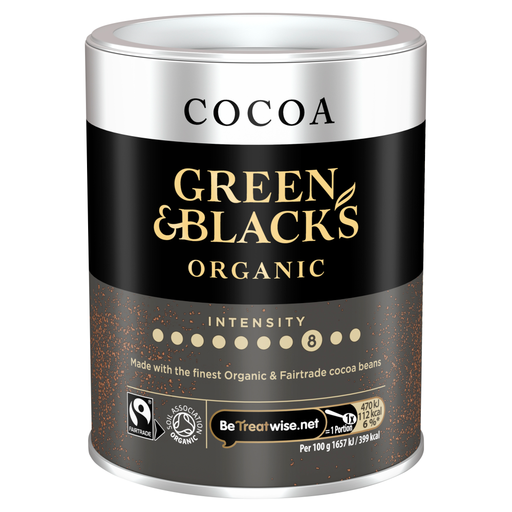
Tesco lists an organic Fairtrade cocoa powder for people who want to choose what goes into the finished drink.
Tesco’s drinking-chocolate listing provides a comparison with a product prepared using hot milk; its reference to Cocoa Life does not establish a Fairtrade certification claim for that product.
This cocoa-powder option suits shoppers who want to choose what they add when making a hot chocolate. Check the current pack’s Fairtrade wording, ingredients and preparation directions against the older person’s needs.
 No image available
This cocoa powder lets you choose what to add to a hot drink, rather than using a ready-mixed instant formulation. Check the current pack for the Fairtrade mark and what its claim covers, along with milk warnings and the nutrition of the drink as you prepare it. Do not use ordinary hot chocolate in place of prescribed nutrition support or assume it fits a texture-modified-fluid plan.
Look for the mark on the current pack and read the wording beside it. The Fairtrade Foundation explains that its classic Mark covers all ingredients that can be Fairtrade-certified, whereas its Fairtrade Sourced Ingredient Mark identifies a particular Fairtrade-sourced ingredient. A product name alone does not tell you which scope applies.
No: choose according to the person’s needs, not age alone. Sainsbury’s lists 41kcal, 1.6g protein and 4.6g sugars per mug for its low-calorie Fairtrade drink, compared with 110kcal, 3.3g protein and 16.1g sugars for its standard version. Someone eating poorly or losing weight needs individual nutrition advice rather than a choice based solely on a lower-calorie label.
No. Black Country Formulary describes oral nutritional supplements as specially made to contain energy, protein, vitamins and minerals for people unable to eat enough. Ask the healthcare professional overseeing the person’s nutrition before changing prescribed support.
Do not assume an ordinary hot chocolate, or a change to its preparation, fits their plan. The Christie NHS Foundation Trust advises people on texture-modified liquids to check suitable products and fluids with their dietitian or speech and language therapist.