Families making quick mugs at home
Instant Fairtrade mixes prepared with hot water can keep preparation straightforward. Compare the stated serving instructions and check the current pack for milk ingredients before serving.


For a quick Fairtrade hot chocolate made with water, compare the nutrition per prepared mug: Sainsbury's lists 4.6g sugars for its Low Calorie instant drink and 16.1g for its regular instant drink, each prepared with 200ml water. Green & Black's Fairtrade cocoa gives you control over added sweetness, but its recipe uses milk and the finished drink depends on what you add. If the drink is being provided by a school or holiday club, check the applicable food rules and provider policy separately from its Fairtrade label.
Instant Fairtrade mixes prepared with hot water can keep preparation straightforward. Compare the stated serving instructions and check the current pack for milk ingredients before serving.
Sainsbury's lists 4.6g sugars per prepared 200ml mug for its Low Calorie Fairtrade instant drink and 16.1g for its regular version. The recipes use different amounts of powder, so compare the prepared servings rather than powder weights alone.
For drinks provided to pupils at state-funded schools in England, the Department for Education identifies school-food standards as a legal requirement. A Fairtrade label does not establish that a particular drink meets a provider's menu or purchasing requirements.
For a home drink, decide whether preparation, sugar per mug or control over the recipe matters most, then read the Fairtrade and allergen wording on the product you choose.
| Priority | What to check | Your needs |
|---|---|---|
| Fairtrade claim | Check which mark appears and whether nearby wording names particular ingredients. The Fairtrade Foundation says the classic FAIRTRADE Mark covers all ingredients that can be Fairtrade certified, while its Sourced Ingredient Mark identifies a particular Fairtrade-sourced ingredient. M&S states that its Fairtrade sugar and cocoa may be mixed with non-certified ingredients on a mass-balance basis. | I want to know what the sourcing claim covers, rather than assuming every Fairtrade-labelled pack makes the same claim. |
| Sugars per mug | Compare sugars for the drink as prepared, including the specified powder amount and liquid. Sainsbury's lists 4.6g sugars for an 11g-powder mug and 16.1g for a 28g-powder mug, both made with 200ml water; Clipper lists 19.2g for a 28g serving made with 200ml hot water. | For a sweet hot drink at home, I'd compare what goes into the mug, including any sugar or toppings added after preparation. |
| Preparation and milk | Check whether the instructions call for water or milk, and read the current allergen label. The Sainsbury's and Clipper instant products contain milk ingredients despite being prepared with water; Green & Black's cocoa instructions use milk, and its listing says it may contain milk. | A water-prepared instant mix would be convenient, but I still need to check milk information if it matters to someone drinking it. |
| Where it is served | Distinguish a family drink at home from food or drink provided to pupils. The Department for Education's school-food standards concern state-funded schools in England; the responsible provider should check the current rules and its own menu requirements. | If I'm buying for a school or organised holiday provision, I need the provider's requirements, not just a Fairtrade claim. |
A classic FAIRTRADE Mark, a Sourced Ingredient Mark and a product's mass-balance statement do not convey identical information about its ingredients.
Read the mark alongside the qualifying wording on the current pack. If physical separation of an ingredient matters to you, do not assume it from a mass-balance claim.
The named instant drinks use different powder amounts per mug. A powder's per-100g figure also does not describe a cocoa drink made with milk and added sweetener.
Compare the stated prepared servings, then account for anything you add to the mug.
The checked Sainsbury's and Clipper instant mixes contain milk ingredients, although their instructions use hot water.
Read the current pack's ingredient and allergen statements, particularly if serving someone with a milk allergy.
The Department for Education's statutory school-food standards apply to food and drink provided to pupils at state-funded schools in England, not automatically to a family's drink at home. Fairtrade certification does not itself establish school-menu compliance.
For school or organised holiday provision, ask the responsible provider to check the rules and policies that apply to its setting before ordering.
These examples describe particular Fairtrade-labelled products and their stated preparation or pack information, not every hot chocolate made by each brand.
Regular 350g and Low Calorie 250g Fairtrade instant hot chocolates, each with instructions for a mug made with hot water.
Fairtrade instant hot chocolate in a 350g tub, with a stated 28g serving prepared using 200ml hot water.
A 400g Fairtrade instant hot chocolate tub.
Instant hot chocolate with a Fairtrade claim specifically describing its sugar and cocoa.
Organic Fairtrade cocoa powder for a drink made with milk and sweetened to taste.
This cocoa powder is an option for making Fairtrade hot chocolate at home with milk and sweetness added separately, rather than preparing an all-in-one instant mix with water.
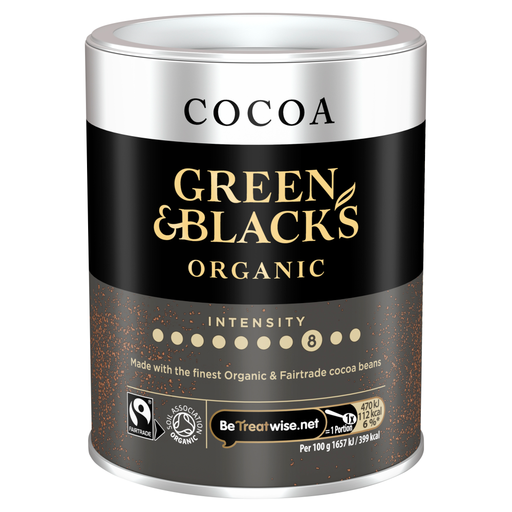 Image unavailable
For a home-made Fairtrade cocoa drink, this powder lets you add sweetness separately.
The listing gives 0.8g sugars per 100g of powder; that figure does not describe the finished drink. Preparation uses milk and sweetening to taste, and the listing says the powder may contain milk. Check the current pack if an allergen or prepared-serving figure is important to your choice.
No. The Fairtrade Foundation says the classic FAIRTRADE Mark covers ingredients that can be Fairtrade certified, while its Sourced Ingredient Mark identifies a particular Fairtrade-sourced ingredient. Read any additional wording: for example, M&S says its Fairtrade sugar and cocoa may be mixed with non-certified ingredients on a mass-balance basis.
Among the named products with stated prepared-serving figures, Sainsbury's Low Calorie Instant Fairtrade Hot Chocolate lists 4.6g sugars per 200ml mug. Its regular version lists 16.1g per 200ml mug, while Ocado lists 19.2g for a 28g serving of Clipper made with 200ml hot water. Follow each product's specified powder amount when comparing them.
Yes, if you make it from a cocoa powder such as Green & Black's Organic Fairtrade Cocoa. Its instructions use milk and say to sweeten to taste, so the finished drink's sugar content depends on the milk and anything else you add.
No. The Department for Education describes the statutory standards as applying to food and drink provided to pupils at state-funded schools in England. For school provision, the responsible provider must check the applicable menu and purchasing requirements; the 2014 regulations' definition of confectionery excludes hot chocolate, but that exception alone does not approve a particular drink.