What matters when choosing?
Decide whether the finished cone must carry the Fairtrade claim, then check the exact product, guest requirements and serving arrangements.
| Priority |
What to check |
Your needs |
| Fairtrade claim |
Read the claim on the exact product and identify the ingredients it covers. Central Co-op describes Fairtrade-sourced cocoa and sugar in its Neapolitan and Rainbow cones, using mass balance; dairy and water are excluded from their stated Fairtrade percentages. |
I want the ready-made cone to carry a product-level Fairtrade claim, rather than assuming that any chocolate cone qualifies. |
| Ready-made or DIY |
Compare a finished cone multipack with separate cones, ice cream and chocolate. Sainsbury’s lists Tony’s Chocolonely Milk Chocolate as Fairtrade chocolate, but a separately bought bar does not establish a Fairtrade claim for the assembled cone. |
For a themed topping or a particular cone and ice-cream combination, I can prepare the dessert myself; otherwise, a ready-made pack avoids that assembly. |
| Other cocoa claims |
Check the named scheme rather than treating cocoa-sourcing statements as interchangeable. Magnum says the cocoa in its ice creams comes from Rainforest Alliance Certified farms; that is not a Fairtrade claim. |
If Fairtrade is essential to my choice, a different cocoa certification will not meet that requirement. |
| Allergens |
Read the current ingredient list and precautionary statements on every cone and topping. Central Co-op’s Neapolitan listing identifies milk and wheat; its Rainbow listing also identifies barley. Both list further possible allergens. |
Guests’ requirements determine which exact packs and toppings I can serve, especially if ingredients or utensils could come into contact. |
| Portions and storage |
Count cones, not just total pack volume: both Central Co-op packs contain four. The Neapolitan pack is listed as 4 x 140 ml and the Rainbow pack as 4 x 75 g. Follow the frozen-storage instructions; the Rainbow listing says not to refreeze after defrosting. |
I need enough individual cones for the guests and a way to keep them frozen until they are served. |
| England school event |
Establish whether the school-food standards apply to the event. The Department for Education’s England guidance addresses chocolate and chocolate-coated products across the whole school day; confirm the menu arrangement with the school before ordering. |
If this is a school-day event in England, I cannot rely on Fairtrade certification to resolve whether a chocolate-containing cone may be served. |
Which brand claims are relevant?
These references concern particular products or cocoa claims, not every item sold under each brand.
Co-op
Central Co-op lists ready-made Neapolitan and Rainbow cone four-packs with product-level Fairtrade cocoa-and-sugar statements.
- Both product pages explain that the required cocoa and sugar are sourced, traded and audited as Fairtrade.
- The claims use mass balance, so they do not promise physical separation during processing; their stated Fairtrade shares exclude dairy and water.
Tony’s Chocolonely
A chocolate component to consider when making cones yourself, rather than a ready-made cone.
- Sainsbury’s describes its listed 180 g Milk Chocolate bar as Fairtrade chocolate and names sugar, cocoa butter and cocoa mass in the claim.
- A Fairtrade claim on a separately purchased bar does not establish one for the finished homemade cone.
Magnum
An ice-cream brand with its own cocoa-sourcing statement, rather than an evidenced Fairtrade claim for the products discussed here.
- Magnum says that the cocoa in its ice creams is sourced from Rainforest Alliance Certified farms.
- Rainforest Alliance certification is a different claim from Fairtrade; check the exact pack if Fairtrade is a requirement.
Cornetto
A ready-made cone format: Sainsbury’s lists Cornetto Classico as a 6 x 90 ml pack.
- The listed pack count gives hosts six individual cones to plan around.
- Do not treat that listing as a Fairtrade claim for Cornetto Classico; inspect the exact pack if certification matters.
Sainsbury’s
Its ice-cream listings include own-label cone multipacks, while its Fairtrade range is a separate shopping category.
- The listed Strawberry & Vanilla Cones come in a four-pack, providing a pack-count alternative for party planning.
- A retailer’s Fairtrade category does not establish certification for an own-label cone; check the specific product.
Chocolate for DIY cones on Joybuy
These chocolate bars are components for making Halloween cones with separately chosen ice cream and cones; they are not ready-made ice-cream cones.
 No image available
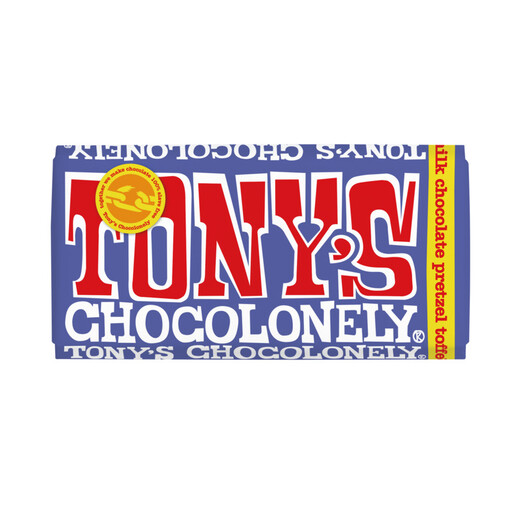
Tony’s Chocolonely Milk Chocolate, Pretzel & Toffee 180 g
A chocolate option for decorating DIY cones with pretzel and toffee pieces. Buy cones and ice cream separately; check the current bar, cone and topping labels against guests’ allergen requirements. The completed dessert does not acquire a Fairtrade claim solely from the chocolate component.
View on Joybuy
 No image available
Tony’s Chocolonely Fairtrade Milk Chocolate Caramel Sea Salt 180 g
A Fairtrade-labelled chocolate bar with caramel and sea salt for a DIY cone. It is not a finished ice-cream cone: choose the cone and ice cream separately, and check the current packaging of every component for ingredients, allergens and the precise Fairtrade claim.
View on Joybuy
Questions about serving party cones
How can I check whether a chocolate ice-cream cone has a Fairtrade claim?
Look for a FAIRTRADE Mark or a product-level statement, then read which ingredients it covers. Central Co-op says the required cocoa and sugar in its specified Neapolitan and Rainbow cones are Fairtrade-sourced, traded and audited, and explains that its claims use mass balance. A different cocoa certification is not the same claim.
Does Fairtrade chocolate make a homemade cone Fairtrade?
Not by itself. A claim on a separately bought chocolate bar applies to that product and its stated ingredients; it does not establish certification for the cone, ice cream and toppings assembled with it. Check each component’s claim if those distinctions matter to your choice.
Can chocolate-containing Fairtrade cones be served during an England school-day event?
Do not assume they can. Department for Education school-food guidance for England addresses confectionery, chocolate and chocolate-coated products across the whole school day, while the Requirements for School Food Regulations 2014 define confectionery to include products containing or coated with chocolate. Confirm how the standards apply to the event and menu with the school before ordering; this does not establish the rules for schools elsewhere in the UK.
What should I check for guests with allergies?
Read the current label of each cone and topping, including any precautionary statements, before deciding what to serve. Central Co-op’s Neapolitan listing identifies milk and wheat and possible nuts, peanuts and soya; its Rainbow listing identifies barley, milk and wheat and possible egg, nuts, peanuts and soya. Keep the packaging available when serving and consider contact through shared utensils.
How should I plan portions and storage?
Count individual cones against the number of guests: each of the two listed Central Co-op Fairtrade packs contains four. Keep the cones frozen in line with their pack instructions; the Rainbow Uni-Cones listing specifically says not to refreeze them after defrosting. Plan transport and serving around the freezer space available.


