Fairtrade-first hunt organisers
If the sourcing claim is essential, check what the mark on each treat actually covers. A chocolate treat may be an option when jelly sweets do not carry the claim you need.


For a UK Easter egg hunt, choose a jelly sweet as a Fairtrade option only if its exact pack shows the classic FAIRTRADE Mark or an FSI Mark naming the Fairtrade-sourced ingredient; vegan and fruit-juice claims do not establish either. If Fairtrade sourcing matters more than the jelly format, consider clearly labelled Fairtrade chocolate instead, while checking the ingredients and suitability for the children attending.
If the sourcing claim is essential, check what the mark on each treat actually covers. A chocolate treat may be an option when jelly sweets do not carry the claim you need.
Look for a vegan statement and read the ingredients on the exact sweet. Vegan suitability answers a different question from Fairtrade sourcing.
Check each treat’s age warning, size, shape and texture before children collect and eat it. The NHS advises particular care with foods that may pose a choking hazard to young children.
Decide whether Fairtrade sourcing or the jelly format matters most, then check the chosen product against dietary needs and the ages of the children taking part.
| Priority | What to check | Your needs |
|---|---|---|
| Fairtrade claim | Check the exact pack or official product page. The Fairtrade Foundation says the classic FAIRTRADE Mark covers all ingredients that can be Fairtrade-certified; an FSI Mark names the particular Fairtrade-sourced ingredient. | I want to know whether the claim covers all eligible ingredients or only a named ingredient before choosing a treat for its sourcing. |
| Jelly and vegan suitability | Read the exact product’s vegan statement and ingredient list. HARIBO UK lists its Jelly Beans as suitable for vegans, but lists gelatine in MAOAM Stripes. | A jelly-style sweet matters to my guests, and some avoid gelatine. I cannot assume similar-looking sweets have the same ingredients. |
| Children’s ages | Follow the product’s age warning and consider size, shape and texture. M&S Fruit Jellies carry a warning against giving them to children under 36 months because of a potential choking hazard; the NHS advises care with food for young children. | Children of different ages may collect the treats, so I need to decide which ones each child can be given and supervise eating. |
| Hunt format | Check how the treat is packaged and how it will be handed out. For a chocolate bar, establish whether you would need to divide it rather than treating it as an individual hunt portion. | I want treats I can distribute appropriately without relying on the product name to tell me how they are portioned. |
A seller title or retailer category does not tell you which ingredients, if any, carry a Fairtrade claim. The Fairtrade Foundation distinguishes the classic FAIRTRADE Mark from the ingredient-specific FSI Mark.
Check the mark on the actual pack or official product page. If it is an FSI Mark, read the ingredient named beside it.
A vegan statement describes dietary suitability, not how an ingredient was sourced. A fruit-juice or pectin description does not establish Fairtrade sourcing either.
Use those details to assess the jelly sweet, then check its Fairtrade claim separately if sourcing is a requirement.
M&S Fruit Jellies warn that they are not suitable for children under 36 months because of a potential choking hazard. The NHS advises considering food’s size, shape and texture for young children, particularly when they may be playing or eating.
Follow each pack’s warning, keep unsuitable sweets away from babies and toddlers, and supervise children while they eat.
These examples illustrate different label and ingredient checks; a claim about one named product should not be assumed to apply to another sweet from the same brand.
Haribo Jelly Beans are a jelly-style option for guests seeking a product labelled vegan.
Jelly Tots Tangy are a fruit-jelly option with a product-specific vegan-friendly claim.
M&S Fruit Jellies are labelled suitable for vegans, with an age warning relevant to family hunts.
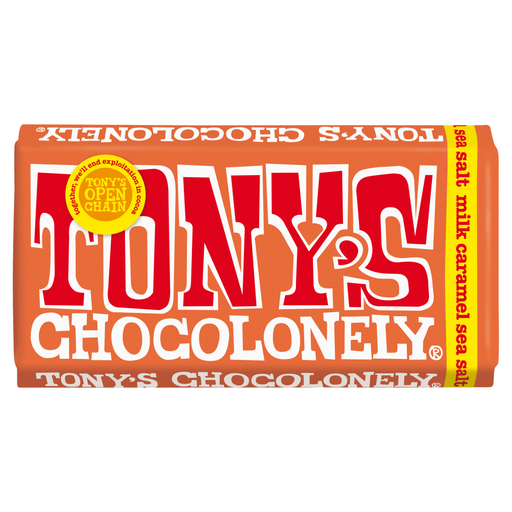
A chocolate alternative for organisers willing to change format to prioritise Fairtrade-sourced ingredients.
This chocolate bar is an option to consider if Fairtrade-sourced ingredients matter more to your hunt than using jelly sweets. Check its exact pack before relying on the sourcing claim or deciding how to share it.
 No image available
A 180g chocolate bar rather than a jelly sweet, for a hunt where a change of treat is acceptable. Check the exact pack for its FAIRTRADE or FSI Mark and ingredient scope before relying on its sourcing claim.
The listing identifies milk and soya as ingredients. Check the current pack for full allergen and age information, and decide whether a bar suits the way you plan to distribute treats.
Check its exact pack or official product page for a FAIRTRADE or Fairtrade Sourced Ingredient (FSI) Mark. The Fairtrade Foundation says the classic mark covers all ingredients that can be Fairtrade-certified, whereas the FSI Mark identifies a particular Fairtrade-sourced ingredient beside it.
Not on the strength of its vegan label. HARIBO UK describes Jelly Beans as suitable for vegans, M&S labels its Fruit Jellies suitable for vegans, and Nestlé describes Jelly Tots Tangy as vegan-friendly; check each exact product separately for a Fairtrade mark if sourcing matters.
No single jelly-sweet choice can be assumed suitable for every age. M&S Fruit Jellies warn against giving them to children under 36 months because of a potential choking hazard, and the NHS advises considering size, shape and texture when preparing food for young children. Follow the warning on each product and supervise eating.
Consider a chocolate treat with a clearly stated Fairtrade ingredient claim rather than treating a vegan or general ethical description as proof. Divine says its Milk Chocolate Mini Bars are made with Fairtrade cocoa and sugar; check the current pack’s ingredients, allergens and age suitability before choosing them for a hunt.