For a Fairtrade-led purchase, check the exact bag for a FAIRTRADE Mark or a Fairtrade Sourced Ingredient (FSI) Mark naming the ingredient: the Fairtrade Foundation says the two marks cover different ingredient scopes. Vegan labelling and a retailer’s Fairtrade range do not establish a sweet’s Fairtrade status, so assess dietary suitability and portions separately if you cannot confirm a mark on the sweets.
Who is choosing these sweets?
Fairtrade-first tea-table shoppers
If Fairtrade sourcing is the reason for buying the sweets, look for the applicable mark on the exact bag. The Fairtrade Foundation explains that an FSI Mark names the Fairtrade-sourced ingredient; a retailer’s wider Fairtrade range does not make every sweet it sells Fairtrade.
Vegan or gelatine-avoiding sharers
Check the particular product rather than the brand. Nestlé Confectionery says Rowntree’s Jelly Tots ingredients are suitable for vegans, and HARIBO describes its Jelly Beans as vegan-suitable; HARIBO Jelly Babies list gelatine.
Shoppers comparing tea-table portions
Use the serving shown on each pack when deciding how many sweets to put out with biscuits. Nestlé Confectionery lists 11.0g sugars per 11 Rowntree’s Jelly Tots from its 150g bag; Tesco lists 12.7g per 25g of Jelly Shapes. Those are different serving definitions.
What should you check before buying?
Start with the mark on the exact sweets, then check the ingredients and serving information against the needs of the people sharing them.
| Priority | What to check | Your needs |
|---|
| Fairtrade status |
Check the exact bag or product listing for the mark. The Fairtrade Foundation says the black FAIRTRADE Mark covers all ingredients that can be Fairtrade-certified; the white FSI Mark identifies one Fairtrade-sourced ingredient, named beside it. |
I want the Fairtrade claim to apply to the sweets I am buying, and I need to know whether it covers all certifiable ingredients or one named ingredient. |
| Dietary suitability |
Read the ingredients and the suitability statement for the exact variant. Nestlé Confectionery describes Jelly Tots ingredients as vegan-suitable, while HARIBO Jelly Babies and Tesco Jelly Shapes list gelatine. |
These sweets are for guests avoiding gelatine. I cannot extend one product’s vegan statement to every sweet from the same brand. |
| Serving information |
Compare sugars against each pack’s stated serving as well as per 100g. Nestlé Confectionery lists 11.0g per 11 Jelly Tots from its 150g bag; Tesco lists 12.7g per 25g of Jelly Shapes. |
With biscuits already on the table, I want to decide how many sweets to serve. Eleven sweets and 25g are different portion measures, not directly equivalent servings. |
Mistakes to avoid
-
Assuming a retailer’s Fairtrade section covers its sweets
A shop can carry Fairtrade products without every bag in its sweets range bearing a Fairtrade claim.
Check the exact bag for the FAIRTRADE Mark or an FSI Mark, including the ingredient named beside an FSI Mark.
-
Using a vegan claim as evidence of Fairtrade sourcing
Vegan suitability and Fairtrade sourcing answer different questions; neither label establishes the other.
Check the Fairtrade mark and the exact variant’s dietary information separately.
-
Assuming a familiar brand is always gelatine-free
Recipes differ within ranges. HARIBO Jelly Babies and Tesco Jelly Shapes list gelatine, while Nestlé Confectionery says Jelly Tots contain no gelatine.
Read the ingredients again when changing product, flavour or pack format for guests who avoid gelatine.
-
Looking only at sugar per 100g
A per-100g figure compares equal weights, but the amount served at the table may follow a different measure on each pack.
Check the stated serving and its sugar figure, then decide how many sweets you plan to put out alongside biscuits.
Brand and product-line references
Rowntree’s
Jelly Tots are a product-specific option to examine when vegan suitability matters.
- Nestlé Confectionery says Jelly Tots ingredients are suitable for vegans and vegetarians; it also says the 150g sharing bag contains no gelatine.
- Nestlé says Jelly Tots are made on a line also used for products containing non-vegan ingredients. Its vegan-suitability statement should not be extended to other Rowntree’s products, and Fairtrade status needs a separate pack check.
HARIBO
Jelly Beans and Jelly Babies illustrate why the exact product matters when choosing sweets for vegan guests.
- HARIBO describes its Jelly Beans as suitable for vegans.
- HARIBO Jelly Babies list gelatine. Check either product’s exact pack separately if Fairtrade certification is required.
M&S
Its chewy-sweets range lists vegetarian and vegan browsing options, according to Marks & Spencer.
- The range also lists reduced-sugar options; check the individual product for its ingredients and nutrition information.
- A range label does not establish Fairtrade status for an individual bag. Inspect the exact sweets for the applicable mark.
Joybuy fruit sweets for sharing
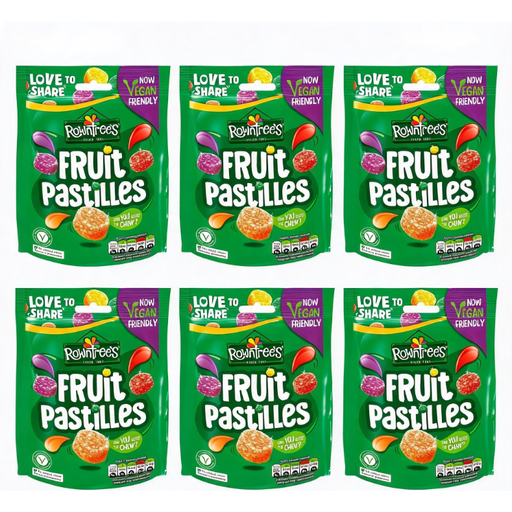
This Rowntree’s Fruit Pastilles multipack is a vegan-friendly sharing option with a stated sugar figure per serving. If Fairtrade certification is essential, check the exact pack for the applicable mark before choosing it.
 No image available
Rowntree’s Fruit Pastilles Vegan 143g x 6pcs
The listing describes this multipack as vegan-friendly for sharing and gives 14.3g sugars per 7 sweets, approximately 24g. It warns that small sweets may pose a choking risk for children under 4; check the current pack label for the ingredients and any Fairtrade mark.
View on Joybuy
Questions about Fairtrade jelly sweets
Does a retailer’s Fairtrade section certify its jelly sweets?
No. Check the exact sweets for a mark rather than relying on the shop category. The Fairtrade Foundation says the black FAIRTRADE Mark covers all ingredients that can be Fairtrade-certified, whereas the white FSI Mark identifies one named Fairtrade-sourced ingredient.
Are vegan jelly sweets also Fairtrade?
A vegan statement does not establish Fairtrade sourcing. Nestlé Confectionery describes Rowntree’s Jelly Tots ingredients as vegan-suitable, and HARIBO says its Jelly Beans are suitable for vegans; check either exact pack separately for a Fairtrade mark.
How do I avoid gelatine when buying sweets for guests?
Read the ingredients and suitability statement for the exact product. Nestlé Confectionery says its core Jelly Tots range contains no gelatine, while HARIBO Jelly Babies and Tesco Jelly Shapes list gelatine; one product’s ingredients do not describe an entire brand.
How should I compare a sweet portion with tea and biscuits?
Check the serving definition alongside its sugar figure, then decide how many sweets to serve. Nestlé Confectionery lists 11.0g sugars per 11 Jelly Tots from its 150g bag, while Tesco lists 12.7g per 25g of Jelly Shapes; the stated portions are not the same measure.


