Fairtrade-first matcha shoppers
You want the claim to apply to the product you buy, rather than assuming that an organic label or Japanese origin means Fairtrade certification.


If Fairtrade is essential, choose matcha only when the current pack or listing confirms the FAIRTRADE Mark and what it covers; organic status and Japanese origin do not establish that claim. For an after-dinner latte, check whether the powder is intended for milk-based drinks and how much caffeine the portion you use contains. If you cannot confirm the claim on a matcha, a Fairtrade-labelled tea is another drink choice, not a matcha substitute.
You want the claim to apply to the product you buy, rather than assuming that an organic label or Japanese origin means Fairtrade certification.
You plan to mix matcha with milk or a plant drink and want to check the ingredients, serving size and caffeine before making it an evening drink.
You prefer matcha whisked with water. Clearspring and JING describe ceremonial styles as suited to drinking plain, so preparation style matters alongside any Fairtrade claim.
Start with the Fairtrade claim on the exact product, then choose a preparation style and serving size that suit your after-dinner drink.
| Priority | What to check | Your needs |
|---|---|---|
| Fairtrade claim | Look for the FAIRTRADE Mark on the current pack or listing. The Fairtrade Foundation says its Fairtrade Sourced Ingredient mark identifies a named Fairtrade-sourced ingredient, so check which ingredient the claim covers. | I want the Fairtrade claim to apply to the tea I am buying, not just to another product sold by the same retailer. |
| Drink format | Check whether the powder is described for lattes or for whisking plain with water. Read the ingredients if you want pure matcha rather than a prepared latte mix. | For a milky after-dinner drink, I want a matcha intended for that preparation. If I drink it plain, I can compare ceremonial-style options instead. |
| Caffeine and portion | Compare caffeine figures using each product’s stated powder weight or serving size. Clearspring estimates approximately 32 mg per 1 g of its premium-grade matcha; that figure is specific to that powder. | I want to know what my intended serving contributes before choosing matcha for the evening. |
Organic production and Japanese origin describe different attributes from Fairtrade certification. Neither establishes a Fairtrade claim for an individual matcha.
Check the current product pack or listing for the FAIRTRADE Mark. If it carries a Fairtrade Sourced Ingredient mark, read the ingredient named beside it.
M&S Food states that its tea is 100% Fairtrade, but a retailer-wide statement does not by itself establish the status of a particular matcha or café drink.
Check the exact product rather than relying on a claim about the wider range.
A caffeine figure applies to the amount of powder stated alongside it. Clearspring’s estimate of approximately 32 mg relates to 1 g of its premium-grade matcha, not every matcha serving.
Check the powder weight you intend to use and the caffeine information for that product when deciding whether to drink it after dinner.
Clearspring and JING position ceremonial matcha for drinking plain, while their other matcha descriptions include uses such as lattes or baking.
Choose according to how you will prepare the drink, and check any Fairtrade claim separately from the grade.
These ranges illustrate preparation choices and Fairtrade checks; a brand’s wider range does not establish certification for an individual matcha.
Lists organic Japanese matcha in premium and ceremonial grades.
Lists matcha for plain preparation alongside a latte-oriented format.
M&S Food states that its tea is 100% Fairtrade.
Has a matcha category and tea ware for home preparation.
Lists Clearspring Matcha Shot, described as organic matcha green tea powder.
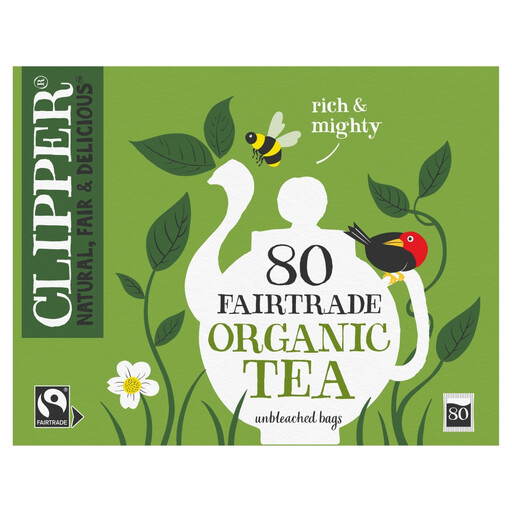
This black tea is an option to consider if you are willing to change the after-dinner drink rather than buy matcha. Check its Fairtrade claim on the current pack before making that choice.
 No image available
This is black tea for a hot drink, not matcha. The pack contains 80 tea bags weighing 232 g in total. Its product title makes a Fairtrade claim; check the current pack for the FAIRTRADE Mark and its scope, and check caffeine information if that matters for your after-dinner serving.
No. An organic claim does not establish Fairtrade certification. The Fairtrade Foundation advises shoppers to look for the FAIRTRADE Mark; check the current matcha pack or listing and what its mark covers.
According to the Fairtrade Foundation, it identifies one Fairtrade-sourced ingredient, named beside the mark. On a latte mix or flavoured drink, check that name rather than assuming the claim covers every ingredient.
Look for a powder described for lattes or versatile drinking use if you will add milk or a plant drink. Clearspring and JING describe ceremonial styles for drinking plain with water. Whichever style you choose, check its Fairtrade claim and caffeine information separately.
Use the caffeine figure for the specific product and compare it with the amount of powder you will prepare. Clearspring estimates approximately 32 mg per 1 g of its premium-grade matcha; do not apply that figure to another powder or a differently sized serving.