Fairtrade-first shoppers
You want the matcha you buy for breakfast to carry an explicit Fairtrade claim, rather than relying on organic or origin wording.


If Fairtrade certification is essential to your weekday matcha, choose a powder whose exact pack or product listing explicitly identifies the matcha as Fairtrade-certified; organic, Japanese-origin and ceremonial descriptions do not establish that. For a repeatable breakfast drink, also check the serving instructions and whether the powder suits the way you make it, with water, milk or in a smoothie.
You want the matcha you buy for breakfast to carry an explicit Fairtrade claim, rather than relying on organic or origin wording.
You want a powder you can prepare with water or add to milk or a smoothie, with serving instructions that fit your morning routine.
You usually drink matcha with water and want preparation guidance for a flavour-focused cup.
Check certification on the exact product first if Fairtrade is a requirement, then choose a serving format and preparation method that fit breakfast.
Choose when: Fairtrade certification is a condition of purchase. Just Natural’s Qi Organic Matcha Powder listing identifies its matcha ingredient as Fairtrade.
Check: Confirm the certification wording on the exact pack or current listing before ordering.
Choose when: You want a measured powder serving for drinks such as lattes or smoothies and Fairtrade certification is not essential.
Limit: An organic claim does not establish Fairtrade certification; check for a separate Fairtrade claim if you need one.
Choose when: You mainly drink matcha straight and want to follow a product-specific preparation method.
Trade-off: Preparation can call for measured water and powder; ceremonial wording alone does not establish Fairtrade certification.
| Priority | What to check | Your needs |
|---|---|---|
| Fairtrade certification | Look for an explicit Fairtrade claim on the exact matcha pack or listing. The Fairtrade Foundation says the classic FAIRTRADE Mark covers all ingredients eligible for Fairtrade certification. | I want certification for the matcha I am buying, not an organic claim or a Fairtrade statement about another tea. |
| Morning preparation | Check whether it is plain powder and how much powder and water the instructions specify. Clearspring suggests 1g in 30ml hot water or another drink; JING specifies 1.5g per 160ml cup. | A measured serving helps me repeat the drink before work, whether I use water, milk or a smoothie. |
| Drink style | Check the product’s intended preparation and any water-temperature guidance. JING specifies 70°C water for its ceremonial matcha. | If I drink matcha with water, preparation guidance matters to me. For a latte or smoothie, I want a powder that suits that recipe. |
| Caffeine information | Check the product-specific caffeine figure, its serving size and whether both products use the same gram basis before comparing them. | I want to know how much powder goes into my cup when considering it alongside other caffeinated drinks. |
Those descriptions concern different product characteristics. A powder can meet your preferred preparation style without meeting a Fairtrade requirement.
Check the Fairtrade wording on the exact matcha product. For a blend, check which ingredient the claim covers.
A product intended for preparation with water may offer guidance you will not use in a milk-based drink or smoothie.
Choose by your usual recipe and serving instructions; if Fairtrade matters, check certification separately from the grade description.
A statement about a tea range does not establish certification for a separate matcha pack or café drink.
Read the exact matcha product’s ingredient and certification wording before relying on a retailer-wide claim.
A caffeine amount stated per serving is difficult to compare with another product if the servings contain different amounts of powder.
Check the stated grams per serving and compare product-specific caffeine figures on the same basis where possible.
These examples illustrate different claims and preparation styles; a brand name alone does not confirm that an individual matcha product is Fairtrade-certified.
Just Natural’s listing for Qi Organic Matcha Powder 40 g identifies its ingredient as 100% organically grown Fairtrade matcha green tea powder.
Clearspring presents its Organic Japanese Matcha Green Tea Powder as a powder for drinks and home use.
JING positions its organic ceremonial matcha for preparation as a water-based drink.
M&S makes a Fairtrade statement about its tea and separately describes PerfectTed matcha drinks in its cafés.
These Joybuy options cover organic matcha powders and pre-portioned sachets for different breakfast preparations. If Fairtrade certification is essential, check the exact product’s pack or current listing for an explicit claim before choosing.
 No image available
Consider this powder for a measured breakfast drink with water or milk. The product is labelled as a 30g organic matcha gift set; its preparation guidance calls for sifting and whisking.
If Fairtrade is a requirement, check for an explicit claim on this exact product.
 No image available
Consider this powder if you prepare matcha with water. The 30g product is labelled organic; its preparation guidance includes sifting before whisking.
Check this exact product’s certification wording if Fairtrade matters to your choice.
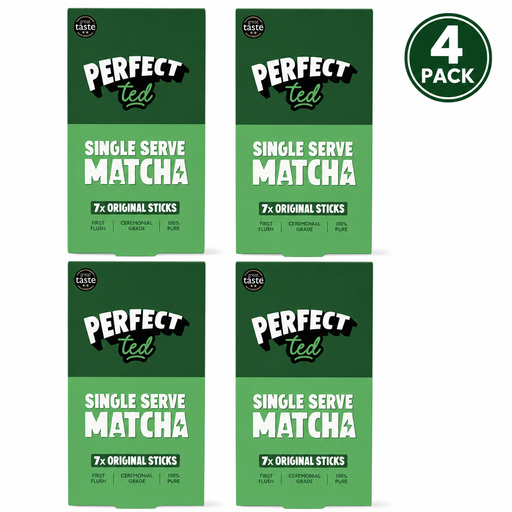 No image available
Individual 1.5g sachets offer a pre-portioned option for mornings when you do not want to measure loose powder.
Check the total sachet count before ordering, as the pack descriptions differ. Check the exact product’s Fairtrade wording if certification is essential.
Look for an explicit Fairtrade claim on the exact pack or current product listing. The Fairtrade Foundation says the classic FAIRTRADE Mark indicates that all ingredients eligible for Fairtrade certification are certified; organic certification and Japanese origin are separate claims.
No. An organic or origin claim does not establish Fairtrade certification. If Fairtrade is a condition of purchase, check for an explicit claim applying to the matcha you intend to buy.
Use the powder’s own measured serving instructions and choose a preparation that fits your usual drink. Clearspring suggests 1g in 30ml hot water or another drink, while JING specifies 1.5g per 160ml cup with water at 70°C.
Check the caffeine amount for the specific product and the grams of powder in that serving. Compare figures on the same serving or gram basis where possible rather than treating one product’s value as a value for all matcha.
Not necessarily. M&S makes a Fairtrade statement about its tea, but its separate café matcha article does not establish Fairtrade certification for that matcha. Check the exact matcha product or drink rather than extending a claim from another part of the range.