What should an office check?
Decide whether Fairtrade certification is a requirement for the exact product before comparing matcha formats. If it is, check a tea alternative separately rather than treating a retailer-wide statement as a matcha claim.
| Priority |
What to check |
Your needs |
| Fairtrade claim |
Look for a claim on the exact pack or product page. The Fairtrade Foundation distinguishes the classic FAIRTRADE Mark, which covers all ingredients eligible for Fairtrade certification, from a Fairtrade Sourced Ingredient Mark, which applies to the named ingredient. |
I need to be able to identify which product, or which ingredient in a mixed product, the Fairtrade claim covers. |
| Ingredients and format |
Read the ingredient list and distinguish plain matcha powder from flavoured powder, concentrates and ready-to-drink products. Tesco’s matcha listings include several of these formats, which need not have equivalent ingredients or servings. |
A plain ingredient list matters to me, or I would rather choose a prepared format for the office fridge. |
| Preparation |
Check whether the product is portioned and what equipment its directions require. Clearspring directs buyers to whisk one sachet of its premium-grade matcha with 30ml of hot water. |
For short breaks, I want a serving staff can prepare with the space and utensils available. |
| Caffeine information |
Check the chosen product’s caffeine information per serving and the serving size it uses. The NHS advises no more than 200mg of caffeine a day during pregnancy, counting caffeine from other sources too. |
Staff who monitor caffeine need information for the serving they will actually use, rather than an assumption that matcha is caffeine-free. |
Brand and retailer references
These references help distinguish matcha formats from broader Fairtrade tea statements; a brand’s or retailer’s inclusion does not certify every product it sells.
Clearspring
Clearspring describes Japanese organic matcha products, including a premium-grade powder and a portioned Matcha Shot format.
- Its premium-grade product lists 100% organic matcha green tea powder as the ingredient.
- Organic status and Japanese origin do not establish Fairtrade certification for the chosen matcha.
Teapigs
Teapigs has a UK matcha shopping category for offices considering a specialist tea brand.
- The dedicated category provides a starting point for looking at its matcha range.
- Check the selected product’s ingredients, format and any Fairtrade claim individually.
M&S
M&S describes Fairtrade loose-leaf and bag teas; M&S Food also describes its café tea as 100% Fairtrade.
- Its tea information is relevant if the office can choose Fairtrade tea instead of matcha.
- Those tea statements do not, by themselves, certify an M&S matcha product.
Waitrose
Waitrose says its own-label tea has been 100% Fairtrade since 2020 and separately lists a Clearspring Matcha Shot product.
- The own-label tea statement can inform a search for a different Fairtrade drink.
- An own-label tea policy does not establish the certification of a separately listed Clearspring matcha.
Tesco
Tesco’s matcha category includes plain and flavoured powders, a concentrate and a ready-to-drink latte.
- The range illustrates why offices should choose a serving format before comparing products.
- Check ingredients and Fairtrade claims on each individual listing or pack.
Matcha options on Joybuy
These organic matcha options are for offices willing to consider matcha without treating the selection as proof of Fairtrade certification. Check the exact pack or product page before making a Fairtrade claim.
 No image available
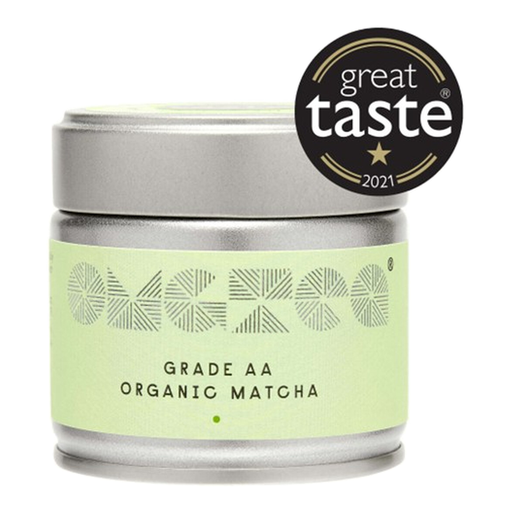
OMGTea AA Organic Matcha Green Tea, 30g
An option for an office choosing organic matcha for shared breaks. This is the AA variant in a 30g size; check its own Fairtrade claim before describing it as certified.
View on Joybuy
 No image available
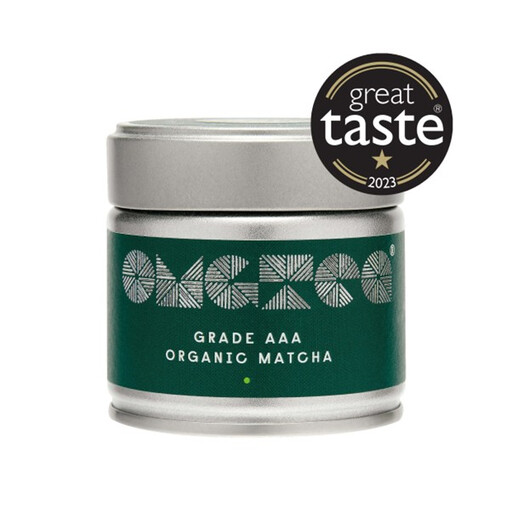
OMGTea AAA Organic Matcha Green Tea, 30g
A separate 30g organic matcha option for office preparation, identified as the AAA variant. Its name does not establish Fairtrade certification, so check a claim on the exact product if that is required.
View on Joybuy
 No image available
OMGTea Organic Matcha AAA+, 30g
For an office considering another organic matcha variant, this product is labelled AAA+ and 30g. Check its preparation and caffeine information for the serving staff will use, and confirm any Fairtrade claim separately.
View on Joybuy
Questions about office matcha
How can an office check whether matcha is Fairtrade-certified?
Check the exact pack or product page for a FAIRTRADE Mark or a clear claim that applies to that matcha. The Fairtrade Foundation says the classic mark covers ingredients eligible for Fairtrade certification, while a Fairtrade Sourced Ingredient Mark applies to the named ingredient; that distinction matters for mixed drinks.
Does a retailer’s Fairtrade tea statement cover its matcha?
Not automatically. M&S describes Fairtrade teas, and Waitrose’s statement concerns its own-label tea; neither statement alone identifies the certification status of a particular matcha. Check the individual matcha pack or page.
Is organic Japanese matcha the same as Fairtrade matcha?
No. Organic status and Japanese origin describe different attributes from Fairtrade certification. If Fairtrade is required for the office purchase, check a claim that applies to the exact matcha even when its organic ingredients or origin are clearly stated.
Would portioned matcha be simpler for a short office break?
It can remove a measuring step, but preparation still depends on the product. Clearspring, for example, directs buyers to whisk one sachet of its premium-grade matcha with 30ml of hot water. Check the directions against the utensils and space available at work.
What should staff check about caffeine in matcha?
Matcha should not be treated as caffeine-free. Check the chosen product’s caffeine information and serving size when counting intake from drinks and other sources; the NHS advises a maximum of 200mg of caffeine per day during pregnancy.


