Fairtrade-first desk-lunch shoppers
If certification determines what you buy, make the exact pack your starting point. Fairtrade International advises shoppers to look for the FAIRTRADE Mark; organic and origin claims answer different questions.


If Fairtrade certification is essential, check the exact matcha product for the FAIRTRADE Mark or obtain product-specific confirmation before choosing a format; organic status, Japanese origin and a retailer’s wider tea policy are not substitutes. Sachets save measuring during a short break, but powder still needs mixing, while a ready-to-drink option calls for the same product-level certification check. Check the serving size and caffeine information against any other caffeinated drinks you have that day.
If certification determines what you buy, make the exact pack your starting point. Fairtrade International advises shoppers to look for the FAIRTRADE Mark; organic and origin claims answer different questions.
Pre-measured sachets avoid weighing powder at work. You will still need a drink to mix it with and a preparation method that fits your desk setup.
If Japanese provenance and organic ingredients matter to you, compare those details on individual products. Check Fairtrade certification separately if it also affects your decision.
Start with certification if it is a requirement, then choose a format you can prepare during your break and a serving you can account for.
| Priority | What to check | Your needs |
|---|---|---|
| Fairtrade certification | Look for the FAIRTRADE Mark on the exact pack or seek product-specific confirmation. Fairtrade International says the Mark indicates that ingredients meet the relevant Fairtrade Standards; organic and origin claims do not establish this. | If Fairtrade certification is non-negotiable for me, I need to confirm it for the matcha I actually buy, not just for the brand or shop. |
| Desk preparation | Check portion size, mixing instructions and what you need at work. Clearspring instructs users to whisk its 1 g Matcha Shot sachet with 30 ml hot water; a ready-to-drink format calls for a check of its own label. | On a short break, I would rather use a measured sachet than portion loose powder, but I still need a practical way to mix it. |
| Caffeine per serving | Check the figure for the exact product and serving. Clearspring estimates approximately 32 mg of caffeine in 1 g of its matcha; that figure should not be applied to other products. | If I also drink coffee or tea, I want to account for the matcha serving alongside those drinks. |
| Drink style | Check whether the product is plain matcha or a flavoured latte blend, and follow its own water or milk instructions. Confirm the ingredients and portion on the exact pack. | For matcha with water, I want plain powder; for a flavoured desk drink, I may prefer a latte sachet. |
| Retailer claims | Separate a retailer’s tea policy from a particular listing. Waitrose says its own-label tea has been 100% Fairtrade since 2020; that statement does not establish the status of a third-party matcha. | Even when I shop with a retailer that has a Fairtrade tea policy, I need to check the matcha product itself. |
These describe different product attributes. Fairtrade International’s guidance ties use of the FAIRTRADE Mark to ingredients meeting its Standards.
If certification is essential, check the Mark on the exact pack or ask for product-specific confirmation before buying.
A retailer’s statement about its tea does not, by itself, certify a third-party matcha listing or a particular café drink.
Check the individual product information rather than relying on the shop-wide statement.
Preparation differs between products: JING Tea gives whisking or shaking instructions for its ceremonial matcha, while latte sachets are sold as blends for mixed drinks.
Decide whether you want plain matcha or a latte, then check that product’s ingredients and preparation directions. Verify Fairtrade status separately.
Matcha contributes to the caffeine you consume from other drinks. Clearspring estimates approximately 32 mg in 1 g of its own matcha, but that is not a figure for every sachet or powder.
Use the serving and caffeine information for the product you choose, particularly if you also drink coffee, tea or energy drinks.
These product and retailer claims can help narrow a choice, but Fairtrade certification still needs checking on the matcha in question.
Clearspring describes its matcha as organic Japanese tea and offers both powder and 8 × 1 g Matcha Shot sachets.
JING Tea describes its 30 g ceremonial matcha as organic and produced in Kirishima, Japan.
Waitrose says all its own-label tea has been Fairtrade since 2020 and also lists third-party matcha.
M&S states that its tea is Fairtrade and describes café matcha drinks made with PerfectTed matcha.
Tesco’s matcha category includes formats such as single-serve sticks and tea bags.
These sachets suit a portioned drink during a short desk break. Check the exact pack for Fairtrade certification if that is a condition of your purchase.
 Image unavailable
The individual 12 g sachets avoid measuring a portion for a desk-lunch latte. This is a vanilla matcha latte blend rather than plain matcha; check the exact pack for the FAIRTRADE Mark if certification matters. If oats or gluten affect your purchase, check the pack’s allergen wording.
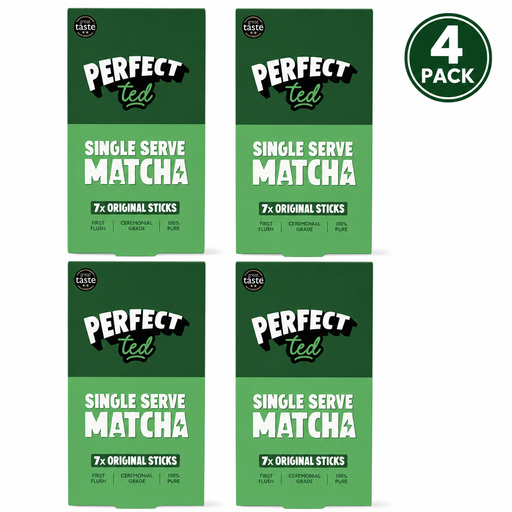 Image unavailable
The 1.5 g sachets offer measured portions of plain matcha for a desk break rather than a flavoured latte blend. Confirm the number of packs in the bundle before ordering, and check the pack for preparation directions, caffeine information and the FAIRTRADE Mark if those affect your choice.
No. Organic status and Japanese origin are separate claims. Fairtrade International advises looking for the FAIRTRADE Mark; if certification is essential, check the exact product or seek product-specific confirmation.
No. Waitrose’s stated policy covers its own-label tea, and M&S’s statement about its tea does not establish the status of every third-party product or café recipe. Check the individual matcha pack or product information.
A pre-measured sachet avoids portioning powder, but follow that product’s mixing directions. Clearspring instructs users to whisk its 1 g Matcha Shot sachet with 30 ml hot water; JING Tea gives different quantities and a 70°C water temperature for its ceremonial matcha.
Check the serving and caffeine information for the matcha you choose, then consider it alongside other caffeinated drinks you have that day. Clearspring estimates approximately 32 mg of caffeine per 1 g of its matcha; do not assume the same figure applies to another powder or latte sachet.