People managing diabetes
Compare sugars, total carbohydrate, sweeteners and the amount you expect to eat with your individual plan. A sugar-free claim does not settle that assessment on its own.


If you want both a mint that fits your diabetes-management plan and Fairtrade certification, check the nutrition panel and the FAIRTRADE Mark on the exact pack separately. “Sugar-free” does not mean carbohydrate-free, while fair-trade wording alone does not confirm certification. For the sugar-free mint shown below, check the pack before treating it as meeting both requirements.
Compare sugars, total carbohydrate, sweeteners and the amount you expect to eat with your individual plan. A sugar-free claim does not settle that assessment on its own.
Look for the FAIRTRADE Mark on the exact mint pack, then assess its nutrition information separately. Ethical sourcing does not indicate its sugar or carbohydrate content.
Check which sweeteners the mints contain and read the pack warning. Excessive consumption of products containing polyols can have a laxative effect.
Start with the amount of mint you would actually use, then assess the nutrition label and Fairtrade certification as separate requirements.
| Priority | What to check | Your needs |
|---|---|---|
| Sugars and carbohydrate | Read sugars and total carbohydrate per 100g and, where stated, per serving. Relate the figures to the number of mints you expect to eat. | I want to assess the amount I would eat against my own diabetes-management plan, rather than rely on “sugar-free” or “diabetic” wording. |
| Sweeteners and frequency | Check the ingredient list for polyols such as sorbitol or xylitol, alongside serving guidance and any warning about excessive consumption. | If I reach for mints throughout the day, I need to consider the pack warning and how I tolerate the product. |
| Fairtrade certification | Look for the FAIRTRADE Mark on the exact pack, as advised by Fairtrade International. Check the nutrition panel independently. | Fairtrade certification matters to me, but I also need the mint’s sugars and carbohydrate information to fit my own requirements. |
Diabetes UK explains that polyols contain carbohydrate and calories. A sugars figure alone therefore cannot tell you how a mint fits your individual plan.
Read total carbohydrate, sugars, ingredients and serving information together. If you adjust insulin for carbohydrate, follow advice from your diabetes healthcare team rather than a general rule for mints.
A reference to fair-trade ingredients does not, by itself, show that the exact mint pack carries the FAIRTRADE Mark.
If certification is essential, check the mark on the exact pack. Assess the nutrition label separately: Oxfam Fair Trade Belgium lists 74.1g sugars per 100g for its organic mint sweets.
Excessive consumption may have a laxative effect. The POLO Sugar Free pack, for example, carries that warning in its Waitrose & Partners listing.
Check the ingredients and warning if you keep mints to hand throughout the day, and reconsider how often you use them if they cause discomfort.
These examples illustrate different label checks; a brand name alone establishes neither Fairtrade certification nor suitability for an individual diabetes-management plan.
The Sugar Free peppermint mints listed by Waitrose & Partners offer an example with sorbitol named as a sweetener.
The Peppermint sugar-free mints listed by Waitrose & Partners name xylitol as their sweetener.
The Mighties Extra Strong Peppermint Sugar Free listing from Sainsbury's gives another mint formulation to compare.
Its Belgian organic mint sweets provide a fair-trade-sourcing example, not a UK mint recommendation for managing sugars.
This peppermint mint is an option to assess when reducing declared sugars matters. Check its carbohydrate information against your own plan and its pack for the FAIRTRADE Mark if you require certification.
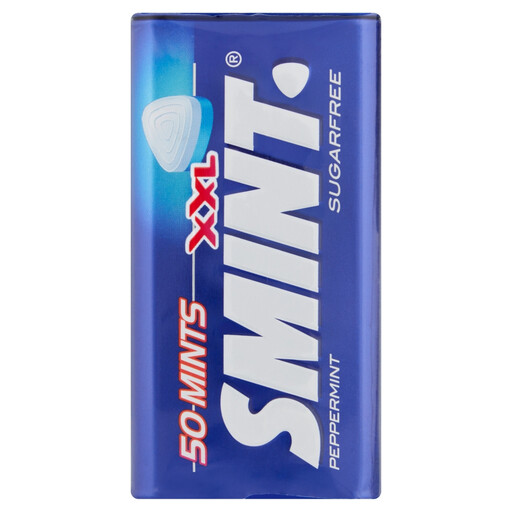 No image available
For a sugar-free peppermint mint, compare the amount you would eat with your own carbohydrate plan. The listing states 0g sugars and 98g carbohydrate per 100g, with 98g polyols per 100g. Its xylitol wording conflicts with the listed ingredients, so check the exact pack before relying on a particular sweetener; also check the pack for the FAIRTRADE Mark if certification is essential. The listing says these mints are not suitable for young children because of a choking risk.
No. Sugar-free describes sugars, not total carbohydrate. Diabetes UK notes that polyols contain carbohydrate and calories, so check the full nutrition panel and the amount you would eat against your individual plan.
Look for the FAIRTRADE Mark on the exact pack, as Fairtrade International advises. General fair-trade wording or a statement about one ingredient should not be treated as confirmation that the mint itself carries the mark.
Excessive consumption of mints containing polyols can have a laxative effect. Check the sweeteners and any pack warning, particularly if you use mints frequently.
No. Diabetes UK does not recommend choosing foods simply because they are described as “diabetic”. Compare the mint’s sugars, total carbohydrate, ingredients and the amount you expect to consume instead.