Choose a Fairtrade-labelled black tea for guests who want a conventional afternoon-tea cup, and offer a decaf black tea as another choice when someone prefers it or wants to reduce caffeine. Check the Fairtrade claim on each exact pack: a familiar brand name or a different sourcing certification does not establish that the tea is Fairtrade. Green tea suits guests who prefer that style, but it is not a caffeine-free substitute.
Who is this for?
Hosts serving a traditional afternoon tea
A Fairtrade-labelled black tea gives guests who expect a conventional brew a familiar choice. Check the pack’s brewing directions and ask about individual preferences rather than assuming everyone wants the same strength.
Hosts offering a decaf choice
A decaf black tea is useful when a guest prefers it or caffeine timing matters to them. Offer it alongside regular tea rather than assuming every older guest needs decaf.
Shoppers comparing Fairtrade claims
If Fairtrade is the reason for buying, check the individual product. The Fairtrade Foundation cautions that shoppers may wrongly assume familiar UK tea brands, including PG Tips, Tetley, Typhoo and Yorkshire Tea, are Fairtrade.
What should you check?
Choose the tea style your guests want, then check the Fairtrade wording and serving details on the pack you intend to use.
| Priority | What to check | Your needs |
|---|
| Fairtrade claim |
Look for the Fairtrade Mark or clear Fairtrade wording on the exact product. Do not treat another sourcing scheme as the same claim. |
I want to know that the tea I serve meets my Fairtrade requirement, rather than relying on the brand’s reputation. |
| Tea style |
Check whether the bags contain black or green tea, and follow that pack’s brewing directions. Clipper lists Fairtrade black, decaf black and green tea products; Waitrose lists a Fairtrade original black-tea blend. |
A conventional black tea will suit guests expecting a traditional cup; I would offer green tea separately to people who prefer it. |
| Caffeine choice |
Check that an alternative is specifically labelled decaf; green tea still contains caffeine. NHS Tayside notes that caffeine can worsen bladder symptoms for some people, while Age UK advises avoiding it close to bedtime when night-time toileting is a concern. |
If a guest prefers less caffeine, I can offer decaf without making that choice for everyone. |
| Current pack details |
Read the pack’s ingredients, allergen information and preparation instructions before serving. Waitrose warns that recipes can change, so an older website listing may differ from the pack. |
For a guest with an allergy or intolerance, I need the information on the pack being served. |
What can go wrong?
-
Assuming a familiar brand is Fairtrade
The Fairtrade Foundation says shoppers may mistakenly make that assumption about several mainstream UK tea brands. A different ethical-sourcing claim does not establish Fairtrade status for a particular tea bag.
Check the Fairtrade Mark or explicit Fairtrade wording on the exact pack before buying.
-
Serving only caffeinated tea
Regular black tea and green tea contain caffeine. NHS Tayside notes that caffeine can worsen bladder symptoms for some people, so a single pot may not suit every guest’s preference.
Ask what guests would like and offer a Fairtrade-labelled decaf black tea alongside regular tea when practical.
-
Preparing green tea like black tea
The Clipper black and green tea products have different preparation directions. Using one method for both may give guests a cup unlike the one they expected.
Read each pack’s instructions and keep the different teas identifiable when serving.
-
Using an old listing for ingredient information
Waitrose warns that product recipes can change. That matters when a guest needs to check ingredients or allergens.
Read the current physical pack before serving and keep it available for the guest to inspect.
Relevant brand references
Clipper
Clipper’s listed Everyday black, Everyday Decaf black and Pure Green tea bags provide different tea styles with product-level Fairtrade wording.
- Clipper Tea Shop states that the tea in each of those listed products is traded in compliance with Fairtrade standards, total 100%.
- Pure Green contains caffeine, so it is not the decaf choice.
Waitrose Essential
Waitrose lists its Essential Original Blend as a box of 160 Fairtrade round black-tea bags, a format to consider when serving several guests.
- Waitrose states that all its own-label tea is 100% Fairtrade.
- Check the current pack for ingredients and allergen information because recipes can change.
Tetley
Tetley is a useful reminder to distinguish a sourcing statement from a Fairtrade claim on an individual product.
- Tata Consumer Products says it sources Tetley teas from Rainforest Alliance Certified farms.
- That statement does not establish that a particular Tetley tea-bag pack is Fairtrade; check the exact pack if Fairtrade is required.
Joybuy tea bags
These Clipper listings offer a decaf black-tea choice and a regular black-tea choice for afternoon tea. Check the Fairtrade wording on the exact pack, particularly the 232g regular-tea pack.
 No image available
Clipper Organic Fairtrade Decaf Everyday 80 Tea Bags, 277g
A decaffeinated black-tea option for guests who prefer decaf or want to reduce caffeine. The listing identifies 80 bags in a 277g pack; check the current pack for brewing directions and ingredient information before serving.
View on Joybuy
 No image available
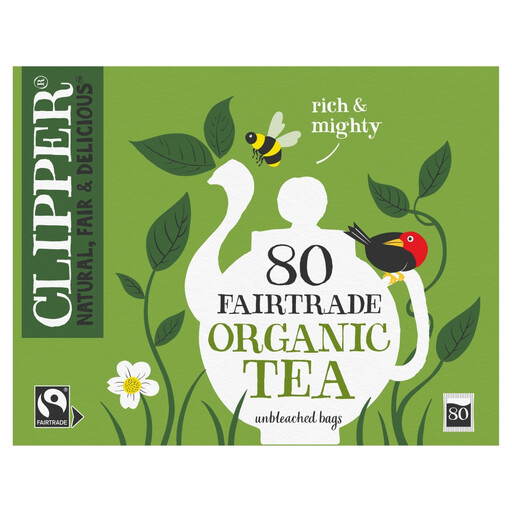
Clipper Organic Fairtrade 80 Tea Bags, 232g
An organically grown black-tea listing for guests who want a conventional afternoon-tea brew. It identifies 80 bags in a 232g pack and makes a Fairtrade claim; check that claim on the exact pack before relying on it, and follow the pack’s brewing directions.
View on Joybuy
Common questions
How can I tell whether tea bags are Fairtrade?
Check the Fairtrade Mark or explicit Fairtrade wording on the exact product pack. The Fairtrade Foundation cautions against assuming that a familiar UK tea brand is Fairtrade without checking its individual product.
Should I offer decaf tea to older guests?
Offer decaf as an additional choice if a guest prefers it or wants to reduce caffeine; age alone does not determine their choice. NHS Tayside notes that caffeine can worsen bladder symptoms for some people, and Age UK advises avoiding it close to bedtime when night-time toileting is a concern.
Is green tea caffeine-free?
No. NHS Tayside lists green tea among drinks containing caffeine. If a guest asks for decaf, choose a tea specifically labelled decaf rather than substituting ordinary green tea.
What if a guest has an allergy or intolerance?
Check the ingredient and allergen information on the current physical pack before serving. Waitrose warns that recipes can change, so its website information should not replace the pack check.


