Dinner-time tea drinkers checking Fairtrade status
If Fairtrade is part of the reason you are buying tea, check the particular pack. The Fairtrade Foundation warned in 2025 that shoppers can wrongly assume familiar UK tea brands are Fairtrade.


If Fairtrade matters to you, choose a tea bag with an explicit Fairtrade claim on the individual pack or product page rather than relying on the brand name. A Fairtrade decaf black tea suits a dinner-time preference for decaf; a Fairtrade standard black tea suits someone who wants a traditional brew without that requirement. Rainforest Alliance certification and Ethical Tea Partnership membership are different sourcing information, not substitutes for a Fairtrade claim.
If Fairtrade is part of the reason you are buying tea, check the particular pack. The Fairtrade Foundation warned in 2025 that shoppers can wrongly assume familiar UK tea brands are Fairtrade.
A decaffeinated black-tea option lets you make decaf and Fairtrade separate checks. Clipper’s Organic & Fairtrade Everyday Decaf product page identifies decaffeinated black tea and states that its tea is traded in compliance with Fairtrade standards.
If another certification might meet your requirements, compare its actual claim with Fairtrade’s. Fairtrade International describes a Minimum Price and Premium for Fairtrade tea; Yorkshire Tea and Typhoo describe Rainforest Alliance-related sourcing for the products or suppliers they discuss.
Choose when: You want decaf with dinner as well as an explicit Fairtrade claim. Clipper describes its Organic & Fairtrade Everyday Decaf as decaffeinated black tea.
Keep in mind: If a particular residual caffeine level matters, check the exact pack for that information.
Choose when: You want a traditional black-tea blend and are not specifically shopping for decaf. Clipper identifies its Organic Fairtrade English Breakfast as a blend of Assam and Ceylon black tea.
Keep in mind: A Fairtrade claim does not establish that a tea is decaffeinated; check both details if you need both.
Choose when: Fairtrade is not a firm requirement and the selected product’s other sourcing claim meets your preference. Yorkshire Tea describes Rainforest Alliance-certified suppliers, while Typhoo labels its Original tea Rainforest Alliance Certified.
Keep in mind: Neither claim makes an individual tea bag Fairtrade without a separate Fairtrade statement.
| Priority | What to check | Your needs |
|---|---|---|
| Fairtrade claim | Look for an explicit Fairtrade claim or FAIRTRADE Mark on the individual pack or product page. Check what the claim covers rather than relying on a brand-wide message. | I want the tea I actually buy to match my Fairtrade priority, not just a familiar brand name. |
| Decaf and blend | Check whether the selected tea says decaffeinated and whether its ingredients identify the blend you want. If a specific caffeine threshold matters, check for a stated amount. | For an after-dinner cup, I may prefer decaf; on another occasion, the particular black-tea blend may matter more. |
| Other sourcing labels | Read the exact certification or programme named on the product. Fairtrade International describes a Minimum Price and Premium for Fairtrade tea; those are Fairtrade-specific mechanisms. | If Fairtrade itself is essential to me, a different sourcing label alone will not answer that need. |
| Pack details | Check the current ingredients, relevant warnings, date marking, storage directions and brewing instructions on the selected pack. | I want to know what is in this particular tea and how to prepare and store it. |
The Fairtrade Foundation identified PG Tips, Tetley, Typhoo and Yorkshire Tea as brands shoppers may wrongly assume are Fairtrade. Brand recognition cannot establish the status of a particular tea.
Check the individual pack or official product page for an explicit Fairtrade claim.
Fairtrade International describes a Minimum Price and Premium for Fairtrade tea. Yorkshire Tea and Typhoo describe Rainforest Alliance-related sourcing; these statements do not establish a Fairtrade claim for their tea.
Decide whether Fairtrade itself is required before considering a product carrying a different sourcing label.
Fairtrade status and decaf status answer different questions. Clipper has a Fairtrade English Breakfast black tea and a separate Organic & Fairtrade Everyday Decaf product.
If you want decaf after dinner, confirm both claims on the exact product you select.
Ingredients and preparation directions belong to the particular blend and format, rather than to tea bags as a whole.
Read the current pack for ingredients, relevant warnings, storage directions and brewing instructions before using it.
These brand examples help distinguish product-level Fairtrade claims from other sourcing information; a brand’s inclusion does not establish the status of every tea it makes.
Clipper identifies specific Fairtrade black-tea options, including English Breakfast and Organic & Fairtrade Everyday Decaf.
Twinings maintains a UK collection labelled Organic & Fairtrade Tea.
An option to consider if Rainforest Alliance-related sourcing, rather than Fairtrade specifically, meets your requirements.
Typhoo describes other sourcing credentials for its Original tea.
Check Tetley products individually when Fairtrade certification is the deciding factor.
Check PG Tips products individually if you require Fairtrade certification.
These two Clipper tea-bag listings cover a decaf-labelled choice and an everyday tea choice for dinner. Check each current pack for the Fairtrade claim and any details that matter to you.
 No image available
Consider this decaf-labelled option if you prefer decaf tea with dinner. The listing names 80 tea bags and 277g; check the current pack’s Fairtrade claim and brewing instructions. If a particular residual caffeine level matters, confirm it before buying.
 No image available
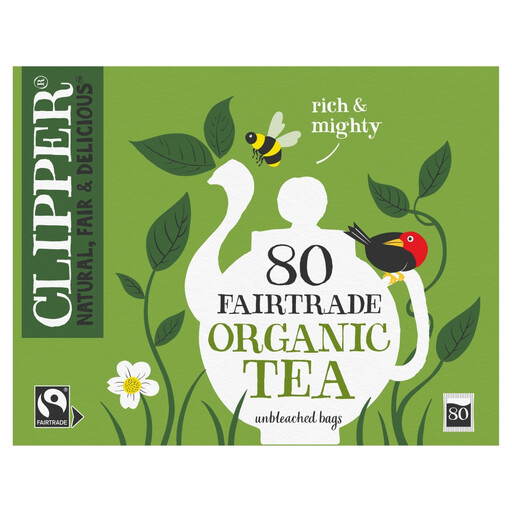
Consider this everyday tea choice when decaf is not a requirement. The listing names 80 tea bags and 232g; check the current pack’s Fairtrade claim, ingredients and brewing instructions. Confirm its decaf status separately if that affects your choice.
Look for an explicit Fairtrade claim or FAIRTRADE Mark on the individual pack or product page. A general sustainability message or familiar brand name is not enough: the Fairtrade Foundation has warned that shoppers may wrongly identify several mainstream UK tea brands as Fairtrade.
Choose a tea that identifies both its Fairtrade status and its decaffeinated format. Clipper’s Organic & Fairtrade Everyday Decaf product page identifies decaffeinated organic black tea and says the tea is traded in compliance with Fairtrade standards. If a specific residual caffeine level matters, check the exact pack for that information.
No: treat them as different claims when choosing tea. Fairtrade International describes a Minimum Price and Premium for Fairtrade tea, while Yorkshire Tea and Typhoo describe Rainforest Alliance-related sourcing. If you require Fairtrade, look for an explicit Fairtrade claim on the selected product.
Check the ingredients, relevant warnings, date marking, storage directions and brewing instructions on the pack you intend to use. These details help you assess that particular blend and prepare and store it as directed.