Fairtrade-first tea drinkers
If Fairtrade status matters more than choosing a familiar name, check the claim on the tea-bag pack you intend to buy.


Choose the type of tea you want for elevenses, then check that the exact pack or its official product page identifies it as Fairtrade; a familiar brand name or a different sourcing credential is not enough. Clipper identifies its Everyday black tea and Pure Green tea as Fairtrade options, while a decaffeinated choice needs both a clear decaf label and its own Fairtrade check.
If Fairtrade status matters more than choosing a familiar name, check the claim on the tea-bag pack you intend to buy.
If your elevenses calls for a full-flavoured black tea, Clipper describes its Fairtrade Everyday 80 Bags as a full, classic blend.
A green tea offers a different flavour from a classic black blend. If you want to avoid caffeine, look for a tea specifically labelled decaffeinated rather than treating green tea as decaf.
Start with the exact pack’s Fairtrade status, then choose the tea type and preparation that fit your break.
| Priority | What to check | Your needs |
|---|---|---|
| Fairtrade status | Look for a Fairtrade claim or Mark applying to the exact pack. Check the individual product page rather than relying on a brand’s other sourcing programme. | I want the tea bags I buy, not just the brand, to meet my Fairtrade preference. Fairtrade International reports that shoppers can mistake familiar UK tea brands for Fairtrade brands. |
| Tea type | Compare the stated black- or green-tea variety and the maker’s flavour description. For green tea, check its brewing directions. | For a classic black-tea elevenses, I would choose a full-flavoured blend; for a different, lighter-tasting cup, I would consider green tea. |
| Decaffeination | Check that the exact tea is labelled decaffeinated, then check its Fairtrade claim separately. Confirm the pack format before ordering. | If I want to avoid caffeine at tea time, a standard black or green tea is not a substitute for a clearly labelled decaf option. |
| Bag disposal | Read the pack’s bag-material and disposal instructions. Check what your local food-waste collection accepts. | I want to know where the used bags can go rather than assuming a biodegradable claim settles the local disposal rules. |
Yorkshire Tea describes Rainforest Alliance-certified suppliers, while Twinings describes its Sourced with Care programme. Neither statement on its own confirms Fairtrade status for a particular tea-bag pack.
If Fairtrade is essential to your purchase, check the exact pack for a Fairtrade claim or Mark.
Clipper describes its Fairtrade Everyday tea as a full, classic blend. Its Pure Green tea is a different style, with different manufacturer brewing guidance.
Choose black tea for the classic cup described by Clipper, or green tea if that style appeals; read the directions for the product you buy.
Clipper describes its bags as biodegradable, but acceptance by household food-waste collections depends on the local service.
Follow the pack guidance and check your local collection rules before putting used bags in the food-waste bin.
These brand statements help distinguish product-level Fairtrade claims from other sourcing approaches; they do not establish the status of every pack a brand sells.
Clipper’s own product pages identify Fairtrade options in both its Everyday black tea and Organic Pure Green tea ranges.
Twinings has an Organic & Fairtrade collection and separately describes Sourced with Care as its responsible-sourcing programme.
Yorkshire Tea says its tea comes from Rainforest Alliance-certified suppliers.
These Clipper listings offer a decaffeinated black tea and an everyday black tea for a routine tea break. Both listings name Fairtrade, but if certification is essential, confirm the claim on the exact pack or applicable official product page before buying.
 No image available
For an elevenses when you want decaffeinated black tea, this is the decaf option in the selection. The listing names Fairtrade; check that claim against the exact pack or an applicable official product page if certification is a requirement.
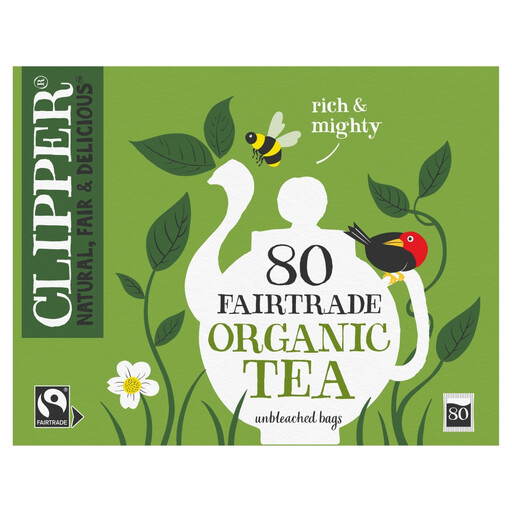 No image available
For a routine black-tea elevenses rather than a decaf cup, consider this listed blend. The listing names Fairtrade; check the exact pack or an applicable official product page if certification is essential.
No. Fairtrade International reports that shoppers can mistakenly assume familiar UK brands, including PG Tips, Tetley, Typhoo and Yorkshire Tea, are Fairtrade. Check the exact pack or its official product page instead of relying on the brand name.
Not necessarily. The Fairtrade Foundation explains that, under mass balance, the amount sold as Fairtrade must match the amount bought on Fairtrade terms. If physical traceability matters to you, check what the specific product says about its sourcing.
For Clipper Organic Fairtrade Pure Green Tea, Clipper recommends boiling fresh water, letting it cool for a minute and infusing the bag for 1–3 minutes. Follow the directions on the pack you buy if you choose a different green tea.
Check both claims on the exact product: it should be identified as decaffeinated and as Fairtrade. Confirm the current pack details before ordering rather than assuming that a brand’s standard tea and decaf tea have the same certification.