Hosts who require Fairtrade tea
If the certification claim matters as much as serving a conventional tea with scones, start with the individual black-tea pack. A brand selling Fairtrade tea does not establish the status of every infusion it makes.


If a FAIRTRADE Mark is essential, choose a black tea with a product-specific Fairtrade claim for the cream-tea table rather than assuming a fruit infusion qualifies. A fruit infusion offers a different drink for guests who prefer fruity flavours or want to avoid caffeine; check its individual pack for the certification claim, ingredients and caffeine wording.
If the certification claim matters as much as serving a conventional tea with scones, start with the individual black-tea pack. A brand selling Fairtrade tea does not establish the status of every infusion it makes.
A fruit-led infusion is a separate choice from black tea. If avoiding caffeine matters, check that the particular blend is labelled caffeine-free rather than relying on a fruity product name.
The FAIRTRADE Mark, organic wording, Fair for Life wording and a Fairtrade mass-balance statement convey different information. Read the claim on the product you intend to serve.
Decide whether the essential requirement is a Fairtrade claim, a fruit-led drink or both drinks for different guests. Then check the exact packs rather than transferring a claim from one product in a range to another.
Choose it when: You want conventional black tea with a product-specific Fairtrade claim alongside the scones.
Bear in mind: Black tea is not a fruit infusion; the Tesco listing for Clipper Fairtrade Everyday Tea also explains that its Fairtrade tea may be mixed with non-certified tea on a mass-balance basis.
Choose it when: A fruit-led drink is the priority, particularly if the specific pack confirms it is caffeine-free.
Bear in mind: Fruit flavour, organic wording or another ethical label does not establish that the infusion bears the FAIRTRADE Mark.
| Priority | What to check | Your needs |
|---|---|---|
| Fairtrade claim | Look for the FAIRTRADE Mark or a product-specific Fairtrade statement. Read any mass-balance wording rather than assuming the tea was kept physically separate. | I want to know whether the particular pack meets my Fairtrade requirement, not just whether its maker sells other Fairtrade products. |
| Drink type | Check whether the ingredients include black tea or instead form a fruit and herbal infusion. If caffeine matters, check the claim on that blend. | A fruity drink would give guests another option, but I would not expect it to taste like conventional black tea. |
| Serving several guests | Compare bag counts and pack weights, then read each pack’s brewing directions. Choose the number of bags according to the drinks you plan to offer. | I need enough of the chosen drink for the gathering, with clear instructions for preparing it. |
Fairtrade International says products bearing its FAIRTRADE Marks meet Fairtrade Standards. The Tesco listing for Pukka Morning Berry uses Fair for Life wording, which should not be read as a FAIRTRADE Mark claim.
If Fairtrade certification is a requirement, inspect the claim on the exact pack rather than relying on organic wording or the brand’s wider range.
Twinings describes fruit tea as an infusion without Camellia sinensis tea leaves. It is therefore a different choice from conventional black tea at a cream tea.
Decide whether guests need black tea, a fruit infusion or a choice of both before selecting packs.
Tesco’s listing for Clipper Fairtrade Everyday Tea says Fairtrade tea may be mixed with non-certified tea on a mass-balance basis. A Fairtrade claim should not automatically be interpreted as physical separation.
Read the product’s Fairtrade wording if that distinction matters to you.
These examples distinguish particular black teas and fruit infusions; they do not establish the certification status of every product from a brand.
Clipper’s Fairtrade tea range and its fruit-infusion range serve different shopping needs.
Sainsbury’s Red Label is a black-tea option for hosts seeking a stated Fairtrade claim.
Pukka Morning Berry is a fruit-led herbal-infusion example for guests seeking a different drink from black tea.
Twinings describes its fruit teas as infusions without Camellia sinensis tea leaves.
These options cover two ways to serve drinks at a cream tea: a fruit-infusion assortment and an organic Fairtrade-labelled black tea. Check each pack against the requirement that matters to you.
 No image available
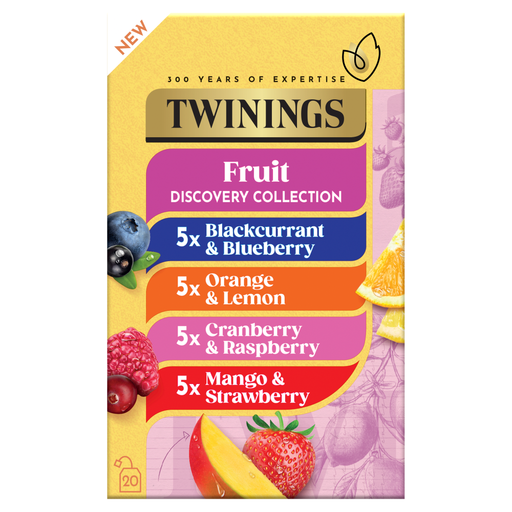
A fruit-infusion option for guests who would prefer something other than conventional black tea. The pack contains 20 bags and weighs 40 g; check its individual Fairtrade claim, caffeine wording and brewing directions if those details matter to your choice.
 No image available
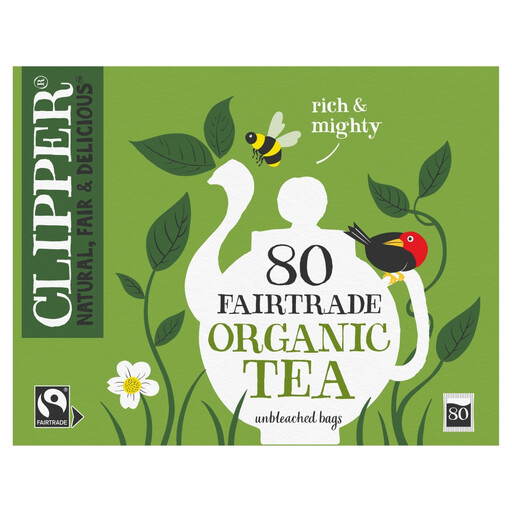
A black-tea option for serving a conventional brew alongside scones, rather than a fruit infusion. The pack contains 80 bags and weighs 232 g; check the exact pack’s Fairtrade Mark or product-specific claim, any mass-balance wording and its brewing directions.
No. Check the exact infusion for a FAIRTRADE Mark or product-specific claim. Fairtrade International says products bearing its Marks meet Fairtrade Standards; a claim on another tea from the same brand does not establish the infusion’s status.
Not necessarily. Twinings describes its fruit tea as an infusion without Camellia sinensis tea leaves. A fruit-flavoured black tea is a different product type, so check the ingredients and caffeine wording when choosing for guests.
Choose black tea with a product-specific Fairtrade claim, and offer a fruit infusion separately if guests would like another drink. Sainsbury’s lists its Red Label tea as “Black Tea 100% Fairtrade”; Tesco lists Clipper Fairtrade Everyday Tea as black tea and provides a mass-balance explanation.
Follow the directions on each pack rather than assuming the methods are identical. Check the recommended brewing time when planning to prepare several cups together.
Check the ingredients and allergens, pack quantity, date marking, brewing instructions and the precise certification wording. UK government food-labelling guidance identifies ingredient and allergen information and best-before or use-by dates among prepacked-food label details.