Older adults who want an everyday Fairtrade tea
A regular black-tea bag may suit someone who wants an everyday brew and has no reason to reduce caffeine. Check the Fairtrade statement for the specific product rather than relying on the brand name.


For an older adult who wants Fairtrade tea, check the exact pack or product listing for Fairtrade wording; Clipper lists both regular and decaf black-tea options with product-level statements. Decaf is the route to consider when reducing caffeine is part of the person's care plan, but it does not replace advice about tea and iron-focused meals. University Hospitals Coventry and Warwickshire NHS Trust advises people following its iron-deficiency dietary guidance not to drink tea with a meal or within one hour before or after it.
The choice changes according to whether Fairtrade status, caffeine reduction or tea-drinking time is the immediate concern.
A regular black-tea bag may suit someone who wants an everyday brew and has no reason to reduce caffeine. Check the Fairtrade statement for the specific product rather than relying on the brand name.
Where sleep or continence needs make caffeine reduction relevant, a Fairtrade decaf tea offers a different choice from regular black tea. Decaf is not a requirement for every older adult.
For someone following iron-deficiency dietary advice, when tea is served matters as well as which tea is bought. University Hospitals Coventry and Warwickshire NHS Trust advises keeping tea at least one hour away from meals.
Start with the Fairtrade wording on the exact tea, then choose between regular and decaf according to caffeine needs. If iron-deficiency dietary advice applies, plan when either tea will be served.
| Priority | What to check | Your needs |
|---|---|---|
| Fairtrade status | Look for the FAIRTRADE Mark or an explicit Fairtrade statement for the exact product. Check the variant and pack size, not just the brand or range name. | I want the tea I buy to meet my Fairtrade requirement, rather than assuming another certification means the same thing. |
| Caffeine | Check whether the product is regular or decaf black tea. If strict caffeine avoidance is necessary, check the pack information and follow individual clinical advice. | If reducing caffeine is part of a sleep or continence care plan, I need a decaf option that also meets the Fairtrade requirement. |
| Meal timing | For someone following iron-deficiency dietary advice, keep tea at least one hour before or after meals. This check applies when considering regular or decaf tea; it is not a reason to select one over the other. | I need to plan a tea break away from meals rather than treating a switch to decaf as a change to iron-related dietary advice. |
Yorkshire Tea and Typhoo describe Rainforest Alliance-certified sourcing for their tea. That does not establish Fairtrade status for a particular pack.
If Fairtrade is a purchase requirement, check the exact pack or official product listing for Fairtrade wording or the FAIRTRADE Mark.
University Hospitals of Leicester NHS Trust's Elderly and Continence Service discusses switching to decaffeinated tea, while NHS Nottingham and Nottinghamshire identifies sleep and continence among caffeine-related care considerations.
Where reducing caffeine is part of the person's care plan, compare Fairtrade decaf tea with regular tea and follow their individual care advice.
University Hospitals Coventry and Warwickshire NHS Trust says drinking tea with a meal can greatly decrease iron absorption for someone following its iron-deficiency dietary advice.
In that situation, serve tea at least one hour before or after meals, whether the chosen tea is regular or decaf.
Clipper listings include different regular and decaf variants and pack sizes. A statement for one variant should not be assumed to describe another.
Before checkout, compare the product page and pack for the tea type, bag count, ingredients and Fairtrade wording.
Brand ranges can point towards products to inspect, but the Fairtrade decision belongs to the specific tea bag and pack.
A place to compare product-level Fairtrade statements for regular and decaf black tea.
Twinings has an Organic & Fairtrade tea collection covering tea bags and loose-leaf tea.
An option to assess if Fairtrade is a preference rather than a required certification.
A tea brand to consider separately from a Fairtrade-only shortlist.
These Clipper listings provide a decaf and a regular black-tea option for shoppers comparing Fairtrade tea bags. Choose the tea type according to the person's caffeine needs, and check the exact pack details before buying.
 No image available
A decaf black-tea option when reducing caffeine is part of the person's care plan. The Joybuy listing describes an 80-bag pack of organically grown black tea in plastic-free, unbleached bags and states that the tea is 100% Fairtrade. If strict caffeine avoidance is necessary, check the pack and follow clinical advice. Decaf does not replace iron-related meal-timing advice.
 No image available
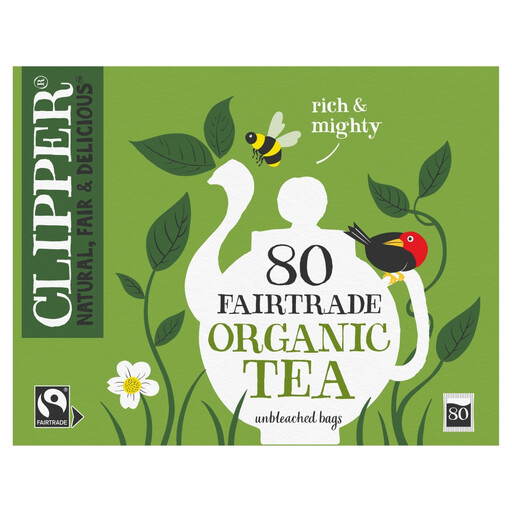
A regular black-tea option for someone who wants an everyday Fairtrade tea and does not need a decaf choice. The Joybuy listing identifies an 80-bag, 232g pack of organically grown black tea and describes it as Fairtrade. If caffeine reduction is relevant, check the tea's caffeine information and individual care advice. Keep tea away from meals when following iron-deficiency dietary advice.
No. Rainforest Alliance and Fairtrade are different schemes. Yorkshire Tea says it sources from Rainforest Alliance-certified suppliers; if Fairtrade is required, check the exact tea pack or product listing for Fairtrade wording or the FAIRTRADE Mark.
No. Decaf is worth considering when reducing caffeine is relevant to that person's sleep, continence or care plan. The choice between regular and decaf tea should reflect their circumstances and any individual clinical advice, not age alone.
University Hospitals Coventry and Warwickshire NHS Trust advises people following its iron-deficiency dietary guidance not to drink tea with meals or within one hour before or after them, because tea with a meal can greatly decrease iron absorption. Follow any individual medical or dietetic advice as well.
Do not treat decaf as a substitute for iron-deficiency dietary advice. Choose decaf for a relevant caffeine-reduction need, and continue to keep tea away from meals when following the meal-timing guidance from University Hospitals Coventry and Warwickshire NHS Trust.