What should you check before buying?
Decide whether you need a claim for the finished sweet or want to choose Fairtrade ingredients for a home-made dessert. Then check the pack, the guests’ ingredient needs and, where relevant, the rules for the setting.
| Priority |
What to check |
Your needs |
| Certification scope |
Inspect the mark on the actual pack. The Fairtrade Foundation says the classic FAIRTRADE Mark covers ingredients that can be Fairtrade-certified; its FSI Mark identifies one Fairtrade-sourced ingredient. Read any accompanying ingredient wording. |
I want to describe the party sweet accurately, without treating a Fairtrade cocoa claim as a claim about every ingredient. |
| Finished sweet or recipe ingredient |
Check whether the item is ready to serve or is sugar, cocoa or chocolate for a recipe. Waitrose & Partners lists Fairtrade golden caster and granulated sugar; choosing a labelled ingredient does not certify the finished dessert. |
I can make the dessert myself if I can identify the Fairtrade ingredients and explain what went into the food I serve. |
| Guest information |
Read the current ingredients and allergen information, and retain the packaging until the food is served. For a home-made item, keep track of the recipe ingredients and possible cross-contact. |
Guests or their carers need to be able to check ingredients before accepting a sweet or a slice of dessert. |
| School setting |
Establish whether food is being provided under a school-food arrangement and check the school’s policy. England’s Requirements for School Food Regulations 2014 include non-chocolate confectionery and chocolate products in their definition of confectionery. |
For a school celebration in England, I need to check food suitability separately from its Fairtrade claim. |
Relevant brand and retailer references
These references may help when choosing ingredients or a chocolate-based alternative; a retailer’s or brand’s wider Fairtrade activity does not establish the claim on an individual toffee product.
Waitrose
Waitrose & Partners lists Fairtrade golden caster sugar and golden granulated sugar, providing ingredient options for a home-made toffee-style dessert.
- Its Fairtrade range provides labelled sugar options to check for a recipe.
- Its ingredient sourcing statement does not establish that an individual ready-made toffee carries a FAIRTRADE Mark.
M&S
Fairtrade International identifies Fairtrade cocoa use in M&S chocolate ranges, which may be relevant if chocolate suits the party instead of conventional toffee.
- The stated cocoa sourcing gives shoppers a specific ingredient claim to look for on a chocolate pack.
- It does not establish that every M&S chocolate, caramel or toffee sweet has the same certification scope.
Sainsbury’s
Sainsbury’s has a Fairtrade shopping category featuring products including bananas, coffee and cashew nuts.
- Its category provides a starting point for checking individual Fairtrade-labelled products.
- A category listing is not a Fairtrade claim for a particular toffee; inspect the product pack.
Divine
Fairtrade International describes Divine as a Fairtrade, farmer-owned chocolate company. Its chocolate is relevant if the birthday treat can be chocolate rather than toffee.
- The brand is a chocolate reference for shoppers considering a different type of party sweet.
- The brand description does not identify a specific Divine toffee product or replace a check of an individual pack.
Joybuy options for party sweets and ingredients
These options include chocolate-and-toffee-style sweets to check as finished treats, plus sugar and cocoa for making a dessert. Check each current pack for the Fairtrade mark and the precise ingredient claim before describing a finished product as certified.
 No image available
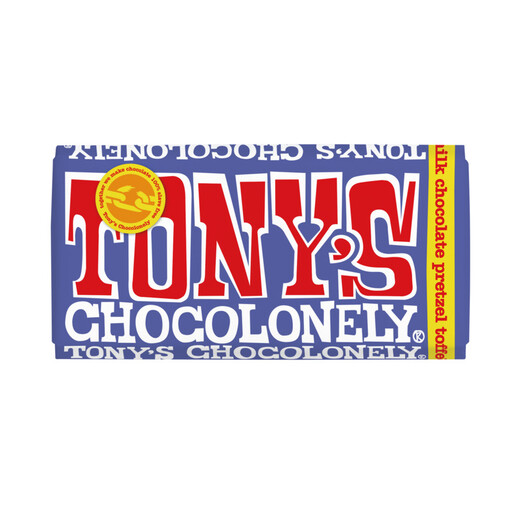
Tony’s Chocolonely Milk Chocolate, Pretzel & Toffee 180g
A chocolate bar with pretzel and toffee for a party where a finished sweet suits the setting. The product description identifies Fairtrade-sourced sugar and cocoa ingredients; check the current pack’s mark before making a claim about the whole bar. It lists milk, soya and wheat, with possible eggs, nuts and peanuts, so check the pack before sharing.
View on Joybuy
 No image available
Tony’s Chocolonely Milk Chocolate Caramel Sea Salt 180g
This is a caramel-and-chocolate party sweet, rather than a product identified as toffee. Its description names Fairtrade-sourced sugar and cocoa ingredients; confirm the mark and claim on the current pack. The product information lists milk and soya and warns of possible gluten-containing cereals, eggs, nuts and peanuts.
View on Joybuy
 No image available
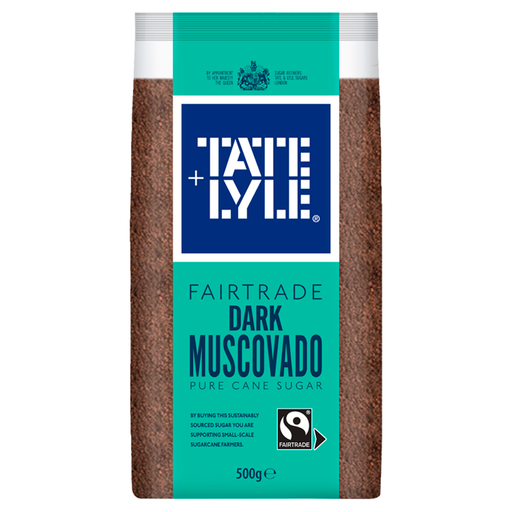
Tate & Lyle Fairtrade Dark Muscovado Sugar 500g
Dark muscovado sugar is an ingredient option for a home-made toffee-style dessert, not a ready-made party sweet. Check the Fairtrade claim on its current pack; using this sugar alone does not certify the finished recipe.
View on Joybuy
 No image available
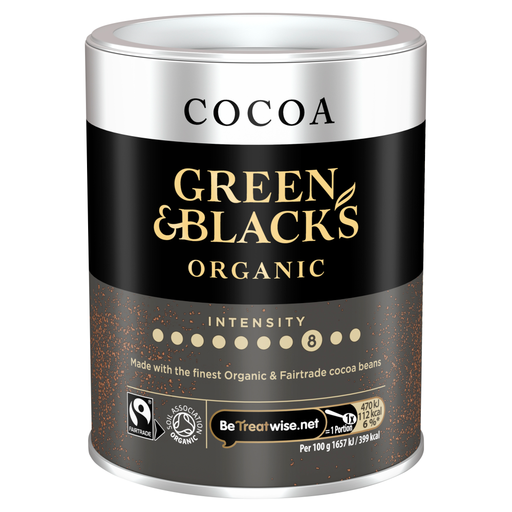
g&B Organic Cocoa 125g
Cocoa powder is an ingredient for a home-made chocolate-and-toffee-style dessert, not a finished sweet. The product description makes a Fairtrade cocoa claim; check its wording and mark on the current pack rather than applying that claim to the finished recipe. The product information warns that it may contain milk.
View on Joybuy
Common questions
Is a toffee Fairtrade because its retailer sells other Fairtrade products?
No. Check the individual toffee pack rather than the retailer’s wider range. The Fairtrade Foundation distinguishes a classic FAIRTRADE Mark from an FSI Mark for a named Fairtrade-sourced ingredient, so the wording on the product matters.
What do the classic FAIRTRADE and FSI marks mean on a chocolate sweet?
According to the Fairtrade Foundation, the classic FAIRTRADE Mark indicates that ingredients which can be Fairtrade-certified are covered; the Fairtrade Sourced Ingredient (FSI) Mark indicates one Fairtrade-sourced ingredient. Read the pack to identify that ingredient instead of assuming the two marks make the same claim.
Can I provide Fairtrade toffee at a school birthday celebration in England?
Check whether the food is being provided under school-food arrangements and ask the school what its policy permits before buying it. England’s Requirements for School Food Regulations 2014 define confectionery to include non-chocolate confectionery and chocolate products; Fairtrade status does not remove the need to check the applicable food rules.
Do England’s HFSS promotion rules ban buying toffee?
No. Department of Health and Social Care guidance describes restrictions on certain promotions and placements by covered businesses selling to England, not a general ban on consumers buying sweets. Whether a particular toffee falls within an HFSS product category requires assessment of that product; do not infer it from the word “toffee” alone.
How should I check allergens before serving party sweets?
Read and retain the current product packaging so guests or carers can check the ingredients and allergen information. For a home-made dessert, keep a record of its ingredients and consider cross-contact during preparation. The Food Standards Agency requires food businesses selling food prepacked for direct sale in England, Wales and Northern Ireland to provide a full ingredients list with allergenic ingredients emphasised; a home-made party recipe should not be presented as allergen-free without substantiation.


