Which brands are relevant?
These brand and retailer references help distinguish chocolate, toffee and ingredient-sourcing claims; check the individual product before buying for the coffee morning.
Divine Chocolate
A chocolate option when a Fairtrade claim and a shareable format matter more than serving plain toffee.
- Divine Chocolate says its 100-pack of milk-chocolate mini bars uses Fairtrade cocoa and sugar.
- Chocolate, including a caramel-flavoured variant, should not be presented as traditional plain toffee; check the chosen pack's ingredients and allergen statements.
Waitrose
An own-label confectionery reference for shoppers comparing cocoa-sourcing statements with product-level claims.
- Waitrose says the cocoa used in its own-label confectionery has been Fairtrade since 2020.
- A cocoa-sourcing statement does not establish that every ingredient in a particular toffee or caramel product carries a Fairtrade claim. Check its pack.
M&S
A chocolate reference when the coffee morning can use chocolate instead of toffee.
- M&S describes its 85% dark chocolate bar as Fairtrade. Its Fairtrade educational material says M&S block chocolate has used Fairtrade cocoa from February 2025.
- Those statements do not establish a Fairtrade claim for a separate M&S toffee product.
Thorntons
A reference for traditional Special Toffee and chocolate-coated toffee formats.
- Thorntons lists Special Toffee, including a chocolate-coated version.
- Check the exact pack for a qualifying mark before describing a Thorntons toffee as Fairtrade.
Werther's Original
A reference for creamy toffee and other caramel sweets when the traditional format takes priority.
- Werther's Original lists Creamy Toffees among its products.
- The brand says its products use dairy ingredients. Check the chosen pack for its allergens and for any Fairtrade claim.
Tesco
A retailer where shoppers can inspect individual Fairtrade-labelled groceries rather than assume a toffee qualifies.
- Tesco lists products in its Fairtrade search results.
- A search result does not establish the claim, ingredients or format of another product; inspect the individual listing and pack.
Sainsbury's
A retailer with a Fairtrade category and a separate policy addressing cocoa sourcing.
- Sainsbury's provides a Fairtrade shopping category and publishes a cocoa-sourcing policy.
- Neither a category nor a cocoa policy certifies a particular toffee. Read the individual product's mark and ingredients.
Joybuy options for the coffee morning
These options cover caramel-containing chocolate to serve as an alternative to plain toffee, and Fairtrade sugar for a homemade toffee-style bake. Check the chocolate pack's exact Fairtrade mark if the event requires a claim covering all eligible ingredients.
 No image available
Tony's Chocolonely Fairtrade Milk Chocolate Caramel Sea Salt 180g
A 180g chocolate bar with caramel pieces and sea salt for hosts willing to serve chocolate instead of plain toffee. Check the exact pack's Fairtrade mark before making a claim about all eligible ingredients. The product description lists milk and soya and says it may contain cereals containing gluten, eggs, nuts and peanuts; check the current pack before serving.
Joybuy
 No image available
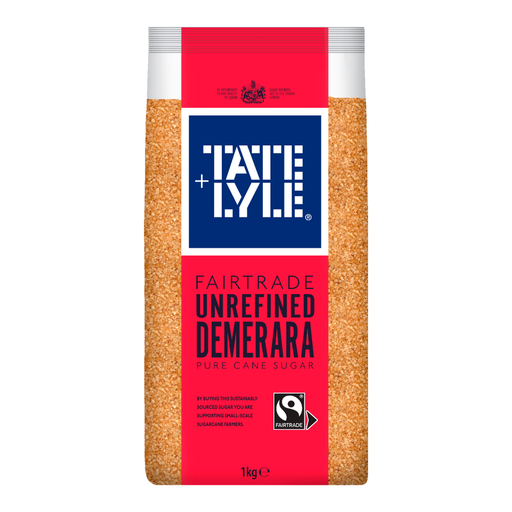
Tate & Lyle Fairtrade Demerara Sugar 1000g
Fairtrade cane sugar for a homemade bake rather than a ready-to-serve sweet. Using it does not, by itself, certify the finished food. The product description says it is packed in a factory that also handles peanuts and nuts; check the current pack if that matters for your guests.
Joybuy
Questions about Fairtrade and serving
Does a Fairtrade mark mean every ingredient is Fairtrade?
Not necessarily. The Fairtrade Foundation says the classic FAIRTRADE Mark means all ingredients that can be Fairtrade-certified are certified; a mark or claim naming one Fairtrade-sourced ingredient has a narrower meaning. Read the wording on the exact pack.
Can I describe Thorntons or Werther's Original toffee as Fairtrade?
Only if the particular product carries a qualifying Fairtrade claim. Thorntons and Werther's Original describe toffee products, but brand familiarity or a shop's wider Fairtrade range does not establish certification for an individual sweet.
What can I serve if chocolate is acceptable instead of plain toffee?
Chocolate containing caramel is one option, provided you describe it as chocolate and check its exact Fairtrade claim. Divine Chocolate says its mini milk-chocolate bars use Fairtrade cocoa and sugar; the format may also suit a help-yourself table.
What allergen information should I keep available?
Keep the current pack for each sweet so guests can read its ingredients and precautionary statements before eating. If the coffee morning is run by a food business, the Food Standards Agency says food business operators must provide allergen information for both prepacked and non-prepacked food.
Does Fairtrade sugar make homemade toffee Fairtrade-certified?
No: using Fairtrade sugar establishes a claim about that ingredient, not certification of the finished sweet. You can say that you used Fairtrade sugar if the ingredient pack supports it, while keeping the full recipe information available to guests.


