For an occasional school-holiday treat at home, choose caramel or toffee-style chocolate by checking the Fairtrade mark on the exact pack and reading which ingredients the claim covers. Fairtrade certification does not change its role as confectionery: consider the portion and allergens, and check the school’s own rules before sending any treat to an activity.
Who is this choice for?
Families choosing an occasional holiday treat
If a caramel or toffee flavour matters alongside Fairtrade sourcing, compare the claim on the exact chocolate bar rather than relying on the brand name. Keep the serving decision separate from the sourcing claim.
Parents planning snacks around school activities
A treat eaten at home is a different decision from food taken into school. Check the school’s current rules for the particular activity before packing or supplying confectionery.
Households checking food allergens
Caramel-chocolate products can have different ingredients and precautionary allergen statements. Read the label for the exact flavour and pack size before sharing it with a child who has an allergy or intolerance.
What should you check before buying?
Start with the sourcing claim, then decide whether the pack and setting suit the occasion. Neither a Fairtrade mark nor a caramel flavour answers the portion, allergen or school-policy questions.
| Priority |
What to check |
Your needs |
| Fairtrade claim |
Read the mark and adjacent wording on the exact pack. The Fairtrade Foundation says the classic FAIRTRADE Mark covers all ingredients that can be Fairtrade-certified; a Fairtrade Sourced Ingredient claim identifies a named ingredient. |
I want to know whether the claim covers the certifiable ingredients generally or only a particular ingredient, such as cocoa. |
| Snack occasion |
Compare pack sizes and nutrition on a consistent per 100g basis, then decide how much to serve. NHS Healthier Families identifies fruit and vegetables as the preferred choice for children’s usual snacks. |
For an at-home holiday treat, I can choose a serving without treating chocolate as the default snack throughout the day. |
| Ingredients and allergens |
Read the current ingredient list and both the contains and may-contain statements for the exact variant. Check again if the flavour or pack changes. |
Before sharing a bar, I need to know whether its ingredients and precautionary statements fit the child’s allergy requirements. |
| School setting |
Check whether the food will be eaten at home, brought into school or provided at a school activity. Read the school’s current food and allergy policies for that setting. |
If I am packing a treat or supplying food for an event, I need the school’s answer before buying it for that purpose. |
Common buying mistakes
-
Reading Fairtrade as a nutrition claim
Fairtrade describes certified sourcing, not how often to serve confectionery. NHS Healthier Families identifies fruit and vegetables as the preferred choice for children’s usual snacks.
Choose a caramel or toffee-style chocolate as an occasional treat, and make the everyday snack decision separately.
-
Assuming every ingredient is covered by the same claim
The Fairtrade Foundation distinguishes the classic FAIRTRADE Mark from a Fairtrade Sourced Ingredient claim for a named ingredient. The distinction matters if you specifically want to check sugar as well as cocoa.
Read the symbol and its wording on the product itself, including which ingredients are named.
-
Buying for school before checking its rules
Guidance on food provided in schools differs across the UK, and it does not by itself establish what a child may bring in. Welsh local-government guidance also notes that food brought for personal consumption can be restricted by the local authority or governing body.
Check the school’s written policy for the activity, and ask the school before buying confectionery to share with a group.
-
Using the flavour name as an allergen check
A caramel flavour or Fairtrade claim does not describe the full ingredient list or precautionary allergen statements.
Read the current label for the exact product and follow the child’s allergy plan and the school’s allergy policy where applicable.
Relevant brand references
These brand examples show different caramel-chocolate formats and sourcing statements; check the individual product rather than extending one bar’s details across a range.
Tony’s Chocolonely
Tony’s Chocolonely offers milk chocolate with caramel and sea salt as a Fairtrade-labelled caramel-style option.
- Its UK product page names Fairtrade cocoa and sugar for the 180g caramel sea salt bar.
- It remains milk-chocolate confectionery; read the exact pack for ingredients, allergens and serving information.
Divine Chocolate
Divine lists a 90g milk-chocolate bar with salted caramel.
- Divine Chocolate describes this bar as made with Fairtrade cocoa and sugar.
- Check the bar’s own allergen and nutrition labels before choosing it for a child or sharing it.
Chocolate and Love
Chocolate and Love lists a 55% dark-chocolate bar with caramel and sea salt for shoppers considering dark rather than milk chocolate.
- The brand describes its chocolate range as Fairtrade.
- Check the individual caramel-and-sea-salt pack for its mark, ingredients, nutrition and allergens rather than relying on the range description.
Joybuy caramel and toffee-style chocolate options
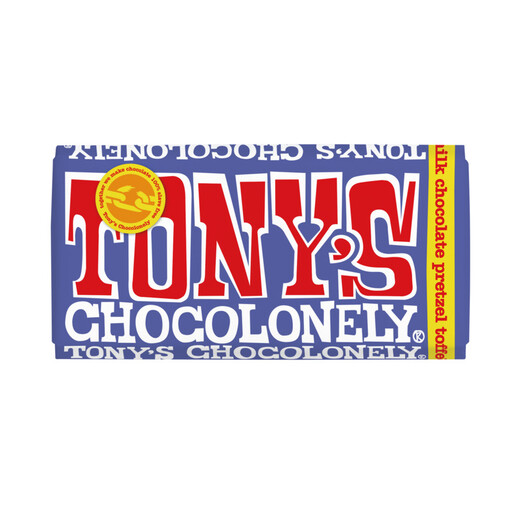
These two 180g Tony’s Chocolonely bars offer a pretzel-and-toffee flavour or a caramel-and-sea-salt flavour for an occasional treat at home. Check the exact pack before choosing either one for its Fairtrade claim, ingredients or allergens.
 No image available
Tony’s Chocolonely Milk Chocolate, Pretzel & Toffee 180g
For an occasional toffee-style treat at home, this 180g milk-chocolate bar combines pretzel and toffee. Decide how to portion a larger bar, and check the exact pack’s Fairtrade wording and allergen statements before sharing it.
View on Joybuy
 No image available
Tony’s Chocolonely Fairtrade Milk Chocolate Caramel Sea Salt 180g
For an occasional caramel-style treat at home, this 180g milk-chocolate bar pairs caramel with sea salt. Tony’s Chocolonely names Fairtrade cocoa and sugar for its caramel sea salt bar; read the current pack’s mark, portion information and allergen statements before buying to share.
View on Joybuy
Questions about treats and school
Does Fairtrade make caramel chocolate an everyday snack?
No. Fairtrade certification concerns sourcing, not the nutritional role of a chocolate bar. NHS Healthier Families identifies fruit and vegetables as the preferred choice for children’s usual snacks; treat caramel chocolate as a separate, occasional choice.
How can I check a chocolate bar’s Fairtrade claim?
Read the mark and wording on the exact pack. The Fairtrade Foundation says the classic FAIRTRADE Mark indicates that all ingredients eligible for Fairtrade certification are certified, whereas a Fairtrade Sourced Ingredient claim identifies a named ingredient.
Can I send Fairtrade chocolate to school?
Do not assume that a Fairtrade mark determines whether a treat may be brought in. England’s Department for Education guidance addresses food provided in state-funded schools, while the other UK nations have their own school-food frameworks; rules for food brought in can also depend on the school. Check its current policy for the activity and its allergy requirements before sending confectionery.
What should I check before sharing caramel chocolate with a child?
Read the exact pack’s ingredient list and contains and may-contain allergen statements, even if you have bought the brand before. A different flavour or pack may have different information; follow the child’s allergy plan where one applies.


