Fairtrade-first afternoon-tea hosts
If a Fairtrade claim is a requirement, look for it on the specific sweet. A retailer’s wider Fairtrade range or a caramel flavour does not establish the status of an individual product.


If a Fairtrade claim is essential, choose a product that states it on the exact pack rather than assuming conventional toffee qualifies. Tony’s Chocolonely has a Fairtrade-certified chocolate bar with toffee pieces, while Divine Chocolate specifies Fairtrade cocoa and sugar in a salted-caramel bar; neither is standalone chewy toffee, and both require an allergen check before serving.
The deciding question is whether the Fairtrade claim, the familiar chewy texture or the needs of guests should determine the sweet you serve.
If a Fairtrade claim is a requirement, look for it on the specific sweet. A retailer’s wider Fairtrade range or a caramel flavour does not establish the status of an individual product.
A chocolate bar with toffee pieces offers a different texture from chewy toffee. A salted-caramel chocolate bar is another option if caramel, rather than toffee pieces, suits the tea table.
Check the current pack for declared ingredients and “may contain” statements before serving. The chocolate-and-toffee products discussed here involve milk and other product-specific allergen considerations.
Start with the exact product’s Fairtrade statement, then choose the format your guests expect and check the pack before serving.
| Priority | What to check | Your needs |
|---|---|---|
| Fairtrade claim | Check the mark or statement on the exact product and identify which ingredients it covers. The Fairtrade Foundation distinguishes the classic Fairtrade Mark, covering all ingredients that can be Fairtrade certified, from a Fairtrade Sourced Ingredient Mark for a specified ingredient. | I want the Fairtrade claim to be clear on the sweet I serve, not inferred from its brand, retailer or flavour. |
| Sweet and texture | Distinguish chewy dairy toffee from chocolate with toffee pieces and chocolate with salted caramel. Check the bar size if you plan to divide it between guests. | For this tea table, would people prefer a conventional chewy sweet, a chocolate bar with toffee pieces or a caramel-chocolate option? |
| Ingredients and allergens | Read the current ingredients list and precautionary allergen statements on the exact pack. Pay particular attention to milk and any statements concerning wheat, soya, gluten, egg or nuts, as applicable to the product. | Before I put sweets out for guests, I need to know whether the particular pack is suitable for anyone with an allergy. |
Toffee and caramel describe the sweet, not its certification. The Fairtrade Foundation also distinguishes between marks that indicate different ingredient coverage.
Check the mark or Fairtrade statement on the exact product and read which ingredients it covers.
The Fairtrade chocolate options discussed here have different declared ingredients and precautionary allergen statements. A flavour name cannot tell you whether a pack is suitable for a guest.
Read the physical pack before serving, including its “may contain” statements, and choose another sweet if those details are unsuitable for your guest.
Werther’s Original states that excessive consumption of its Sugar Free Creamy Toffees may produce laxative effects. Sugar-free also does not establish a Fairtrade claim.
Read the pack’s serving information and warning, and check separately for a Fairtrade claim if that matters to your choice.
These examples illustrate the difference between product-specific Fairtrade claims and conventional toffee; a brand’s inclusion does not establish the status of every sweet it makes.
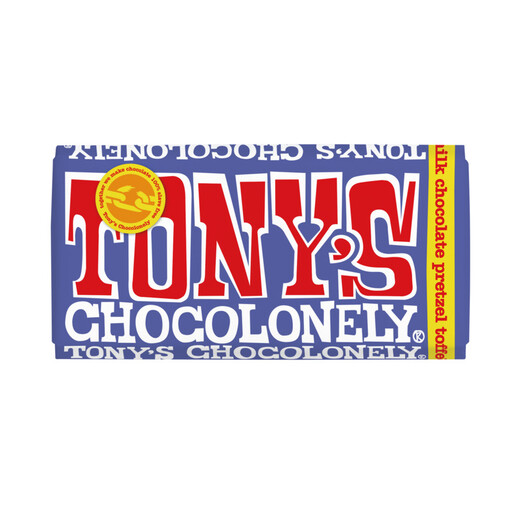
Its Dark Milk Pretzel Toffee 42% bar combines chocolate, pretzel and toffee pieces. Tony’s Chocolonely describes this particular bar as Fairtrade certified.
Divine’s 38% Milk Chocolate with Salted Caramel is a 90 g bar. Divine specifies Fairtrade cocoa and sugar for this product.
Co-op describes Fairtrade sourcing across its own-brand chocolate range, which may help when choosing other items for an afternoon-tea spread.
Werther’s Original describes its Creamy Toffees as chewy, making them a reference point for the conventional toffee texture.
M&S describes its Toffee Assortment as chewy, with salted caramel, classic butter, chocolate brownie and coffee flavours.
These chocolate bars offer a toffee or caramel note for afternoon tea. They are alternatives to serving standalone chewy toffee; check each pack for its Fairtrade mark, ingredient coverage and allergens.
 No image available
This 180 g chocolate bar is the choice here for a toffee-and-pretzel combination rather than chewy toffee. Check the pack for the Fairtrade mark and ingredients covered, and for milk, soya and wheat plus precautionary statements concerning eggs, nuts and peanuts before serving.
 No image available
Choose this 180 g milk-chocolate bar if caramel and sea salt suit the tea table better than toffee pieces. It is not standalone chewy toffee. Check the pack for the Fairtrade mark and ingredients covered, and for milk, soya and precautionary allergen statements before serving.
No. Check the exact product for a Fairtrade mark or statement. The Fairtrade Foundation says the classic Fairtrade Mark covers all ingredients that can be Fairtrade certified, while its Fairtrade Sourced Ingredient Mark identifies a particular Fairtrade-sourced ingredient.
A chocolate bar containing toffee pieces is one option if you want a toffee note: Tony’s Chocolonely describes its Dark Milk Pretzel Toffee bar as Fairtrade certified. Divine Chocolate’s salted-caramel bar is a different, caramel-led choice for which Divine specifies Fairtrade cocoa and sugar. Neither has the texture of standalone chewy toffee.
Yes. Read the current pack before serving, including any “may contain” statement. Tony’s Dark Milk Pretzel Toffee product information lists milk, wheat and soya and says it may contain egg and nuts; Divine’s salted-caramel bar lists milk and says it may contain gluten and nuts.
You can choose the chewy format, but do not assume it has a Fairtrade claim. Check the exact pack for that claim; if it is essential and the pack does not establish it, choose a clearly labelled alternative that also meets your guests’ ingredient needs.