Hosts prioritising a Fairtrade claim
Caramel chocolate or truffles are worth considering if you can serve something other than plain toffee. Check the exact product’s Fairtrade wording, including which ingredients it covers.


If a product-level Fairtrade claim matters more than serving traditional toffee, consider caramel chocolate whose current pack states what is Fairtrade-sourced. Conventional butter toffee remains a different choice: do not describe a particular sweet as Fairtrade without checking its own packaging. For a shared wedding buffet, check the claim alongside allergens and the number of portions you can serve.
Caramel chocolate or truffles are worth considering if you can serve something other than plain toffee. Check the exact product’s Fairtrade wording, including which ingredients it covers.
Keep ingredient and precautionary allergen information available at the buffet. The caramel-chocolate products discussed here have differing milk, soya, nut and other allergen information, so assess each current pack separately.
Choose by the recipe and serving format if familiar butter or dairy toffee is the priority. If Fairtrade sourcing is also required, confirm a qualifying claim on the exact product rather than assuming its ingredients or brand establish one.
Consider it when: Fairtrade-sourced ingredients matter more to you than serving plain toffee.
Trade-off: A chocolate bar, truffle or filled baton changes both the sweet on offer and how you portion it.
Consider it when: The familiar butter or dairy toffee format is your main requirement.
Trade-off: A traditional recipe does not itself establish a Fairtrade claim; check the chosen pack if certification matters.
Once you have chosen a format, use the exact pack to check the sourcing claim and allergens, then plan portions against your guest count.
| Priority | What to check | Your needs |
|---|---|---|
| Fairtrade wording | Look for the Fairtrade Mark or a named Fairtrade Sourced Ingredient. Read any mass-balance statement to understand what the claim covers. | I want to describe the sweets accurately to guests. The Fairtrade Foundation distinguishes a product-level Mark from a claim covering only a named ingredient; mass balance allows certified and non-certified material to be mixed while matching Fairtrade volumes are purchased. |
| Allergens | Read the current ingredients and any “may contain” wording on each pack. Keep that information accessible when serving. | Guests need to be able to check the particular sweet they choose. The Food Standards Agency explains that precautionary allergen labelling signals possible unintended presence of a regulated allergen. |
| Servings | Compare a stated piece count with a bar’s serving information; decide whether you will need to divide a bar before the buffet. | I want enough portions for the planned display, not just enough boxes. Waitrose lists nine pieces in its 97g caramel-baton box, while Tesco lists six 30g servings for Tony’s Chocolonely’s 180g caramel sea salt bar. |
| Toffee format | Check whether the product is plain toffee or chocolate containing caramel or toffee pieces. Verify any Fairtrade claim on that exact product. | If I promised guests traditional toffee, a caramel-chocolate alternative would change what is served. If the Fairtrade claim is essential, the recipe alone cannot confirm it. |
A recipe description identifies the sweet, not which ingredients carry a Fairtrade claim. A general responsible-sourcing statement may also differ from a claim on the individual product.
Check the current pack for a Fairtrade Mark, a named Fairtrade ingredient or other precise wording before describing the sweet to guests.
According to the Fairtrade Foundation, mass balance permits certified and non-certified ingredients to be mixed during processing while matching Fairtrade volumes are purchased.
If physical separation matters to your choice, read the product’s sourcing statement before deciding whether its certification model fits.
The reviewed caramel-chocolate products have different ingredients and precautionary allergen warnings. Guests cannot assess a loose sweet from its appearance.
Check current packs before serving and keep the relevant ingredient and allergen information with the buffet; arrange products so their information remains identifiable.
A box of counted batons and a sharing bar need different serving plans. Net weight alone does not tell you how many individual sweets are ready to put out.
Start with the number of portions you intend to serve, then check the stated piece count or serving information and allow for any bar portioning you will do.
These references concern the particular products described, not every sweet made by each brand or stocked by a retailer.
Its salted caramel truffles and caramel-filled chocolate batons offer boxed alternatives to plain toffee.
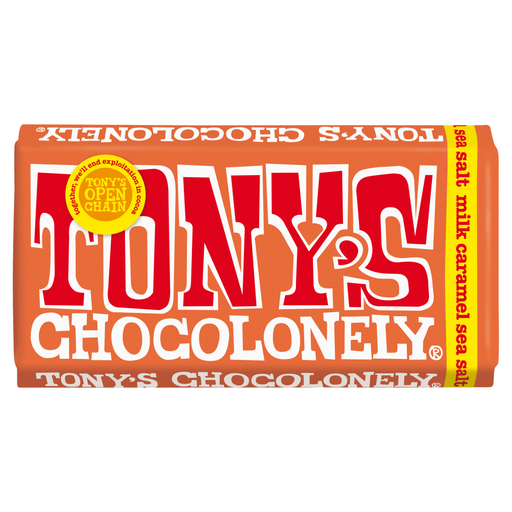
The 180g Milk Chocolate Caramel Sea Salt bar is a sharing-bar option rather than a box of individual toffees.
The 90g milk-chocolate salted-caramel bar contains butterscotch toffee pieces, bringing a toffee element to a chocolate format.
Creamy Toffees provide a traditional butter-and-cream toffee format.
Its 75% Cocoa Single Origin Dark Chocolate is a chocolate reference, not a caramel or toffee option.
This sharing bar represents the caramel-chocolate route for a buffet where plain toffee is not essential. Check its current pack before describing its Fairtrade claim or serving it to guests.
 No image available
A caramel-chocolate sharing bar to portion for the buffet, rather than individual plain toffees. Tesco’s listing for the matching 180g bar states six 30g servings and describes its cocoa and sugar as Fairtrade, with mass balance for sugar; check the current pack for the wording on the bar you buy. The product information identifies milk and soya and warns of possible gluten-containing cereals, eggs, nuts and peanuts.
Not necessarily. The Fairtrade Foundation says the classic Fairtrade Mark covers ingredients that can be Fairtrade-certified, while a Fairtrade Sourced Ingredient claim identifies a named ingredient. Mass balance means certified and non-certified material may be mixed during processing while matching Fairtrade volumes are purchased. Read the wording on the particular pack before describing what it covers.
Only if the exact product’s current packaging or official information supports that claim. The Werther’s Creamy Toffees and Tesco Toffee product descriptions cited here establish their dairy-toffee recipes, not a Fairtrade certification claim.
Make the current ingredient and allergen information available for each product you serve, including any “may contain” statement. The Food Standards Agency explains that precautionary allergen labelling warns of possible unintended allergen presence; do not treat the absence of an allergen from the recipe as a substitute for reading that warning.
Use the stated count or servings, then decide how the sweets will be presented. Waitrose lists nine pieces in its 97g caramel-baton box; Tesco lists six 30g servings for Tony’s Chocolonely’s 180g caramel sea salt bar. A bar will need dividing if you want those servings ready for guests to take.