Families making cookies or traybakes
Chips can be measured, folded into dough or scattered over a bake without chopping a bar. Waitrose & Partners describes its Cooks’ Ingredients white chocolate chips as suitable for cooking and baking.


For cookies and traybakes that children will help measure or decorate, Fairtrade white chocolate chips avoid the need to chop a bar. Choose a cooking block when the recipe calls for melted chocolate, or consider a smaller organic bar if its format suits the bake. Check exactly what the Fairtrade statement covers and read the current pack’s allergen information before children handle or eat the chocolate.
Chips can be measured, folded into dough or scattered over a bake without chopping a bar. Waitrose & Partners describes its Cooks’ Ingredients white chocolate chips as suitable for cooking and baking.
A cooking block is worth considering when melted white chocolate is central to the recipe. Waitrose & Partners describes its Cooks’ Ingredients white chocolate block as a cooking product intended to melt.
Read the current pack’s ingredients and precautionary allergen statements before children handle or eat the bake. The white chocolates discussed here declare milk; some also declare soya or carry a may-contain-nuts statement. The NHS advises avoiding a food if you are unsure whether it contains a child’s allergen.
Start with how the recipe uses the chocolate, then check its sourcing statement, pack size and allergens.
| Priority | What to check | Your needs |
|---|---|---|
| Recipe method | Is the chocolate folded into dough, scattered on top or melted? Chips avoid bar chopping; check a block’s stated cooking uses if melting is central. | I’d like children to help measure or scatter chocolate, so chips fit the activity. For a melted drizzle or filling, I’ll look at a cooking block instead. |
| Fairtrade wording | Read which ingredients the pack’s Fairtrade statement covers and whether it mentions mass balance. The Fairtrade Foundation says the mass-balance model requires matching quantities of the relevant Fairtrade ingredients to be bought; it does not establish physical separation in each pack. | I want to understand the sourcing claim rather than assume every ingredient in my individual bar or bag has been kept separate. |
| Allergens | Check the current ingredients list for milk and soya, plus any precautionary nut statement. The NHS advises avoiding food when you are unsure whether it contains a child’s allergen. | Where a child has an allergy, I need to check the exact pack before they help with or eat the bake. |
| Bar format | If organic certification also matters, check the bar’s organic and Fairtrade labels. Allow for breaking or chopping it before measuring. | An organic bar suits my recipe if I only need a small amount and an adult can prepare the pieces. |
| Pack size | Match the quantity to how often you bake and where you can store it. Callebaut lists its Fairtrade W2 callets in a 10 kg bag. | For an occasional family bake, I’d rather choose a manageable pack than arrange storage for a 10 kg bag. |
| Product declaration | Compare the cocoa and milk-solids declarations on the particular packs, alongside their stated cooking uses. A cocoa percentage alone does not establish how a product will work in your recipe. | I need chocolate whose stated format and uses match the bake, not just a particular number on the label. |
A mass-balance statement does not mean the Fairtrade ingredient in a particular pack was physically kept apart from non-certified material. The Fairtrade Foundation says companies using this model must buy matching quantities of the relevant Fairtrade ingredients.
Read the mark and sourcing statement on the pack, including which ingredients the claim names.
A bar needs breaking or chopping before children can measure small pieces. Chips are suited to folding into dough or scattering, while a cooking block may better match a recipe built around melted chocolate.
Check whether the method calls for pieces or melted chocolate before choosing the format.
The white-chocolate products discussed here declare milk, and some declare soya or may contain nuts. A may-contain statement concerns possible unintended allergen presence, according to University Hospital Southampton NHS Foundation Trust.
Read the current physical pack each time. If you are unsure whether it contains a child’s allergen, follow the NHS advice to avoid it.
Callebaut supplies its Fairtrade W2 callets in a 10 kg bag, a quantity that calls for more storage planning than a small pack.
Consider a smaller format for an occasional recipe; assess a bulk bag against your baking frequency and available storage.
A partly used bulk bag also needs somewhere suitable to be kept between baking sessions.
These examples illustrate different formats and label checks; the brand references do not indicate which products Joybuy carries.
Its white chocolate chips and cooking block offer two different baking formats.
Its 90 g white chocolate bar is an organic and Fairtrade-labelled option where a bar suits the recipe.
Divine’s Fairtrade white chocolate comes in 35 g bars that can be portioned for a recipe.
Fairtrade W2 callets are a bulk format to consider for repeated or larger baking projects.
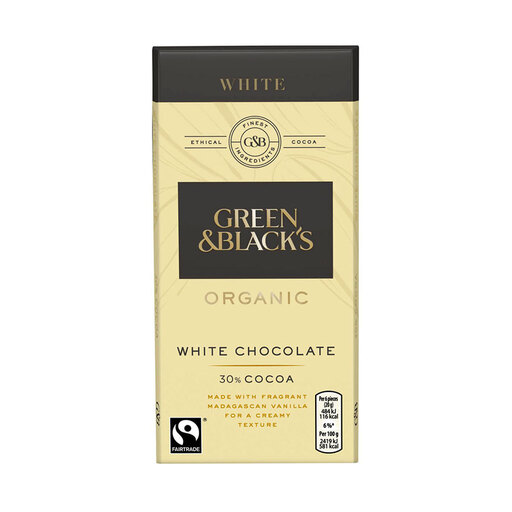
This Joybuy option is a 90 g organic white chocolate bar for recipes where breaking or chopping a bar is manageable. It does not stand in for chips or a cooking block when those formats are called for.
 No image available
The 90 g bar can be broken into pieces for a bake when an adult can prepare it before children measure or decorate. The matching Green & Black’s product is described as organic and Fairtrade; check the current pack’s sourcing statement if physical separation of Fairtrade ingredients matters. It contains milk and soya and may contain nuts, so read the current allergen information before use.
No. The Fairtrade Foundation explains that companies using mass balance must buy matching quantities of the relevant Fairtrade ingredients, but certified and non-certified material may mix during processing. Read the pack to see which ingredients its sourcing statement covers.
Choose chips if children will help measure, fold chocolate into dough or scatter it over a bake without chopping. If the recipe centres on melted chocolate, check a cooking block’s stated uses instead; Waitrose & Partners describes its Cooks’ Ingredients block as intended to melt for cooking.
No: the Waitrose chips and block, Green & Black’s bar and Divine bar discussed here all declare milk. Check the current pack for any product you are considering; the NHS advises avoiding food if you are unsure whether it contains a child’s allergen.
It warns of possible unintended nut presence rather than listing nuts as a deliberate ingredient. University Hospital Southampton NHS Foundation Trust explains that manufacturers use such wording when they cannot rule out accidental small amounts; the statement does not quantify the risk for an individual child.