Fairtrade-focused hosts
If Fairtrade is a requirement for your Bonfire Night gathering, check the claim on the particular white-chocolate pack rather than relying on a brand-wide cocoa-sourcing message.


For Bonfire Night, choose a white-chocolate bar with an explicit Fairtrade statement on its current pack or product page. A plain bar suits sharing or bakes when the product describes that use; raspberry-and-popping-candy or caramelised-wafer bars offer different flavours and ingredients. Check which ingredients the Fairtrade claim covers, whether mass balance applies, and the allergen information before serving guests.
If Fairtrade is a requirement for your Bonfire Night gathering, check the claim on the particular white-chocolate pack rather than relying on a brand-wide cocoa-sourcing message.
A plain bar, raspberry with popping candy and caramelised chocolate with wafer offer different ingredients and textures. Choose according to how you plan to serve the chocolate and what your guests expect.
Read each product’s current ingredients and precautionary allergen statements before setting it out, and keep its wrapper available for guests to inspect.
Start with the product-level Fairtrade claim, then choose the format for your plans and check the exact pack before serving.
| Priority | What to check | Your needs |
|---|---|---|
| Fairtrade claim | Look for explicit Fairtrade wording on the current product. Check which ingredients it names, any stated total Fairtrade content and whether mass balance applies. Fairtrade International says cocoa in chocolate can be sourced using mass balance. | I want the claim to apply to this white-chocolate bar, not just to a brand’s wider cocoa programme. |
| Sharing format | Compare a plain bar with added raspberry and popping candy, or caramelised chocolate with wafer. Check the pack size and ingredients; the flavoured options are not interchangeable with plain white chocolate. | For a group expecting plain white chocolate, I would choose that format; added flavours and crunch are choices to make deliberately. |
| Baking plans | Check whether the product description mentions use in bakes, and read the ingredients if you need a plain chocolate flavour. Waitrose & Partners describes its Belgian White Chocolate as suitable for eating by the square or using in bakes. | If I am making a Bonfire Night dessert, I want chocolate described for that use rather than assuming a bar with wafer or popping candy will suit the recipe. |
| Allergens | Read the current ingredients and ‘may contain’ statements for milk, soya, cereals containing gluten, peanuts, nuts and other relevant allergens. Keep the original packaging available when serving. | I need guests to be able to check the exact chocolate on offer, particularly when several bars have different ingredients. |
Mars describes Rainforest Alliance sourcing for specified Galaxy Smooth Milk products, while Cadbury describes its Cocoa Life programme. Neither statement establishes a Fairtrade claim for a particular white-chocolate bar.
If Fairtrade is essential, check the current white-chocolate product for explicit Fairtrade wording and the ingredients it covers.
The product pages give different total Fairtrade contents: Waitrose Belgian White Chocolate states 76%, Green & Black's Organic 30% White Chocolate 71%, Tony's Chocolonely White Raspberry Popping Candy 72%, and Waitrose Fairtrade Blonde Chocolate 60%. Their sourcing statements also differ.
Read the named Fairtrade ingredients and any mass-balance wording on the current pack instead of assuming the labels make identical claims.
Raspberry and popping candy change the flavour and texture; caramelised blonde chocolate with wafer adds cereal ingredients. These differences matter when choosing both a dessert ingredient and chocolate to share.
Choose a plain bar for a plain-white-chocolate plan, and check preferences and allergens before adding a flavoured option.
These bars have different ingredients and precautionary allergen statements. GOV.UK guidance also recommends retaining packaging for prepacked food served at community or charity events.
Keep each bar’s original packaging available so guests can inspect its current information.
Waitrose & Partners lists both a plain Belgian white-chocolate bar and a caramelised blonde variant with product-level Fairtrade statements.
The listed Organic 30% White Chocolate is a plain 90 g option with a product-level Fairtrade statement.
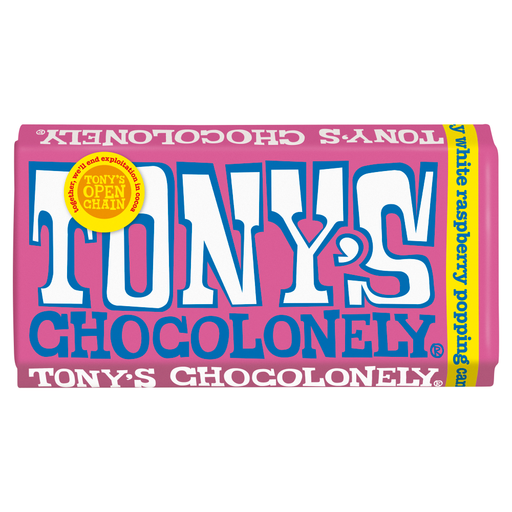
The White Raspberry Popping Candy bar is a flavoured white-chocolate option with a product-level Fairtrade claim.
Cadbury describes Cocoa Life sourcing for its Dairy Milk cocoa; that brand statement does not establish a Fairtrade claim for a specific white-chocolate product.
Mars describes Rainforest Alliance sourcing through mass balance for specified Galaxy Smooth Milk products, not a Fairtrade claim for a white-chocolate bar.
This Joybuy option is a flavoured white-chocolate bar for sharing, rather than a plain bar for a baking plan.
 No image available
For sharing when guests want raspberry and popping candy rather than plain white chocolate. The product description states a minimum of 28% cocoa solids; Tony's Chocolonely states that Fairtrade cocoa and sugar account for 72% of the bar in total, with sugar sourced through mass balance. It contains milk and soya and may contain cereals containing gluten, eggs and nuts; check the current wrapper before serving.
Look for an explicit Fairtrade statement on the current pack or product page and read which ingredients it names. Fairtrade International explains that ingredients available under Fairtrade conditions, including cocoa, sugar and vanilla, can be certified in chocolate; a general responsible-cocoa statement is not a substitute for checking the particular product.
Yes. Fairtrade International says cocoa can be sourced using mass balance. Read the bar’s sourcing statement and named Fairtrade ingredients if it matters to you whether certified and non-certified ingredients may be mixed during processing.
For a plain white-chocolate bake, check for a plain bar whose product information mentions baking. Waitrose & Partners describes its Belgian White Chocolate as suitable for eating by the square or using in bakes; a bar with wafer or popping candy has different ingredients and texture.
Read each bar’s current ingredients and precautionary allergen statements, then keep its packaging available. The products discussed here contain milk, while particular bars also list soya or wheat and barley, or carry ‘may contain’ statements for other allergens.