Hosts serving one portion per person
Divine Chocolate lists a pack of 30 individually wrapped 35 g white-chocolate bars. Count attendees before choosing this format, and check the current pack for milk and precautionary allergen wording.


Check the FAIRTRADE Mark or a statement naming the Fairtrade ingredients before choosing for your book club. Divine’s pack of 30 individually wrapped 35 g bars suits one-per-person serving, while Waitrose Belgian White Chocolate is a plain 180 g bar listed as 10 servings. For a flavoured shared tasting, Tony’s raspberry-and-popping-candy bar offers another format; whichever you choose, check the current pack against attendance and allergen needs.
Divine Chocolate lists a pack of 30 individually wrapped 35 g white-chocolate bars. Count attendees before choosing this format, and check the current pack for milk and precautionary allergen wording.
Waitrose & Partners lists 10 servings for its plain 180 g Belgian White Chocolate bar. Tony’s Chocolonely offers a 180 g raspberry-and-popping-candy alternative when the group wants to discuss a flavoured bar.
The Fairtrade Foundation distinguishes the classic FAIRTRADE Mark, which covers ingredients that can be Fairtrade certified, from the Fairtrade Sourced Ingredient mark, which identifies a particular Fairtrade-sourced ingredient. Read the mark alongside the product statement.
Start with what the Fairtrade claim covers, then match the serving format, flavour and allergen label to your group.
| Priority | What to check | Your needs |
|---|---|---|
| Fairtrade scope | Check the mark and which ingredients the statement names. The Fairtrade Foundation says its Sourced Ingredient mark identifies a particular ingredient; do not treat a general sourcing claim as the same statement. | I want to tell the group precisely what is Fairtrade, without assuming the claim covers every ingredient. |
| Portions | Compare the number of separate bars or stated servings with attendance. Divine Chocolate lists 30 × 35 g bars; Waitrose & Partners lists 10 servings for its 180 g bar and five for Green & Black’s 90 g bar. | If everyone is taking one sealed portion, a multipack makes distribution straightforward. For a shared plate, I need enough bar servings for the people attending. |
| Flavour | Choose between a plain bar and a bar with added flavours. Tony’s Chocolonely lists raspberry and popping candy; Waitrose Belgian White Chocolate is the plain sharing option described here. | For a discussion-led tasting, I might choose the flavoured bar. If the group expects plain white chocolate, that difference matters more than the bar’s size alone. |
| Allergens | Read the exact current pack for ingredients and ‘may contain’ statements. The products discussed here contain milk; other declared allergens and precautionary warnings differ between bars. | Before I serve chocolate to someone with an allergy or dietary restriction, I need to check the label for the particular bar I am buying. |
The Fairtrade Foundation distinguishes the classic FAIRTRADE Mark from a mark identifying one Fairtrade-sourced ingredient. A statement naming cocoa, sugar or vanilla should not be expanded into a claim about every ingredient.
Read the mark and the nearby ingredient statement. Where a product describes mass balance, follow its wording rather than assuming physical separation of certified ingredients throughout processing.
One 90 g bar listed as five servings and a pack of 30 separate 35 g bars meet different serving needs.
Count attendees, decide whether each person needs a sealed bar or a portion from a sharing bar, and use the stated serving information to plan the quantity.
The products discussed here contain milk, while their other allergen declarations and precautionary warnings vary.
Ask about relevant dietary restrictions before buying, then check the current physical pack of the exact product and flavour before serving it.
These examples refer to the particular products described, not every bar made by each brand.
Fairtrade International describes Divine as farmer-owned. Divine Chocolate lists a pack of 30 individually wrapped 35 g white-chocolate bars.
Waitrose & Partners lists a plain 180 g Belgian White Chocolate sharing bar with 10 servings.
Tony’s Chocolonely UK lists a 180 g white-chocolate bar with raspberry and popping candy.
Waitrose & Partners lists Green & Black’s Organic 30% White Chocolate as a 90 g bar with five servings.
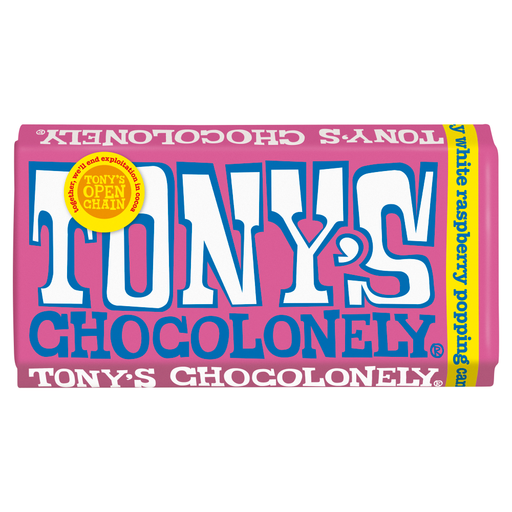
This option is a raspberry-and-popping-candy white-chocolate bar for a shared book-club tasting.
 No image available
The 180 g raspberry-and-popping-candy bar is an option for a flavoured shared tasting. Tony’s Chocolonely UK describes this product as Fairtrade certified and states that its Fairtrade cocoa and sugar total 72%, with sugar on a mass-balance basis. It contains milk and soya and may contain cereals containing gluten, eggs and nuts; check the current pack before serving.
Look at the mark and read which ingredients the product statement covers. The Fairtrade Foundation says the classic FAIRTRADE Mark covers ingredients that can be Fairtrade certified, while the Fairtrade Sourced Ingredient mark identifies a particular Fairtrade-sourced ingredient. If the pack describes mass balance, read that qualification too.
Not from that wording alone. Check whether the current pack or product page displays a FAIRTRADE Mark, states Fairtrade certification or identifies Fairtrade ingredients, and describe the claim at the scope it gives.
Match the stated portions to attendance and how you intend to serve them. Divine Chocolate lists 30 individually wrapped 35 g bars; Waitrose & Partners lists 10 servings for its 180 g Belgian White Chocolate and five for the Green & Black’s 90 g bar. A tasting plate and a one-bar-per-person handout call for different quantities.
Do not assume they are suitable. The white-chocolate products discussed here contain milk, and some carry nut or other precautionary allergen warnings. Check the current pack of the exact bar against the attendee’s requirements before serving it.