Who is this choice for?
The useful starting point is whether Fairtrade wording, a quiet pairing with biscuits, or the needs of the people being served will determine your choice.
Shoppers looking for a specific Fairtrade claim
If Fairtrade is the reason for buying, check the individual bar. The Fairtrade Foundation distinguishes its classic FAIRTRADE Mark from a Fairtrade Sourced Ingredient mark, which identifies a particular certified ingredient.
Fans of plain white chocolate with biscuits
A vanilla-led bar makes a different tea-time pairing from chocolate containing wafer, caramelised sugar, raspberry or popping candy. Decide whether you want the biscuit or the chocolate to provide the extra flavour and texture.
People serving chocolate to others
Check the current pack’s ingredients and precautionary allergen statements before sharing. Milk, soya and nuts are relevant to some of these products, while wafer and other inclusions can introduce further ingredients.
What should you check before choosing?
Check the product-level Fairtrade wording first, then choose a flavour and format for the way you will serve the chocolate. Finish with the current pack’s ingredient and allergen information.
| Priority |
What to check |
Your needs |
| Fairtrade scope |
Look for a claim on the exact product. The Fairtrade Foundation says its classic mark covers ingredients that can be Fairtrade certified, while the Fairtrade Sourced Ingredient mark names a particular ingredient. Read any mass-balance wording alongside the claim. |
I want to know which ingredients the Fairtrade statement covers, rather than relying on a general responsible-sourcing message. |
| Flavour and texture |
Compare a plain vanilla-led bar with caramelised chocolate containing wafer and sea salt, or a raspberry and popping-candy bar. These are distinct flavours and textures, not interchangeable versions of a plain bar. |
For tea and biscuits, I would choose a plain bar if I do not want extra inclusions; on another occasion, the flavoured chocolate could be the main sweet treat. |
| Serving format |
Check the pack size and whether the product is a ready-to-eat bar or cooking chocolate. Divine lists a 35g white bar, while Waitrose positions its Cooks’ Ingredients white chocolate for baking. |
A smaller bar suits the portion I have in mind, whereas chocolate for homemade biscuits needs to suit the recipe. |
| Ingredients and allergens |
Read the current ingredient list and any “may contain” statement. The Food Standards Agency explains that precautionary allergen labelling communicates possible unintended allergen presence; inclusions such as wafer also need checking. |
Before I share chocolate, I need the actual pack’s information to be compatible with the recipient’s requirements. |
Relevant brand and retailer references
These examples show different Fairtrade white-chocolate formats; each claim applies to the product or range described, not automatically to every item from that brand or retailer.
Green & Black’s
Waitrose lists the Organic 30% White Chocolate Bar as Fairtrade, with cocoa butter and Madagascan vanilla.
- A plain, vanilla-led option without the wafer or fruit inclusions of the flavoured examples.
- The listed product contains milk and soya and may contain nuts. Its Fairtrade wording includes a mass-balance qualification; check the pack received.
Divine Chocolate
Divine Chocolate describes its white-chocolate range as Fairtrade and palm-oil-free, and lists a 35g white bar.
- The smaller bar format offers an alternative to opening a larger bar at tea time.
- Check the individual bar’s current ingredients, allergens and pack quantity before buying.
Tony’s Chocolonely
Tony’s Chocolonely describes its White Raspberry Popping Candy bar as Fairtrade-certified white chocolate with raspberry and popping candy.
- A distinct flavoured choice when the chocolate, rather than the biscuits, is intended to bring extra texture.
- It is not a plain bar. The product information also warns that it may contain gluten, egg and nuts.
Waitrose
Waitrose lists Cooks’ Ingredients White Chocolate for baking and a No.1 Fairtrade blonde chocolate with feuilletine wafer and sea salt.
- The two products address different uses: making biscuits or serving a caramelised, crunchy bar.
- Their Fairtrade statements include mass-balance wording. Check each product’s own ingredients and allergen warnings, particularly the wafer-containing blonde chocolate.
A Joybuy option for a plain bar
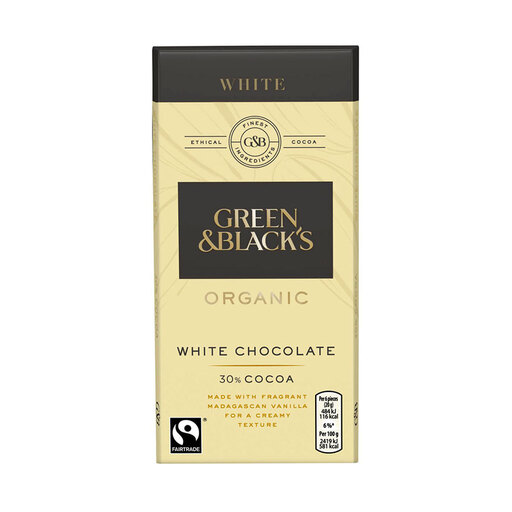
This white-chocolate bar represents the plain, vanilla-led route for serving alongside tea and biscuits. Confirm that the pack received carries the Fairtrade wording for the Green & Black’s product described by Waitrose.
 No image available
Green & Black’s White Chocolate 90g
A plain bar with Madagascan vanilla to serve alongside tea and biscuits. The product description lists milk and soya and says it may contain nuts. Check the received pack’s allergen information and Fairtrade wording before serving.
Joybuy
Questions about Fairtrade white chocolate
How can I tell whether a white-chocolate bar is Fairtrade?
Check the claim on the individual pack. The Fairtrade Foundation says the classic FAIRTRADE Mark applies to ingredients that can be Fairtrade certified, while its Fairtrade Sourced Ingredient mark identifies a particular certified ingredient. Read any accompanying mass-balance statement too.
Does mass balance mean the ingredients in my bar were kept separate?
No. The mass-balance wording on Waitrose’s Fairtrade white-chocolate listings says certified ingredients may be mixed with non-certified equivalents. If separation matters to your choice, read the exact product’s sourcing statement rather than assuming that a Fairtrade claim means physical separation.
Which format should I choose for homemade tea biscuits?
Choose a cooking product if the chocolate is going into the biscuits or being used as a drizzle. Waitrose positions its Cooks’ Ingredients White Chocolate for baking and states that its cocoa is Fairtrade certified; check the current pack’s full Fairtrade and allergen wording before use.
Should I check allergens even if I have bought the bar before?
Yes. Check the current pack’s highlighted ingredients and any “may contain” statement before serving it. Ingredients vary between these products: a wafer-containing bar, for example, needs different checks from a plain bar.
Does a brand’s sustainability message make its white chocolate Fairtrade?
No. A brand-level sourcing message is not the same as a Fairtrade claim for a particular bar. Galaxy describes its own Responsible Cocoa programme; if Fairtrade is your requirement, look for explicit Fairtrade wording on the exact white-chocolate product you intend to buy.


