
24/7 Customer Support

Free returns

Same-day & Next-day Delivery

Quality Guaranteed

Unlock Your Welcome Offers: FREE Delivery | Up to 80% OFF | Free 30-day JoyPlus trial
Download the APP
A large bottle of Fairy washing-up liquid can look like good value, but the cheapest-looking option is not always the most practical for your kitchen. UK households differ widely: a single-person flat may need a compact bottle, while a family or busy home cook may use washing-up liquid daily on greasy pans, roasting trays and plates.
The right choice depends on more than brand familiarity. Before buying, consider the formula, bottle size, intended use and safety information. This guide explains the main pitfalls and compares suitable options for everyday homes and professional kitchens.
A 1,450ml bottle or bulk washing-up liquid format may reduce how often you reorder, but it can be awkward beside a small sink. Large containers may also need decanting, and a low purchase price does not automatically mean the lowest cost per 100ml.
Compare the price per millilitre, not just the shelf price. A washing-up liquid multipack can be useful when the unit price is lower and you have suitable cupboard storage.
Concentrated washing-up liquid is designed to be used in small amounts, but adding more product does not necessarily improve results. Excess liquid can create more foam, take longer to rinse and lead to unnecessary waste.
For greasy cookware, apply a small amount directly to a damp sponge or the affected area. For a normal sink of dishes, dilute the product in warm water and rinse items thoroughly afterwards.
Scent is a personal choice. Fairy Lemon washing-up liquid gives a fresh citrus fragrance, while Original is a more familiar option. Clean & Fresh variants include scents such as pomegranate and grapefruit, apple and rhubarb, orange and yuzu and pink jasmine.
Antibacterial washing-up liquid should not be treated as a replacement for proper food-safety procedures or surface disinfectant. Check the packaging for the intended use, contact time and rinsing instructions. If you have sensitive skin or known preservative allergies, review the ingredients before purchase; several listed products contain preservatives such as benzisothiazolinone or methylisothiazolinone.
Select a size based on how often you wash dishes and where the bottle will be stored:
When comparing products, divide the price by the bottle volume. For multipacks, calculate the combined millilitres rather than assuming a three-pack is automatically better value.
For washing-up liquid for dishes and pans, look for a clearly stated concentrated formula and instructions for direct application on stubborn grease. A grease-cutting washing-up liquid may be suitable for frying pans and food residues, but heavily burnt cookware may still need brief soaking or mechanical cleaning.
Fairy Platinum washing-up liquid options focus on faster grease handling and easier rinsing in the supplied product information. The Original and Antibacterial Eucalyptus versions are listed in 820ml bottles. By contrast, standard Fairy Original and Lemon formats provide a straightforward daily-use option in several sizes.
Fragranced products contain perfumes and may list fragrance allergens such as limonene, linalool or hexyl cinnamal. Read the current product label, as ingredients and warnings can vary between variants and pack sizes.
Washing-up liquid is not edible. Keep it away from children, avoid eye contact and follow the label if splashed in the eyes. Rinse dishes, glasses and cookware thoroughly with clean water after washing. Do not mix it with other cleaning chemicals.
The following options are matched to different household requirements rather than ranked universally.
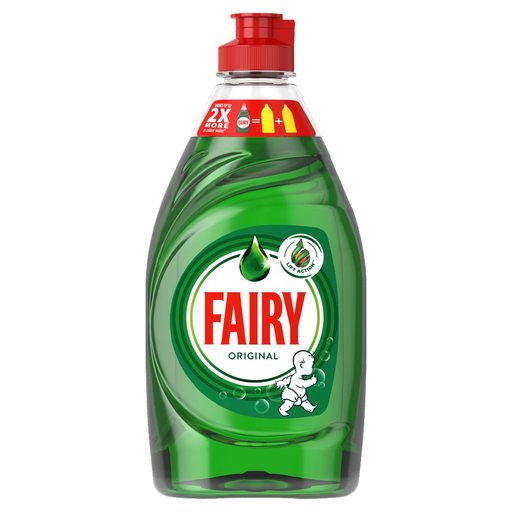
Why This Fits Their Persona: A compact choice for students, renters, couples and smaller UK kitchens where cupboard and sink space matter.
The smaller volume avoids paying for excess product before you know how quickly your household uses it.
Concentrated Original formula; suitable for applying a small amount to a sponge or warm dishwater.
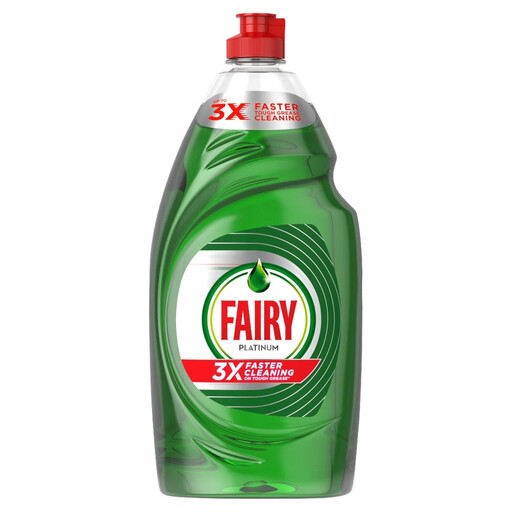
Why This Fits Their Persona: Suits frequent home cooks who want a formula listed for fast handling of greasy dishes and pans.
The 820ml size offers a middle ground between a compact bottle and a large-format purchase.
Product information describes fast grease penetration and easier rinsing; it has a fresh Original fragrance.

Why This Fits Their Persona: Designed for cafés, restaurants, catering operations and very busy family kitchens that need a high-volume format.
The bulk format reduces frequent reordering, while the label should be checked carefully for its precise antibacterial use and dilution guidance.
4-litre capacity; intended for heavy-duty washing of dishes, cookware and kitchen surfaces.
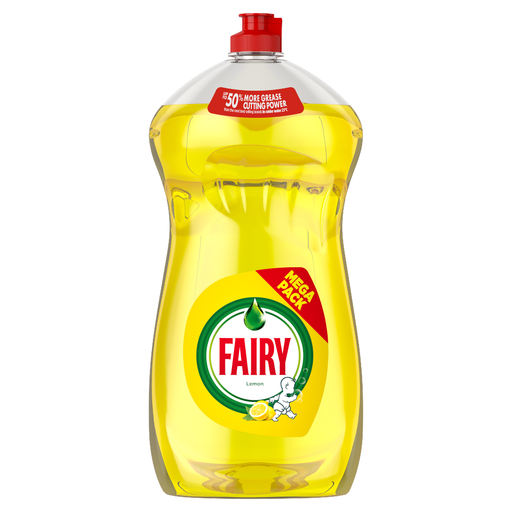
Why This Fits Their Persona: A practical choice for larger households that prefer a citrus scent and want a generous everyday bottle.
The larger volume is more suitable when washing up is a daily task, rather than for occasional users with limited storage.
1,450ml bottle; concentrated Lemon formula for dishes, cutlery and greasy pans.
We have compiled a complete, real-time list of products that fully satisfy these strict selection criteria and UK safety regulations.
Avoid pouring large quantities directly into a full sink. Correct dosing usually provides better control, reduces residue and helps the bottle last longer.
Yes, the listed Fairy Original, Lemon, Platinum and Clean & Fresh products are intended for washing dishes, cutlery, cookware and pans. Follow the individual label instructions, particularly for delicate materials and any non-standard surfaces.
It can be suitable for households with frequent, high-volume washing-up, but the larger 900ml and 4-litre formats need suitable storage and careful dispensing. Professional products may be unnecessary for a small household unless the price per millilitre and usage level make sense.
There is no universal lifespan because it depends on the number of people in the household, washing frequency, water temperature, grease levels and dosing habits. Compare the volume, price and recommended amount on the current label rather than relying on a fixed number of washes.