
24/7 Customer Support

Free returns

Same-day & Next-day Delivery

Quality Guaranteed

Unlock Your Welcome Offers: FREE Delivery | Up to 80% OFF | Free 30-day JoyPlus trial
Download the APP
A bottle of Fairy washing up liquid can look like a straightforward household purchase, but the range includes different formulas, fragrances, bottle sizes and professional-strength options. Choosing by label colour or headline claim alone can lead to paying for features you will not use, running out sooner than expected or selecting a formula that does not suit your cleaning routine.
This guide explains the practical points to check before buying, whether you need a small bottle for a flat, a washing up liquid multipack for a family home or bulk washing up liquid for a café or catering kitchen.
A larger bottle is not automatically more economical. Compare the price per 100ml and check whether the formula is concentrated. A 320ml bottle may suit occasional use or a smaller household, while a 1,015ml or 1,450ml bottle can reduce repurchasing for busy kitchens. However, the cost only makes sense if the product will be used before its recommended shelf-life information becomes relevant.
Original, Lemon, Pink Jasmine, Pomegranate & Grapefruit and other scents mainly affect the washing-up experience. Fragrance should not be treated as proof of stronger grease removal. If you regularly clean frying pans, roasting trays or food containers, prioritise the formula and dispensing instructions before choosing a scent.
A Fairy antibacterial washing up liquid may include an antibacterial action for the sponge or other specified surfaces, but this does not remove the need to wash, rinse and dry items properly. Check the label for the exact intended use and contact time. Do not assume that every Fairy product is antibacterial or suitable for disinfecting all kitchen surfaces.
A concentrated washing up liquid is designed to work with a relatively small amount applied to a damp sponge, brush or sink water. The actual dosage depends on the amount of grease, water temperature and number of items. For heavily soiled cookware, applying a small amount directly to the residue can help loosen it before washing.
Avoid squeezing large amounts into the sink by habit. Excess detergent creates more foam but does not necessarily improve cleaning, and it may require more rinsing.
For everyday plates and cutlery, a standard Original or Lemon formula may be sufficient. If your routine involves burnt-on food, greasy pans or short turnaround times, look for a product specifically described as grease-cutting washing up liquid or designed for fast cleaning.
Fairy Platinum products are positioned around quickly penetrating and weakening tough grease. Fairy Professional products are concentrated for high-volume environments and can also be used for pre-soaking, subject to the product instructions.
Consider how frequently you wash up:
Always read the label before use. Several products carry eye-irritation warnings, and some list ingredients that may cause an allergic reaction. Keep washing-up liquid away from children, avoid ingestion and rinse dishes thoroughly with clean water.
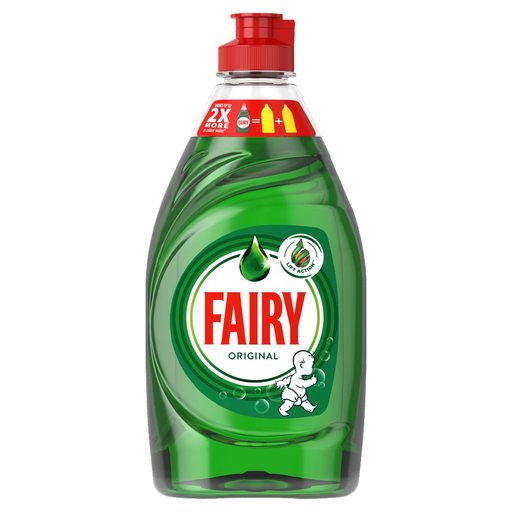
Why This Fits Their Persona: A compact option for students, couples, rented flats or anyone who wants to try Fairy Original without storing a large bottle.
The smaller capacity limits upfront spend and avoids paying for unused volume when washing-up needs are modest.
Concentrated Original formula; suitable for plates, pans, cutlery and everyday food residue.
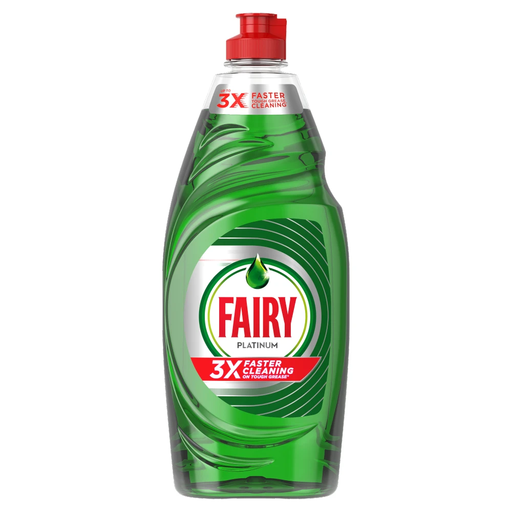
Why This Fits Their Persona: Suits home cooks who regularly tackle greasy pans and want a formula focused on fast cleaning and easier rinsing.
It is selected for its stated grease-penetrating and fast-rinse features rather than fragrance or bottle appearance alone.
Designed for tough grease; available in a 520ml bottle for regular domestic use.
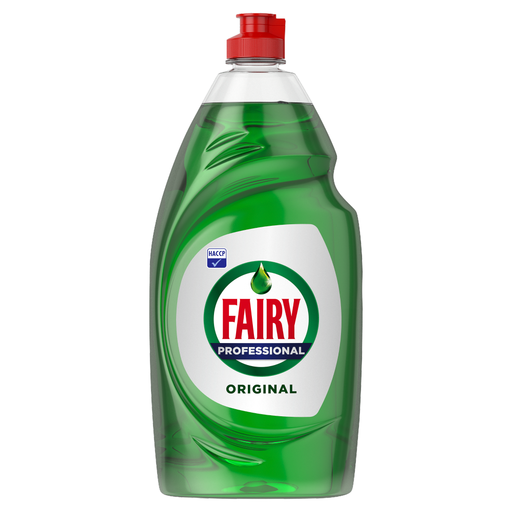
Why This Fits Their Persona: Intended for busy kitchens in cafés, restaurants, catering operations and households with frequent washing up.
The professional format makes the intended high-volume use clear, avoiding reliance on small domestic bottles for demanding workloads.
Concentrated 900ml formula; suitable for washing and pre-soaking tableware, pots, pans and utensils.
For normal washing up, use warm water where appropriate, add a small quantity to a damp sponge or sink and adjust the dosage to the level of grease. Apply detergent directly to stubborn residue rather than filling the entire sink with excess liquid. Rinse plates, glasses, pans and cutlery thoroughly with clean water.
For commercial kitchens, follow the product’s dilution and handling instructions. Keep the bottle clearly labelled, store it away from food and ensure staff understand eye and ingestion warnings. Professional products may also be suitable for surfaces such as tables, mirrors or windows, but check the specific label before broadening their use.
We have compiled a complete, real-time list of products that fully satisfy these strict selection criteria and UK safety regulations.
Yes. The listed Original, Platinum and Professional products are described for dishes, pans, cutlery and kitchen utensils. Use a small amount, follow the label directions and rinse thoroughly after washing.
It can be, because a smaller dose may be needed per wash. The real value depends on dosage, bottle price, capacity and how much grease you usually clean. Compare price per 100ml, then use only the quantity required rather than judging value by foam volume.
There is no fixed lifespan for every household. A bottle lasts longer when used in small, measured amounts and when heavy grease is treated directly. A 320ml bottle may be adequate for light or occasional use, while 1,015ml, 1,450ml or professional formats are more practical for families and high-volume kitchens. Check the product label for storage and shelf-life information.