
24/7 Customer Support

Free returns

Same-day & Next-day Delivery

Quality Guaranteed

Unlock Your Welcome Offers: FREE Delivery | Up to 80% OFF | Free 30-day JoyPlus trial
Download the APP
Choosing family board games can be surprisingly difficult. A colourful box may promise hours of fun, yet the actual experience can be too complicated for younger children, too repetitive for adults or unsuitable for the number of people you usually invite.
The right choice depends less on attractive packaging and more on practical details such as age suitability, player numbers, game length and how much interaction the format creates. This guide explains the common buying traps and highlights suitable options for family game nights, parties and gifting.
A game labelled for children aged 8 and over may contain small components, reading-heavy instructions or strategic concepts that younger players cannot easily follow. Always check the manufacturer’s age guidance and warnings before buying, particularly if children aged 6 or 7 will be playing.
For example, Connect 4 and Cranium Big Brain Detective Game are listed for children from age 6, while Cluedo, Mastermind and many classic board games are listed from age 8. A younger child may still join an older game with adult support, but this should not be assumed.
Some multiplayer tabletop games technically support several players but work most smoothly with two to four. Others depend on a lively group, team play or simultaneous participation.
A two-player strategy game such as Mastermind is not a practical choice for a large family gathering. Conversely, a party game designed for four or more people may feel slow or awkward with only two players. Check the player range and consider the usual size of your family game night.
A game that takes a long time to assemble may be left unused, especially on busy weeknights. Look for clear component lists, portable storage and straightforward rules.
Electronic games also require additional checks. Operation Electronic Board Game with All-in-One Carrying Case requires three AA batteries, which are not included. Other options, including Cluedo, Scrabble, Connect 4 and Mastermind, do not require batteries.
The recommended age is an important starting point, not just a marketing detail. Games with small parts may present a choking hazard and should be kept away from younger children. Remove all packaging before play and follow the product warning regarding adult supervision.
For families with children aged 6 and over, consider games with simpler actions, such as placing discs, identifying clues or solving accessible mysteries. Children’s board games should also offer rules that can be explained without lengthy reading.
Think about how your household actually plays:
A familiar format does not automatically guarantee lasting interest. Check whether the game offers changing questions, different scenarios, variable strategies or multiple modes.
Cranium Big Brain Detective Game includes 300 mysteries, while Scrabble offers both competitive and cooperative modes. Telestrations uses erasable sketch books and dry-erase markers, allowing the game to be replayed without continually replacing paper.
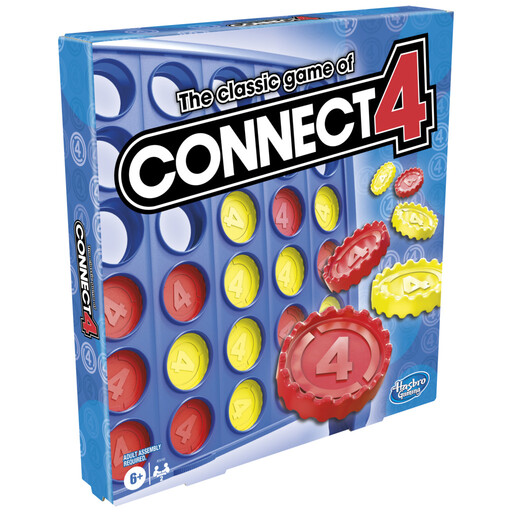
Why This Fits Their Persona: A compact, easy-to-learn choice for families wanting short screen-free games without a lengthy setup.
The age guidance starts at 6, and the rules involve one clear action: placing discs while trying to connect four in a row.
No batteries required; supports repeated two-player play and packs away in a compact box.
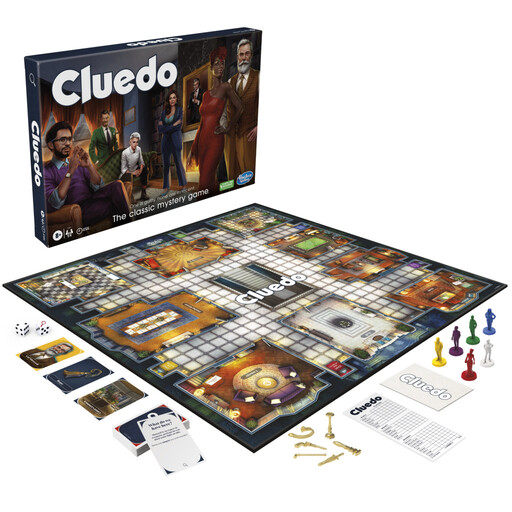
Why This Fits Their Persona: Suitable for adults and older children who enjoy detailed components, deduction and a more immersive classic board game format.
The set lists six suspects, clue cards and a defined mystery structure, so the main appeal is deduction rather than vague open-ended play.
Includes sculpted character movers, weapon tokens and an illustrated board; no batteries are required.
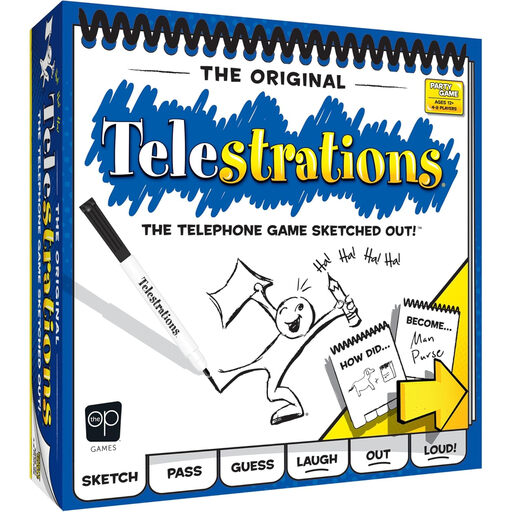
Why This Fits Their Persona: A practical option for regular hosts, parties and mixed-age groups that want everyone involved at the same time.
Players draw and guess simultaneously, reducing long waiting periods that can make larger group games lose momentum.
Includes erasable sketch books and dry-erase markers; suitable from age 8 and over with no batteries required.
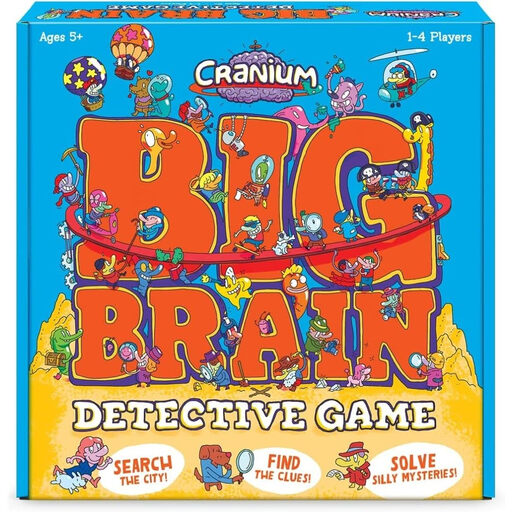
Why This Fits Their Persona: Designed for families who prefer collaborative puzzles, clue-finding and educational games for children aged 6 and over.
The cooperative format allows adults to support younger players instead of eliminating them early in a competitive round.
Includes 300 mysteries and an illustrated custom map; the product is listed for ages 6 and over.
For fans of licensed themes, Monopoly HARRY POTTER replaces traditional properties with Hogwarts, Diagon Alley and Hogsmeade, and is listed from age 8. Football board games such as Monopoly FIFA World Cup combine match cards, player statistics, attack and defence dice, making them suitable for football-focused family groups.
Classic Monopoly remains useful for players who enjoy property trading, negotiation and money management. Scrabble suits households interested in spelling and vocabulary, while Mastermind offers a quieter two-player deduction challenge. For larger gatherings, TV show board games such as Catchphrase, Family Fortunes and Race Across the World focus on quick answers, team play and general knowledge.
Always compare the full product details before ordering, including age guidance, player numbers, dimensions, battery requirements and the number of included components.
We have compiled a complete, real-time list of products that fully satisfy these strict selection criteria and UK safety regulations.
Check the stated age rating first. Connect 4 and Cranium Big Brain Detective Game are listed from age 6, making them practical starting points for families with younger players. Adult supervision remains important where small parts are included.
Start with the number of players and available time. Choose strategy board games for two to four players, cooperative detective games for shared problem-solving and party games for larger groups. If some players dislike reading, prioritise visual, drawing or guessing formats.
Most traditional games have no running costs once purchased. Battery-operated products may require replacement batteries, while games with paper components may eventually need additional supplies. Reusable boards, erasable books and durable storage cases can reduce replacement needs over time.