
24/7 Customer Support

Free returns

Same-day & Next-day Delivery

Quality Guaranteed

Unlock Your Welcome Offers: FREE Delivery | Up to 80% OFF | Free 30-day JoyPlus trial
Download the APP
Choosing family board games and card games can seem straightforward until you compare age ratings, playing time, themes and component sizes. A colourful box may attract children, yet the game inside might be too complicated, too long or unsuitable for the intended players.
Parents, grandparents and gift buyers can avoid wasted purchases by checking how a game will actually fit into family life: who will play, where it will be stored and whether the rules match the children’s abilities.
A game marked “8+” may be suitable for an eight-year-old, but that does not guarantee that younger siblings will be able to join in. Games involving deduction, bluffing or detailed instructions may also require adult support at first.
For children aged 3 to 5, look for simple rules, large components and short rounds. Older children may be ready for strategy board games, themed games or card games with more reading and decision-making.
A game described as suitable for family game night may still be frustrating if it takes an hour and your children prefer ten-minute activities. Check both the recommended number of players and the approximate duration where available.
For busy UK households, quick games such as matching games, dexterity challenges and compact card games can be easier to bring out regularly. Longer games may suit weekends, holidays or gatherings when everyone can stay at the table.
Educational games for children can support matching, counting, memory, coordination or turn-taking, but a learning label does not automatically mean the game will hold a child’s attention. Choose a theme your child already enjoys, such as shopping, animals, football or familiar television characters.
Also check whether the game depends on batteries, electronic parts or many small pieces. These details affect storage, supervision and ongoing use.
Treat the manufacturer’s age guidance as a safety requirement rather than a suggestion. Many children’s board games contain small counters, cards, pegs or tokens. Products in this guide include warnings about choking hazards, and some are not suitable below the stated age.
For UK households, remove all packaging before play and store small components securely. Adult supervision is particularly important for younger children, games with electronic parts and products containing magnets.
Large, sturdy cards and easy-to-handle pieces are useful for pre-school games. Orchard Toys games, for example, are designed around straightforward play and components intended for young children’s hands. A compact box can also make a difference if you live in a smaller home or want travel games for kids.
For games used frequently, check whether the set includes a dedicated tray, case or storage solution. A portable format can prevent lost pieces during holidays, visits to grandparents or car journeys.
Battery-free games are ready to use without additional running costs and are convenient for travel. Electronic games may add sound or lights, but check whether batteries are included and whether they need replacing.
Active products need a clear, stable area. Balance games should be placed on a level surface, while outdoor games require suitable weather and space. Always follow the supplied instructions and safety warnings.
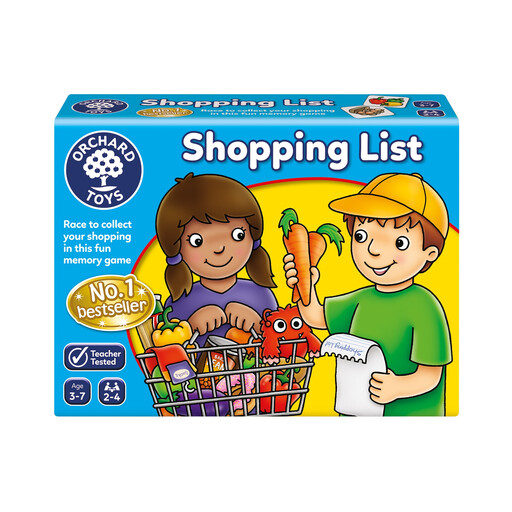
Why This Fits Their Persona: A practical starting point for families introducing tabletop play to children from age 3, with familiar shopping-themed play and straightforward turns.
It has simple rules rather than a lengthy instruction set, and its matching format is suitable for early play with adult guidance.
Designed for ages 3+, includes shopping list and item cards, and supports matching, memory and turn-taking practice.
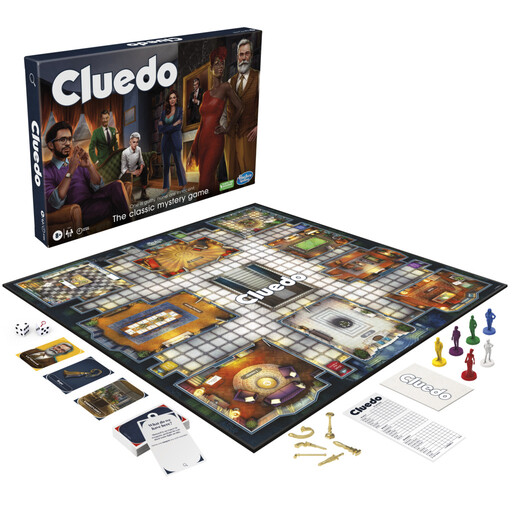
Why This Fits Their Persona: A suitable choice for adults and older children who want a more detailed mystery game for family gatherings and longer sessions.
The product details clearly state the age guidance of 8+, helping buyers avoid giving a deduction-based game to children who may find it too demanding.
Includes six suspects, sculpted character movers, weapon tokens and Clue cards with gameplay twists.
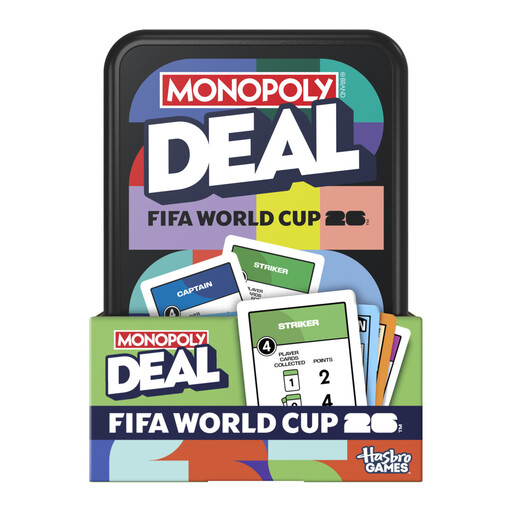
Why This Fits Their Persona: Football fans and families needing a compact option for holidays, parties, camping or quick play between other activities.
Its stated 15-minute playtime and compact plastic case make it more practical than a full-size board game for travel.
For 2–5 players aged 8+, with action cards and a case measuring approximately 2.5 x 9.8 x 17.1 cm.
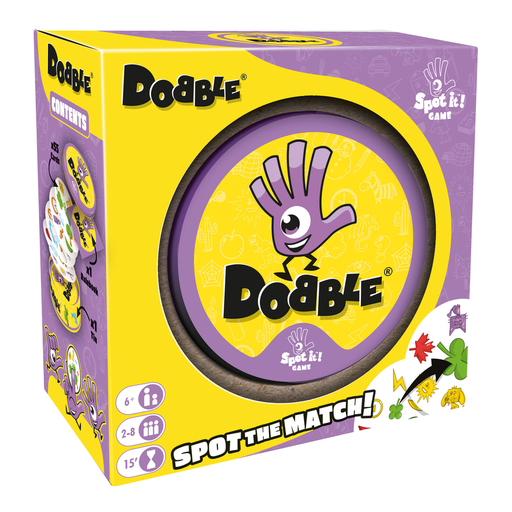
Why This Fits Their Persona: A flexible option for family game night, parties and travel, particularly when players want short, energetic rounds.
The metal tin keeps the cards together, reducing the storage problem often associated with portable card games.
Contains 55 circular cards, five mini-games and a portable tin; suitable for ages 6+ and battery-free play.
There is no single age range. Some games are designed for children from age 3, while deduction, bluffing and strategy games commonly start at age 6 or 8. Always follow the stated age rating and small-part warning.
Start with the youngest intended player, then check the player count and likely duration. A short, battery-free game is often easier for mixed-age groups, while older children and adults may enjoy games involving deduction, collecting or tactical choices.
Yes. Look for a compact box, tin or carrying case, and confirm that the game can be played on a small, stable surface. Card games such as Monopoly Deal FIFA and Dobble are easier to pack than many large board games.