Family meal-prep cooks
If dressing, sauces and meal components share the fridge with everyday groceries, look at chilled-compartment litres and whether shelves accommodate sealed containers upright.


Choose usable chilled space and shelves that hold sealed dressing containers upright before deciding how much freezer room you need. A freestanding combi can suit a conventional kitchen space, an integrated model must fit its cabinet, and a larger model is worth considering when family groceries and batch cooking justify its size. Compare each model’s compartment volumes, annual energy use and installation requirements.
If dressing, sauces and meal components share the fridge with everyday groceries, look at chilled-compartment litres and whether shelves accommodate sealed containers upright.
If you also freeze portions for later meals, assess freezer volume and drawer layout alongside chilled space. A no-frost feature may reduce freezer-defrost work, but it does not replace temperature checks in the fridge.
If cabinetry or floor space limits your choice, measure the installation and delivery route. Compare annual energy consumption, compartment volumes and noise for models that fit.
Start with the fridge space needed for dressing and family groceries, then decide whether your freezer use and kitchen layout call for a different format.
Consider it when: You want a separate freezer and a model you can place in a suitable freestanding space.
Allow for: Visible placement, door swing and installation clearances; usable fridge capacity varies by model.
Consider it when: The appliance needs to sit behind an existing kitchen cabinet door.
Allow for: A matching cabinet niche, hinge arrangement and ventilation requirements.
Consider it when: Frequent large grocery shops and batch cooking call for substantial chilled and frozen storage.
Allow for: More kitchen and delivery-route space; compare annual energy consumption as well as capacity.
| Concern | What to check | Who this matters to |
|---|---|---|
| Chilled temperature control | Look for usable temperature controls and space for a fridge thermometer. The Food Standards Agency recommends keeping a fridge at 5°C or below. | If I store homemade dressing for later, I need to know the fridge stays suitably cold rather than relying on its dial setting. Around 36% of consumers put chilled temperature control first. |
| Usable fridge capacity | Compare chilled-compartment litres separately from total capacity, then check whether shelves fit sealed jars and food tubs upright. | When dressing and fresh ingredients share space with a family shop, I need room I can actually organise. For around 29% of consumers, usable chilled capacity is the primary concern. |
| Freezer space and maintenance | Check freezer litres and drawer layout; confirm whether the exact model has a no-frost feature if avoiding manual defrosting matters. | If I freeze meal portions regularly, accessible drawers matter more to me than extra fridge shelving. Around 21% of consumers prioritise freezer storage and maintenance. |
| Kitchen fit and energy information | Measure the installation and delivery spaces, then compare annual kWh, compartment volumes and noise for suitable models. | With a fixed kitchen opening or a focus on electricity use, I need an appliance that fits and whose running information I can compare. Fit and energy information come first for around 14% of consumers. |
A freezer-heavy layout can have a generous total capacity while leaving less chilled shelf space for dressing, fresh ingredients and groceries.
Compare fridge and freezer litres separately, then inspect the shelf layout and fridge-to-freezer split.
No Frost addresses ice build-up and defrosting; it does not establish the temperature at which homemade dressing is stored.
Keep dressing in a sealed container and use a fridge thermometer to check that the fridge stays at 5°C or below, in line with Food Standards Agency guidance.
Energy Saving Trust notes that appliance size affects energy use, so models with the same efficiency rating need not use the same amount of electricity.
Compare annual kWh alongside compartment capacity and noise, particularly when considering a larger model.
A larger-than-needed appliance may use more electricity over time.
Ventilation space, door swing and the route into the kitchen can affect whether a fridge-freezer can be installed. The Joybuy listing for the Bosch KGN27NWEAG, for example, specifies at least 5 cm clearance behind that particular model.
Measure the available space and delivery route, and follow the installation instructions for the exact model you choose.
Brand ranges can help narrow a search, but capacities, cooling features and installation requirements belong to individual models.
A reference point for freestanding and integrated fridge-freezers, including models with no-frost cooling and dedicated freshness compartments.
Its range includes family-oriented formats and selected models with flexible compartments.
An option to examine for tall bottom-mount models with no-frost and connected features on selected products.
A useful range to examine when comparing fridge-to-freezer splits and freestanding or built-in formats.
These models cover wider freestanding storage, a narrower freestanding option and an integrated format. Choose by chilled space and kitchen fit first; a larger total capacity alone does not answer the dressing-storage question.
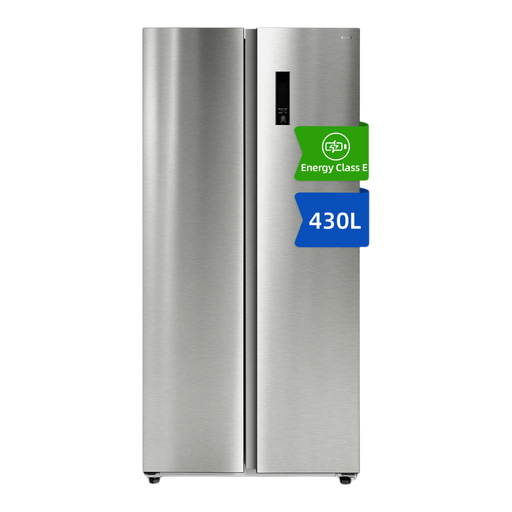 No image available
Consider this wider format if family groceries and several sealed containers call for substantial storage. Its stated width is 84 cm; check installation and delivery access. The product name specifies No Frost and an E energy rating; compare annual kWh and chilled-compartment litres before deciding.
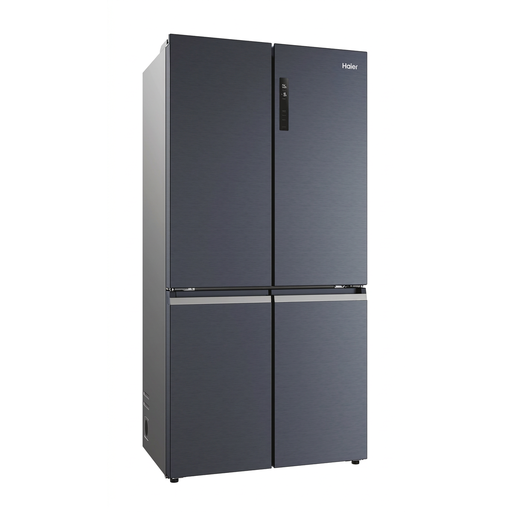 No image available
This freestanding model is worth considering when a large family shop calls for more chilled storage. Its name states 528 L total capacity, which should not be mistaken for fridge capacity; check the separate compartment volumes and measure the space available for a Cube 90 model.
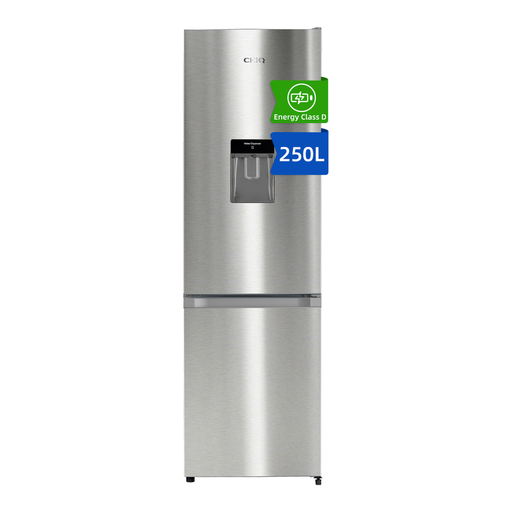 No image available
At a stated 54 cm wide, this freestanding model merits a look where kitchen width is constrained. Its name specifies Total No Frost, a water dispenser and a D energy rating. Check whether its chilled compartment accommodates your usual groceries and upright dressing containers.
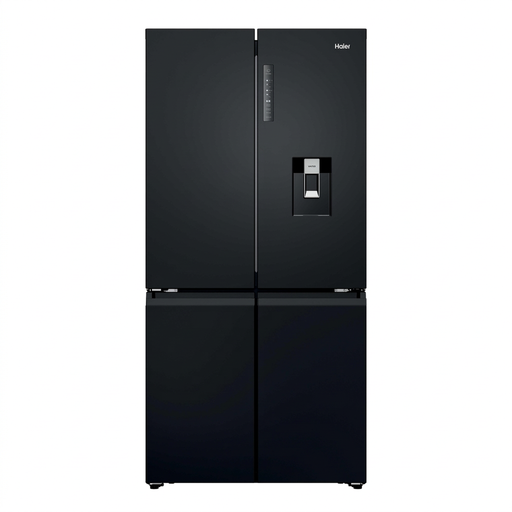 No image available
This freestanding four-door format may suit households making frequent large grocery shops. The stated 649 L is total capacity: compare the fridge and freezer compartments separately, and check that the appliance and its doors fit the kitchen and delivery route.
 No image available
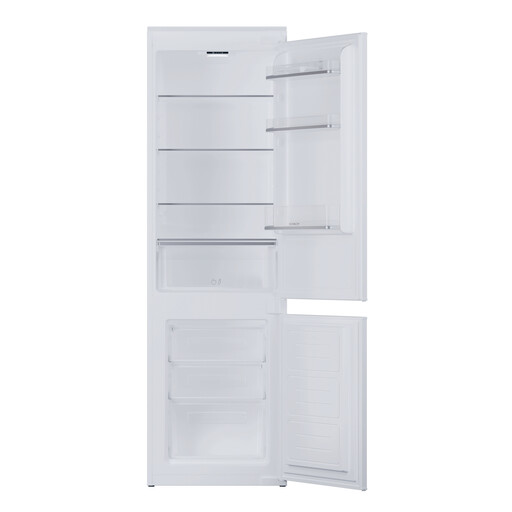
Consider this fully integrated model if concealing the appliance within cabinetry is a priority. Its name specifies a 177 cm height, 70/30 split, Low Frost and E energy rating. Confirm that the cabinet niche, hinge system and ventilation requirements match your kitchen.
Keep the fridge at 5°C or below, as recommended by the Food Standards Agency, and check it with a thermometer. Store dressing that will not be eaten immediately in a sealed container; how long it keeps depends on its ingredients, preparation and recipe instructions.
Not for dressing alone: it chiefly needs chilled storage. Extra freezer room becomes relevant if you also freeze family meal portions or ingredients, so compare fridge and freezer litres separately.
No Frost helps with ice build-up and defrosting, not the safety of dressing in the fridge. Maintain the appropriate chilled temperature, use a sealed container and follow any ingredient-specific storage instructions.
Compare annual energy consumption and the separate compartment volumes as well as the rating. Energy Saving Trust notes that size affects energy use; noise information and the exact model’s dimensions also matter when narrowing the choice.