What to check before buying
Start with the toddler’s texture and allergen needs, then decide whether the wider household will use a larger pack often enough to make its size practical.
| Priority |
What to check |
Your needs |
| Texture and choking risk |
Read the ingredients and cautions for whole nuts, seeds, shells, fruit stones and other hard pieces. NHS guidance says whole nuts should not be given to children under 5 because they can choke. |
I need a breakfast texture my toddler can safely manage, rather than assuming a crunchy adult cereal is suitable. |
| Sugars and sweeteners |
Compare sugars per 100g and per serving between similar products. Check the ingredients for sugar, honey and syrups; a no-added-sugar claim does not answer texture or allergen questions. |
I want to compare the full label, not treat oats, wholegrain wording or a large pack as a sugar guide. |
| Wholegrain and fibre |
For an under-2, avoid making wholegrain cereal the only type of starchy breakfast food. NHS guidance says wholegrain foods can be offered, but a child should have variety. |
I need breakfast variety for a younger toddler instead of relying on the same wholegrain granola every morning. |
| Allergens and packed lunches |
Check bold allergens and any may-contain statement on the physical pack. Confirm the nursery or school’s current policy, especially where nuts, milk, soya or gluten are relevant. |
I need to know whether the exact product is appropriate for my child and permitted by their particular setting. |
| Pack size and household use |
Compare net weight with how often adults or older children will eat it. Follow the storage instructions after opening and do not use an adult serving suggestion as a toddler portion guide. |
A 750g to 1kg bag makes sense when the household will use it regularly, even if the toddler has a separate breakfast. |
Joybuy product options
These Joybuy options are 750g granola packs for shared household breakfasts where adults or older children use the granola and the toddler has a separately suitable breakfast.
 No image available
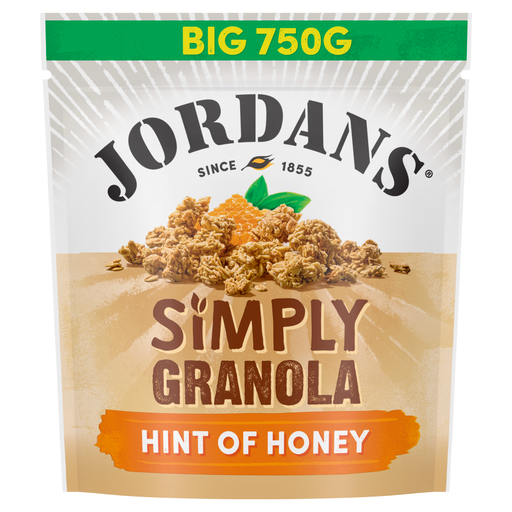
Jordans Simply Granola 750g
A 750g resealable option for regular adult or older-child breakfasts when the toddler has a separate suitable breakfast.
Listed with 81% wholegrain oat flakes, sunflower seeds, sugar and honey; the listing also notes possible nuts, other gluten-containing cereals and occasional hard nut-shell or fruit-stone pieces. Check the current pack before packing for a nursery or school.
Joybuy
 No image available
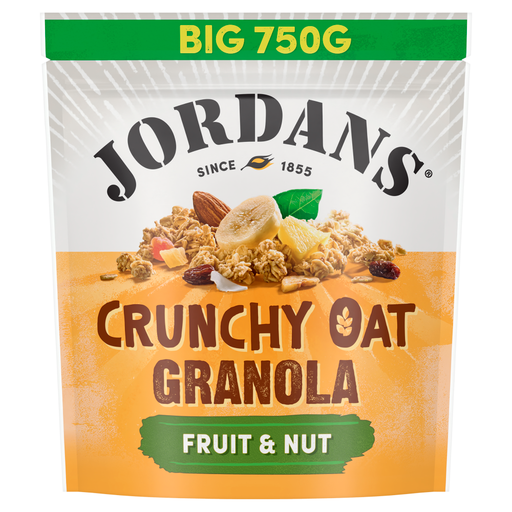
Jordans Crunchy Oat Granola Fruit & Nut 750g
A resealable 750g granola for adults or older children sharing breakfast, rather than an assumed toddler breakfast.
Listed with 66% wholegrain oats, dried fruit, whole almonds and sunflower seeds. It may contain peanuts, other nuts and cereals containing gluten, and carries a hard-fragment caution; check the current pack and any setting policy.
Joybuy
Frequently asked questions
Is a 1kg granola bag automatically the right choice for a toddler breakfast?
No. A 1kg pack is a household quantity choice, not a toddler-suitability claim. Large granolas can contain seeds or nuts and may warn that small children can choke, so choose a large bag when the wider household will use it and the toddler’s breakfast is independently suitable.
Can toddlers eat granola containing nuts?
Do not give whole nuts to children under 5 because they can choke, according to NHS guidance. Granola is often crunchy and may also contain hard shell or fruit-stone fragments, so a nut-containing adult granola should not be assumed safe for a toddler.
Does a low-sugar or no-added-sugar granola solve the toddler issue?
No. Sugar labelling can be useful for comparing products, but it does not address whole nuts, seeds, hard fragments, gluten, other allergens or the suitability of a crunchy texture. Check each of these separately on the current pack.
Should an under-2 have wholegrain granola every morning?
Not as the only type of starchy breakfast food. NHS guidance says under-2s can have wholegrain foods, but should not be given only wholegrain starchy foods because fibre can fill them before they obtain the calories and nutrients they need. Offer variety across breakfasts.
Can I pack gluten-containing granola for school?
There is no single UK-wide yes-or-no answer. In England, schools must publish an allergy safety policy, so check the individual school’s current packed-lunch rules and the product’s full allergen declaration. A gluten check does not replace checks for nuts, milk, soya or trace-allergen statements.


