An all-in-one desktop is worth considering if you want fewer separate computer units around a family-history research desk: it combines the display and computer in one enclosure, but does not guarantee a particular number of plugs for the whole setup. Choose Windows or macOS around the software and peripherals you use, then check the exact model’s power connections, ports, storage and upgrade options.
Who this setup suits
Researchers with limited sockets
If your research desk has little room for separate equipment, an all-in-one can reduce the number of main computer units. Lenovo UK describes this design as combining the display and computer in one enclosure; check the chosen model and your accessories before planning how to power everything.
Family historians using local software
If you maintain a tree on your computer as well as browsing archives, check the operating system, browser and connected devices before choosing a desktop. Software MacKiev offers Family Tree Maker 2024 for Mac and Windows, while Ancestry advises keeping browsers current.
Organisers of records and photographs
If you regularly read scans and store certificates or family photographs, compare display specifications, SSD capacity and connections for your scanner or backup drive. Lenovo UK and HP Store UK list 23.8-inch FHD all-in-ones with 512GB SSDs; whether that capacity suits you depends on your own files.
What matters when choosing
Decide whether an integrated display and computer suit your desk and power plan before choosing Windows or macOS. A separate tower and monitor remains an option if replacing components independently matters more than reducing separate equipment.
| Concern |
What to check |
Who this matters to |
| Desk space and power |
Check the model’s mains arrangement and list the power needs of connected accessories. Follow the marked rating of any extension lead. |
With few sockets free, I want fewer separate desktop units without overlooking the devices around them; around 36% of consumers would put the setup and power plan first. |
| Software compatibility |
Confirm support for your genealogy programs, archive-site browser, scanner and printer on the chosen operating system. |
If my tree software or scanner needs a particular system, screen design alone cannot settle the choice. Roughly 29% of consumers would make compatibility their primary concern. |
| Record-reading workspace |
Compare the exact display’s size and resolution, and check connections for devices used with scans and photographs. |
When I spend time comparing scanned records, I need a screen that suits how I read them; around 21% of consumers would put their viewing workspace first. |
| Files and backup |
Compare SSD capacity with your existing archive and plan a separate backup; check what your tree service synchronises. |
If my collection of tree files and media keeps growing, I need room for it and a recoverable copy. Roughly 14% of consumers would prioritise preserving their archive. |
Mistakes to avoid
-
Assuming every all-in-one needs the same cables
An integrated computer and display remove the separate tower, but a printer, scanner, drive or other accessory may still need a connection or its own power supply.
List everything you will use at the desk, then check the exact model’s power arrangement, ports, wireless connections and included accessories.
-
Using extension leads without checking their load
Electrical Safety First warns that an overloaded extension device can overheat and create a fire risk.
Keep connected loads within the device’s marked current rating, use only one extension device per socket and do not plug one extension lead into another. If extensions are a regular necessity, consider professionally installed additional sockets.
-
Choosing an operating system before checking your tools
Family Tree Maker 2024 is available for Mac and Windows, according to Software MacKiev, but that does not establish support for every other program, browser or peripheral you use.
Check your genealogy applications, archive sites, scanner, printer and existing files against the system you intend to buy.
If an essential tool cannot move with you, changing systems may also take time to migrate files or require a compatible replacement.
-
Treating synchronisation as a complete backup
Software MacKiev says core data in linked Family Tree Maker and Ancestry trees synchronises in both directions; that does not mean every file or detail is covered.
Review the services’ synchronisation boundaries and keep an independent backup of important tree files and media.
Brands to consider
Apple
The iMac is a macOS all-in-one route for researchers whose genealogy software and peripherals support Mac.
- Apple UK lists a 24-inch 4.5K Retina display, with memory and SSD configurations that vary by model.
- Check Mac compatibility for any Windows-specific program or device utility before choosing an iMac.
Lenovo
Lenovo’s Windows all-in-ones combine the computer and display for a more integrated desk setup.
- Lenovo UK specifies an A100 configuration with a 23.8-inch FHD display, 8GB DDR5 memory and a 512GB SSD.
- Lenovo notes that upgrades to all-in-ones can be challenging; check the exact configuration and upgrade options before buying.
HP
HP’s Windows all-in-one listings offer different screen sizes and storage configurations for a screen-and-PC setup.
- HP Store UK lists a 23.8-inch FHD model with 8GB RAM and a 512GB SSD, alongside a 27-inch configuration with 16GB RAM and a 1TB SSD.
- Choose a specific configuration against your files and desk space rather than assuming those specifications apply across the range.
Dell
Dell offers Windows all-in-ones for researchers comparing integrated desktops with different configurations.
- Dell UK lists all-in-one options with 23.8-inch displays and configurations with DDR5 memory and SSD storage.
- Check the particular model’s display, ports and power arrangement rather than applying range-wide specifications to it.
Windows all-in-one to consider
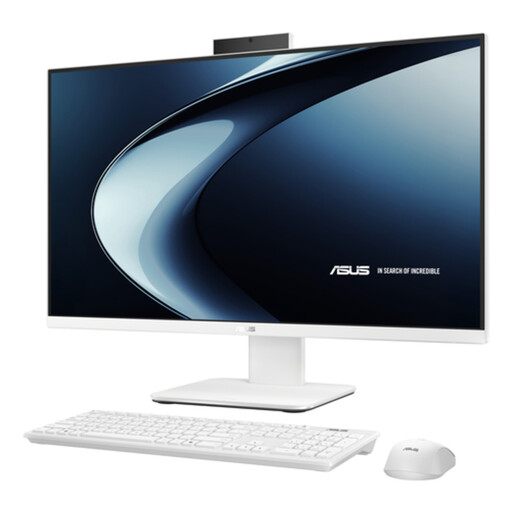
This Windows all-in-one combines the computer and display for a family-history desk where reducing separate equipment matters. Check its connections and the power needs of your other devices before deciding whether it fits your socket plan.
 No image available
ASUS V400 AiO V470VAK-WPE032W 27-inch, 16GB/512GB, White
This all-in-one suits a Windows research desk where keeping the computer and display together is the priority.
Its listed configuration includes a 27-inch Full HD display, Intel Core i7-13620H processor, 16GB DDR5 RAM, a 512GB SSD and Windows 11 Home.
Check whether Full HD suits your record viewing, whether 512GB accommodates your files, and how your software, peripherals and mains connections will fit the setup. Keep an independent backup of important records.
View on Joybuy
Common questions
Will an all-in-one automatically use only one wall socket?
No: an all-in-one combines the computer and display, but that alone does not establish the power requirements of the complete desk setup. Check the exact model’s mains arrangement and any printer, scanner, powered hub or other accessory you intend to use.
Can I use an extension lead for this desk setup?
Yes, provided you use it within its marked current rating and follow safe connection practices. Electrical Safety First advises using only one extension device per socket and never plugging an extension lead into another; consider professionally installed sockets if you regularly depend on extensions.
Should I choose Windows or macOS for family-history research?
Choose the system that supports your own genealogy applications and peripherals. Software MacKiev offers Family Tree Maker 2024 for both Mac and Windows, but check your other programs, scanner, printer and file workflow individually; keep the browser you use for archives current.
Does a larger SSD remove the need for backups?
No. Additional internal storage holds more files but does not provide an independent recoverable copy. If you link Family Tree Maker with Ancestry, review what synchronises and keep a separate backup of important tree files and media.


