Families making pasta lunches regularly
If pasta goes into the lunchbox several times a week, pack size, storage and a shape the pupil will eat cold all affect the choice.


Choose a larger pack of standard dried pasta if you make packed lunches regularly, have room to store it and will use it after opening. For lunches eaten cold, Tesco describes its fusilli as suitable hot or cold; wholewheat is an option when the pupil accepts it and its fibre content matters to you. If gluten must be avoided, choose a clearly labelled alternative instead, and check the current pack label and the school’s arrangements before packing lunch.
If pasta goes into the lunchbox several times a week, pack size, storage and a shape the pupil will eat cold all affect the choice.
Check the fibre declaration on the pack, but try the pasta at home before relying on it for school lunches. Wholewheat pasta still contains wheat and gluten.
Choose against the individual pupil’s requirements, the current product label and the school’s allergy arrangements rather than assuming all dried pasta is interchangeable.
Start with any allergen requirements, then decide whether the pack size and pasta shape fit your lunch routine.
| Concern | What to check | Who this matters to |
|---|---|---|
| Usable pack size | Compare the number and weight of packs with your storage space and how often you prepare pasta. | When pasta lunches are made repeatedly, a larger bundle is useful only if the household will finish it. About 29% of consumers put usable pack size first. |
| Cold-lunch practicality | Check whether the chosen shape suits cold serving and whether the prepared lunch fits a sealed container. | For lunch eaten cold, the pasta needs to work with the planned dressing without making the container awkward to use. About 36% of consumers prioritise cold-lunch practicality. |
| Wholewheat preference | Read the specific pack’s fibre declaration and try the flavour and texture at home. | A pupil must be willing to eat the wholewheat lunch for that choice to be practical. Roughly 21% of consumers make the wholewheat option their primary concern. |
| Allergen requirements | Read the current allergen label and check the school’s arrangements for the pupil. | Where wheat or gluten must be avoided, an ordinary wheat-semolina pack cannot serve the same purpose. About 14% of consumers put allergen requirements first. |
The standard Tesco, ASDA and M&S pasta products described here contain wheat; gluten-free alternatives have different ingredient lists.
Read the current pack’s allergen declaration and check the school’s arrangements for the individual pupil.
Tesco lists a 3kg fusilli pack, while its standard penne and ASDA’s standard penne are each 1kg. The larger size is not automatically the practical choice.
Match the amount to your lunch routine and available dry storage.
An opened pack that is not stored and used as intended may go to waste.
A fibre-focused choice still needs to be eaten, and wholewheat pasta does not avoid wheat or gluten.
Try a small meal at home and compare the fibre declarations on the products you are considering.
Once pasta is prepared with other ingredients, consider how the completed lunch will be kept cool until it is eaten.
East Lancashire Hospitals NHS Trust advises refrigerating food prepared the night before and using a cool bag with an ice pack or frozen drink carton.
That routine may require a cool bag and an ice pack.
Tesco Groceries lists 3kg fusilli alongside 1kg standard and wholewheat penne options.
ASDA Groceries lists 1kg standard wheat penne and a separate 500g Free From penne.
Barilla describes separate whole-wheat and gluten-free penne products.
Marks & Spencer lists a 500g dried penne made with durum wheat semolina.
Dolmio is relevant here as a pasta-sauce option, not as a dried-pasta pack.
These dried wheat-pasta bundles offer separate packs for repeated household use: standard fusilli, wholewheat fusilli and spaghetti. For a packed lunch, choose the shape and ingredients to suit the pupil before deciding how much to buy.
 No image available
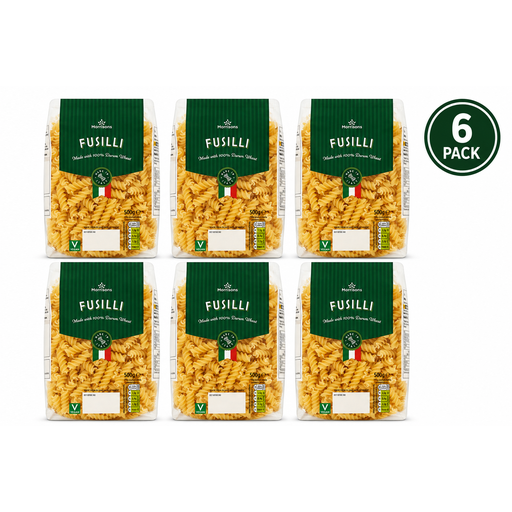
Consider this short pasta shape for repeated pasta-lunch preparation; the bundle contains six separate 500g packs, totalling 3kg. It contains wheat, so check the current label and the school’s arrangements before packing it.
 No image available
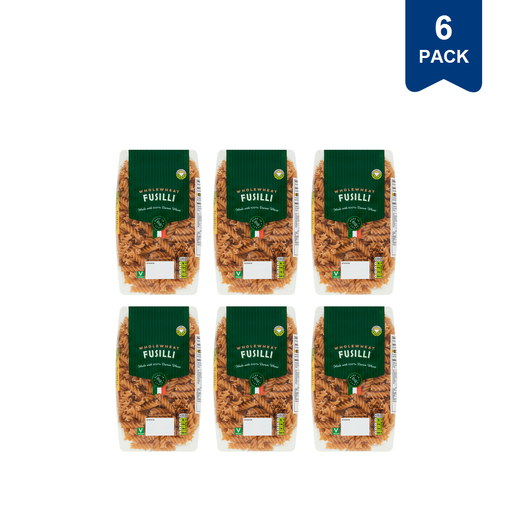
Choose this route if the pupil accepts wholewheat fusilli and you will use a six-pack bundle of 500g packs. Wholewheat still contains wheat and gluten; try the prepared pasta for the intended cold lunch before relying on it.
 No image available
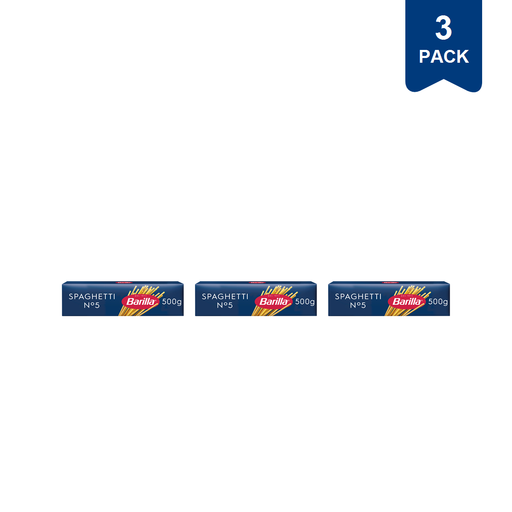
Consider this three-pack bundle if your household will also use spaghetti beyond the school-lunch routine; it contains 1.5kg in total. It contains wheat, and it is worth trying the chosen cold-lunch preparation before buying it specifically for packed lunches.
Use the particular pack’s serving guidance as a starting point, then account for the pupil’s appetite and the rest of the lunch. ASDA Groceries gives 75g dry pasta as serving guidance for its cited 1kg penne.
Tesco Groceries explicitly describes its 3kg fusilli as suitable hot or cold, while it describes the ridges and hollow centre of its 1kg penne as holding sauce. Choose the shape your pupil will eat and use a sealed container for the prepared lunch.
No. Tesco’s cited wholewheat penne is made with durum wholewheat semolina and identifies cereals containing gluten. Check the current label if the pupil needs to avoid wheat or gluten.
Ask about the school’s current packed-lunch and allergy arrangements, especially where the pupil has an individual allergen requirement. Department for Education guidance for England addresses school allergy safety policies; the current food label and the pupil’s own requirements still matter when choosing the pasta.
Refrigerate the prepared lunch until morning and carry it in a cool bag with an ice pack or frozen drink carton, as advised in an East Lancashire Hospitals NHS Trust packed-lunch fact sheet. Keep the lunch away from direct sunlight and heat.