Low-fat family-meal planners
For repeated pasta dinners, the relevant fat figures extend beyond the pasta. Check the sauce and any meat, cheese or oil used in the recipe before judging the meal.


A 1 kg or larger pack of dried pasta makes sense when your household uses that shape regularly and can store the opened pack as directed. For a low-fat meal, check the pasta’s nutrition panel, but assess the sauce, meat, cheese and oil separately: a figure for one ingredient does not describe the finished dish.
For repeated pasta dinners, the relevant fat figures extend beyond the pasta. Check the sauce and any meat, cheese or oil used in the recipe before judging the meal.
A larger pack is practical when the household will use its particular shape regularly and has suitable dry storage, rather than leaving an opened bag unused.
If wholewheat pasta appeals to the household, compare its ingredients and fibre information while checking the exact product’s fat panel separately.
Start with the meal you intend to make, then choose a pack size and pasta shape your household will use. A wholewheat preference is a separate choice from checking the fat content of the finished dish.
| Concern | What to check | Who this matters to |
|---|---|---|
| Fat in the finished meal | Read fat and saturates per 100 g and per intended serving for packaged components; account for meat, cheese and oil added during cooking. | If I am planning a lower-fat dinner, the pasta alone cannot tell me what will be on the plate. About 36% of consumers put the finished meal’s fat content first. |
| Portions and pack size | Use the pack’s dry-portion guidance and decide how often the household will make that pasta shape. | When I cook pasta for several people, I need a pack that fits our usual portions without lingering in the cupboard. Matching portions to pack size comes first for about 29% of consumers. |
| Using a larger pack | Check the shape suits repeat meals and that the opened pasta can be stored according to its pack directions. | A larger bag only suits me if everyone will eat that shape and I have room to keep it properly. Avoiding an unused bulk pack is the main concern for about 21% of consumers. |
| Wholewheat preference | Check the ingredients, fibre information and fat panel on the particular product. | If my household likes wholewheat pasta, I want that choice to work for our meals without assuming it lowers their fat content. About 14% of consumers prioritise wholewheat fit. |
A pasta or sauce panel covers that product, not the meat, cheese or oil added to the dish. Dolmio’s family-size low-fat Bolognese sauce, for example, is a sauce component rather than a nutrition figure for a completed recipe.
Check each packaged component per 100 g, then consider the ingredients and portions in the recipe you actually serve.
Tesco’s spaghetti guidance allows approximately 75 g dry pasta per person, while Sainsbury’s wholewheat fusilli guidance gives 90 g. Those different serving amounts change how far a pack goes.
Use the directions on the pasta you buy, alongside your household’s usual portions, before choosing the pack size.
A larger quantity is less practical if the household does not like the shape or cannot store the opened pasta as directed.
Choose a bulk format for a shape you use repeatedly; otherwise, consider a smaller pack or separately packed quantities.
Standard durum-wheat pasta contains wheat. The Food Standards Agency identifies wheat among cereals containing gluten, so fat information does not establish gluten-free suitability.
If you need to avoid wheat or gluten, read the current ingredients and allergen declaration and choose a product labelled for your requirement.
Tesco’s 1 kg spaghetti and wholewheat penne are reference points for choosing between standard and wholewheat dried pasta.
Sainsbury’s has a 1 kg wholewheat fusilli example and a 3 kg fusilli listing relevant to different household-use patterns.
Dolmio is relevant here as a sauce choice: its Low Fat Bolognese Family Size sauce comes in a 675 g jar, according to Dolmio UK.
Barilla’s 500 g dried-pasta packs offer a smaller individual pack size to consider alongside larger single bags.
These dried-pasta multipacks offer wholewheat fusilli, standard fusilli and spaghetti choices for households planning repeat meals. Assess sauce and other additions separately when planning a low-fat dish.
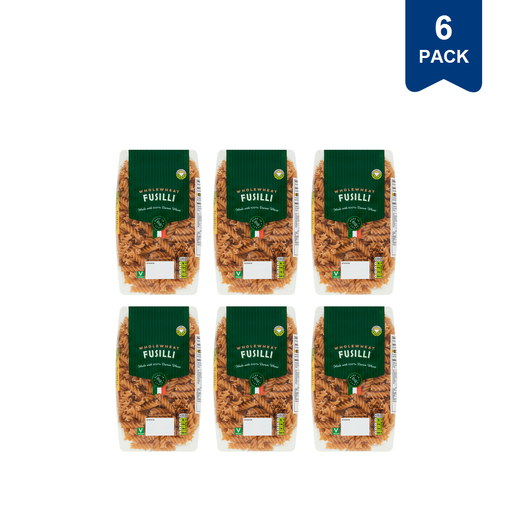 Image unavailable
Consider this when your household uses wholewheat fusilli for repeat meals. The bundle contains six 500 g packs; check the pasta and any sauce or additions separately when assessing a finished dish.
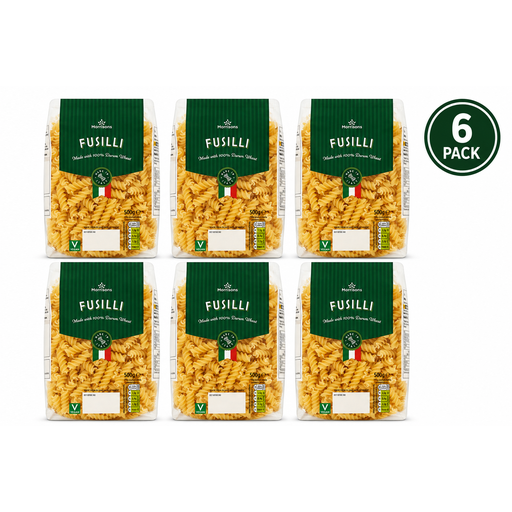 Image unavailable
Consider this standard fusilli multipack if the shape suits regular household meals. It contains six 500 g packs; use the current pack’s portion and nutrition directions for planning, rather than treating the pasta as the whole meal.
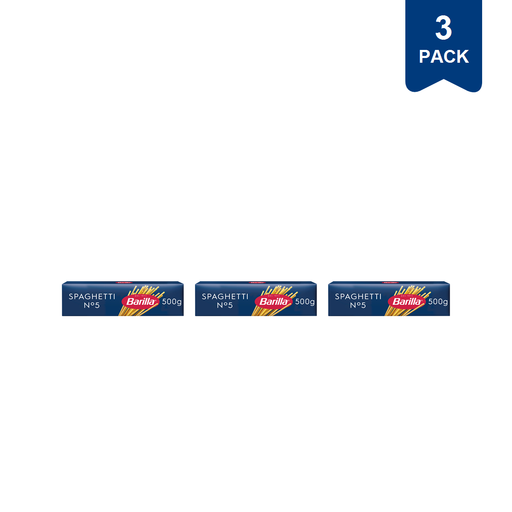 Image unavailable
Consider this spaghetti bundle if three separately packed 500 g quantities fit your household’s meals. Before comparing its nutrition figures with another pasta, check whether the pack states them for dry or cooked pasta.
No: the pasta’s nutrition panel does not include the sauce, meat, cheese or oil you add. Compare packaged components per 100 g and consider the portions used in your recipe. The NHS describes 3 g of fat or less per 100 g as low fat for solid foods; that threshold does not describe a mixed meal simply because one component meets it.
The answer depends on the product’s dry-portion guidance and how much your household serves. Tesco advises approximately 75 g dry pasta per person for its spaghetti, while Sainsbury’s advises 90 g for its wholewheat fusilli. Check the pack you intend to use rather than assuming one serving size for every pasta.
No: low fat and gluten-free describe different things. Standard durum-wheat pasta contains wheat, which the Food Standards Agency identifies among cereals containing gluten. Check the specific product’s ingredients, allergen declaration and gluten-free labelling when those are relevant to your purchase.
Follow the directions on the specific pack. Tesco’s spaghetti directions call for a cool, dry place and an airtight container once opened; check whether a different product gives different instructions before committing to a larger quantity.