Hosts feeding a larger table
If pasta is part of a shared Sunday meal, plan the portions, available pan space and what you will do with any uncooked pasta left in the pack.


For pasta served alongside a Sunday roast, start with the number of portions you need rather than the largest available bag: a 1kg pack can cover a shared meal and leftovers if its serving guidance fits your plans. Consider a 3kg pack for regular pasta meals or a larger gathering, but check storage and pan capacity; if someone needs gluten-free pasta, choose a product explicitly labelled gluten-free rather than standard durum-wheat pasta.
If pasta is part of a shared Sunday meal, plan the portions, available pan space and what you will do with any uncooked pasta left in the pack.
If you are making a substantial sauce or using roast leftovers in a bake, the pasta shape matters as well as the pack size.
If a guest needs to avoid gluten or another ingredient, check the individual product’s ingredients and allergen statement before planning the dish.
Decide how pasta will fit into the meal, then check the pack’s portion guidance, its shape and its ingredients.
| Concern | What to check | Who this matters to |
|---|---|---|
| Portions and pan space | Compare the pack’s serving guidance with your guest count and leftovers plan; check whether your pan can hold the batch. | If pasta is an extra Sunday side, I want enough for the table without cooking far more than my pan can handle. About 42% of consumers put portions and cooking capacity first. |
| Shape for the dish | For a sauced dish or bake, compare ridged penne and spiralled fusilli with the shape your recipe calls for. | When I am serving pasta with a substantial sauce or baking it with roast leftovers, the shape affects my choice. Roughly 33% of consumers prioritise that match. |
| Ingredient suitability | Read the specific pack’s ingredient and allergen statement; choose an explicitly gluten-free product where required. | Before making a dish for someone who must avoid gluten, I need to know which pasta they can eat. For about 25% of consumers, ingredient suitability is the primary concern. |
Tesco suggests 75g of dried pasta per person for its penne, while Sainsbury’s lists approximately 11 servings for its 1kg penne and macaroni.
Use the guidance on the pack you choose, adjusting the amount for a side dish, a main dish or planned leftovers.
Sainsbury’s instructions for its 1kg pasta use 1 litre of water per 90g of pasta. Following that guidance for the whole bag calls for roughly 11 litres of water.
Check your pan before the meal and cook in batches if it cannot accommodate the planned quantity.
The standard Sainsbury’s and Tesco examples contain durum wheat semolina. The Food Standards Agency identifies wheat as a cereal containing gluten.
For a gluten-free guest, select pasta explicitly labelled gluten-free and read its current ingredients and allergen statement.
Sainsbury’s describes its ridged, hollow penne as suitable for sauces and baked dishes; Barilla describes its fusilli spirals as capturing sauce. These are product descriptions, not a comparison test.
Choose a shape for the dish you intend to make, then select a quantity that covers the planned portions.
Its dried-pasta range includes 1kg penne and macaroni, while its pasta category lists a 3kg fusilli pack.
Its 1kg penne offers a portion guide for planning a shared dish.
Its 1kg penne listing states approximately 12 servings.
Its classic fusilli and gluten-free fusilli offer distinct ingredient choices, rather than the same family-size pack.
Dolmio is relevant here as a pasta-sauce choice, not as a dried-pasta pack-size option.
These multipacks are options for a larger table or for keeping pasta for later meals. The fusilli packs suit a plan centred on a shaped pasta dish; the spaghetti pack offers a different shape. Check each pack’s portions and ingredients against your Sunday menu.
 No image available
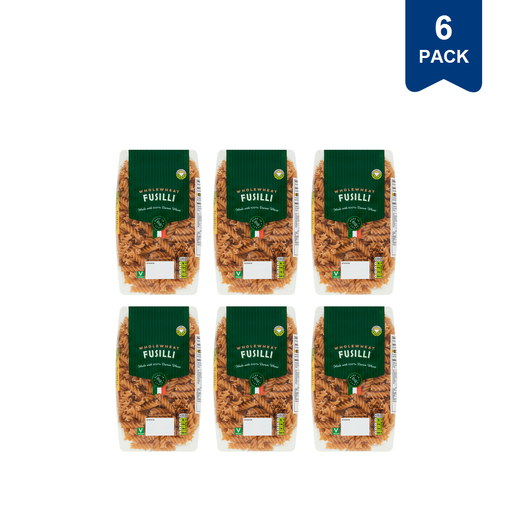
Six separate packs may suit a larger gathering or pasta kept for later meals. The product information identifies wholewheat durum semolina, suggests 75g per person and gives a cooking range of 10–12 minutes. It contains wheat; check the pack’s current allergen information and portion guidance before serving.
 No image available
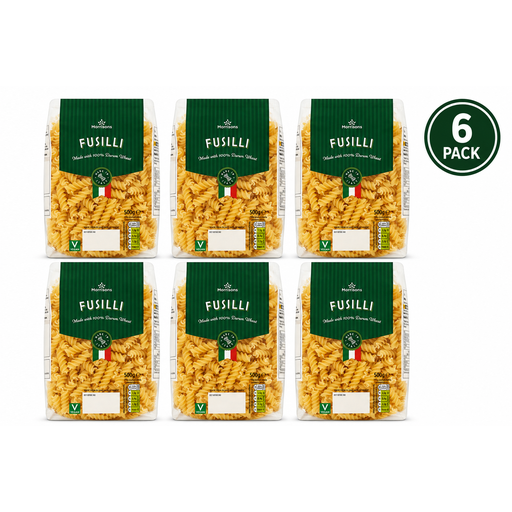
Six separate packs offer flexibility if Sunday’s meal will not use the whole bundle. The product information identifies durum wheat semolina, suggests approximately 75g per person and gives a cooking range of 10–12 minutes. It contains wheat; check the current allergen information and the individual pack’s portion guidance.
 No image available
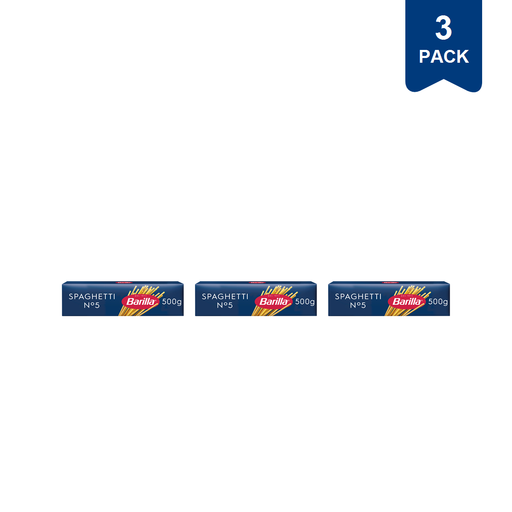
Three packs provide spaghetti for more than one meal or a larger table. The product information lists durum wheat semolina and water and gives a 9-minute cooking time. It contains wheat and may contain mustard and soya; check the current allergen information and pack guidance when planning portions.
Use the guidance on the particular pack and account for whether pasta is a side or the main dish. Tesco suggests 75g per person for its 1kg penne, which works out at about 13 portions; Sainsbury’s lists approximately 11 servings for its 1kg penne and macaroni.
Only if the pan accommodates the water and pasta required by that product’s instructions. Sainsbury’s guidance of 1 litre of water per 90g of pasta amounts to roughly 11 litres for a full 1kg bag, so cooking in batches may be more practical.
Sainsbury’s describes its ridged, hollow penne as holding sauce and suiting baked dishes; Barilla describes its fusilli spirals as capturing sauce. Choose according to the dish you are making, while treating those product descriptions as shape guidance rather than a universal performance comparison.
Do not assume it is: the standard wheat-pasta examples contain durum wheat semolina, and the Food Standards Agency identifies wheat as a cereal containing gluten. Choose a product explicitly labelled gluten-free and check its current ingredients and allergen statement; Barilla’s gluten-free fusilli is made with corn and brown rice.