Choose a backup arrangement based on where your files originate, how often they change and how you would restore them: a regularly updated drive suits a computer-led local copy, cloud uploads suit phone photos and access away from home, and a NAS suits households prepared to manage shared storage. For irreplaceable files, keep a separate recoverable copy as well as any synced library, and check capacity, compatibility, ongoing costs and a sample restore before relying on your setup.
Who needs a household backup?
Families protecting irreplaceable files
If you want to recover photos or documents after deletion, device loss or damage, keep a copy separate from the everyday library. The UK National Cyber Security Centre recommends considering both cloud storage and removable media for irreplaceable data.
Phone-first households
If most new photos and videos come from phones, check that uploads complete, videos are included and files remain accessible when you change devices. Google Photos Help and Microsoft Support describe phone camera-upload options and their settings.
Multi-device households
If files are spread across several phones and computers, check which accounts, folders and devices the chosen destination actually covers. Synology and Microsoft Support describe different ways to upload mobile media and select computer folders.
What should you prioritise?
Choose a route by where files originate and how you will restore them: computer-led local copies, automatic phone uploads and shared household storage involve different setup tasks. Combining local and cloud copies can provide separate destinations, but each needs maintenance and a recovery check.
| Concern |
What to check when buying |
Who this matters to |
| Recoverable copies |
Identify the separate copy, check how recently it was updated and test restoring sample files. The UK National Cyber Security Centre advises considering cloud and removable-media copies for irreplaceable files. |
If I could not replace family photos after a deletion or device loss, I would prioritise a separate copy I can restore. Consumers putting recoverability first make up around 29%. |
| Automatic coverage |
Check the account used, whether videos upload, which computer folders are selected and whether uploads have completed. Microsoft Support documents these settings for OneDrive. |
When new photos arrive on phones and documents change on computers, I want them copied without relying on repeated manual transfers. Consumers prioritising automatic coverage make up around 23%. |
| Room to grow |
Measure the files to protect and allow for expected growth and any retained versions; check what shares a cloud account’s storage allowance. |
If my family’s collection is growing, I need enough space for the files and copies we intend to keep. Consumers focused on capacity make up around 18%. |
| Device compatibility |
Check the actual devices, ports, backup apps, file-system requirements and any power or adapter needs. Apple Support explains that external drives used with iPhone may require external power. |
When our photos and documents sit across different devices, I need a workable way to copy and restore them on the devices we use. Consumers prioritising cross-device compatibility make up around 18%. |
| Access and ongoing commitment |
Check account recovery and two-factor authentication, the service’s billing terms and how to export files if you change your setup. |
If I want clear control over access and a commitment I can maintain, I would check both account protection and any continuing plan requirements. Consumers putting access and ongoing commitment first make up around 12%. |
Backup buying pitfalls
-
Treating a synced photo library as an independent backup
Apple says that deleting photos in iCloud Photos deletes them across devices using the service, so a synced library is not the same as a separate recoverable copy.
Keep another copy of files you cannot replace and test that you can open them from it.
This requires another storage destination and a routine for checking that it remains usable.
-
Buying a cross-platform drive solely because its plug fits
A connector that fits does not establish that a phone can power a drive or that a computer’s backup application accepts its format. Apple specifies format requirements for Time Machine and notes that external drives may need external power with iPhone.
Check your intended devices, backup app, power supply and file format before copying data or reformatting.
A cable, adapter or external power source may be needed for the setup you intend to use.
-
Assuming NAS redundancy is a separate backup
Synology cautions that RAID or drive failure can still cause loss of data held on a NAS.
Plan and test a backup from the NAS to a different destination.
The separate destination also needs upkeep and its own recovery checks.
-
Choosing cloud storage without checking upload settings and capacity
Having an account does not confirm that videos, selected computer folders or recent files have uploaded. Paid capacity may be needed as a collection grows.
Check the selected folders and videos, upload completion, available space, billing terms and file-export steps.
Relevant brands to consider
Seagate
The Expansion Portable family is a computer-connected HDD route for keeping a local household-file copy.
- Seagate lists Windows and Mac compatibility and USB 3.0 for the family.
- Seagate says Time Machine use requires reformatting. Check the selected capacity, supplied cable and exact variant rather than assuming every listing has the same configuration.
Samsung
The T7 Shield 1 TB MU-PE1T0S/EU illustrates a portable SSD option for frequent file transfers.
- Samsung rates sequential speeds of up to 1,050/1,000 MB/s with a compatible host and cable and UASP enabled.
- Samsung’s physical-resistance statements are based on manufacturer testing, and its stated warranty excludes liquid, dust and drop damage.
Synology
DiskStation DS223 is a shared NAS destination for households looking to manage backups across devices.
- Synology describes mobile-media upload and computer-folder backup options through its apps.
- A separate destination is still needed to protect data held on the NAS from failures affecting that storage.
Apple
iCloud+ is a subscription route for households using supported Apple photo, file and device-backup workflows.
- Apple lists UK storage plans and family sharing.
- Apple says iCloud Photos synchronises deletions and advises keeping a backup copy of the photo library. Check how this differs from device backup.
Microsoft
OneDrive offers an account-based route for phone camera uploads and selected computer folders.
- Microsoft documents camera upload on Android and iOS and computer-folder selection.
- Camera upload works with one account at a time; videos and additional folders require the relevant settings.
Google
Google Photos is an automatic photo-and-video upload option for supported phones.
- Google describes signed-in access and backup settings for supported devices.
- Original quality counts towards account storage. Storage saver also counts towards storage and can reduce resolution, so check the selected quality before relying on an upload as an original-quality copy.
Joybuy storage choices
These Joybuy choices focus on local household copies using portable SSDs and external hard drives for photos, documents and other files.
 No image available
Samsung MU-PE1T0S 1TB USB Type-C 3.2 Gen 2
A portable local copy may suit households transferring files between compatible devices.
1TB capacity and USB Type-C connection. The listing states USB 3.2 Gen 2 and speeds up to 1,050/1,000 MB/s; Samsung’s stated maximums require a compatible host and cable with UASP enabled.
Joybuy
 No image available
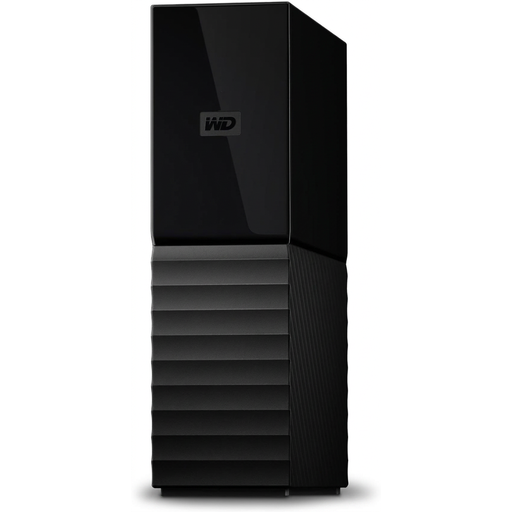
Western Digital My Book 22TB
A desktop drive may suit a household keeping a large local collection connected to a computer.
The listing specifies 22TB, USB 3.0, password protection and hardware encryption, and describes use with PC and Mac. It includes an AC adapter, so the setup requires mains power.
Joybuy
 No image available
SanDisk Portable SSD 2TB
A portable SSD may suit households wanting to carry a local copy of photos, videos and documents.
The listing specifies 2TB capacity and read speeds up to 800 MB/s. It describes a compact drive with a rubber hook.
Joybuy
 No image available
Western Digital My Passport 4TB Portable Hard Drive
A portable local drive may suit households that want scheduled computer backups.
The listing specifies USB 3.2 Gen 1 and describes scheduled local backups. It is USB bus-powered; the listing says macOS use requires a downloadable NTFS compatibility driver.
Joybuy
 No image available
Western Digital Elements Portable 4TB
A portable hard drive may suit households looking for a local copy connected to a computer.
The listing specifies 4TB capacity and USB 3.2 Gen 1. It describes plug-and-play file transfer and notes that reformatting may be required for Mac or other operating systems.
Joybuy
Household backup FAQs
How much backup capacity should I choose?
Measure the files you intend to protect across your devices, then allow for growth and any versions you plan to retain. For cloud storage, check what shares the account allowance rather than relying on a generic photo count.
Will iCloud Photos protect my photos if I delete them by mistake?
Not as an independent copy: Apple says a deletion in iCloud Photos is reflected across devices using the service. Keep and check a separate backup of files you cannot replace.
Can I plug an external hard drive straight into my iPhone?
It depends on the iPhone, connector, supported app, drive format and power. Apple Support notes that external hard drives often need external power when used with iPhone, so check the requirements for your setup before choosing an adapter or drive.
Can one drive handle Windows file copying and Mac Time Machine?
Check the file-copy and backup workflows separately. Western Digital describes exFAT for file copying between Windows and macOS, while Apple Support says Time Machine prefers APFS or encrypted APFS for its backup disk. Reformatting removes existing data.
Does a two-drive NAS remove the need to back it up?
No. Synology advises backing up to a different destination because RAID or drive failure can still cause loss of data held on the NAS.


