What to check before buying
Start with likely weekly bowls, then compare the exact current labels and decide whether the format works for everyone who will eat it.
| Priority |
What to check |
Your needs and respondent concerns |
| Usable pack size |
Use the labelled serving size to estimate breakfasts; compare pack count or weight with likely household use; confirm that regular eaters accept the format. |
I want a pack that will be eaten, rather than a large box chosen only for its shelf price. In a KAM survey published by Weetabix Food Company in 2023, 65% of 300 UK adults with children aged 2–14 said price was their top reason for choosing one cereal over another. |
| Nutrition label |
Compare similar products per 100g; then check the labelled serving; use traffic-light labelling, where shown, as a quick comparison of calories, fat, saturates, sugars and salt. |
I want to compare the current nutrition declaration instead of assuming that a family-size cereal has the same profile as another format. In the same manufacturer-published KAM survey, 44% of the stated parent sample said health content influenced their cereal choice. |
| Portion planning |
Check the stated serving weight or biscuit count; separate dry-cereal nutrition from milk and toppings; allow for different appetites and breakfast routines. |
Our bowls are not all the same size, so I need a realistic starting point for the week. Kellogg's says cereal portions commonly range from 30g to 50g per bowl, while individual products can state different serving sizes. |
| Ingredients and allergens |
Read the ingredients, highlighted allergens and any precautionary statement on the exact pack; repeat the check when buying again; do not assume a cereal format suits every eater. |
A shared cereal needs to work for every intended eater, including people who avoid particular ingredients or prefer a different breakfast format. |
Joybuy product options
Joybuy product options for shared breakfasts in a weekly big shop, covering wheat biscuits, ready-to-eat cereal, porridge oats and muesli formats.
 No image available
Weetabix Super Size 72 Pack 1.52kg
A portioned wheat-biscuit option for households that regularly eat the same breakfast format.
The pack states 36 two-biscuit portions. It contains wheat and barley, so check suitability for every intended eater.
Joybuy
 No image available
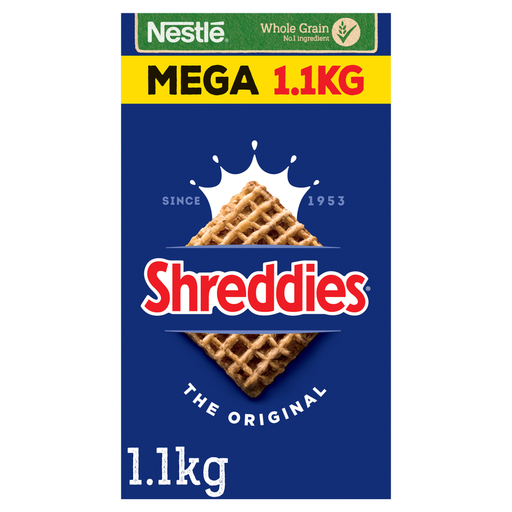
Nestlé Shreddies Original Malted Wheats 1.1kg
A ready-to-eat 1.1kg cereal for shared breakfasts where quick bowl preparation matters.
The listing states a 40g serving and 12g fibre per 100g. It contains wheat and barley-derived ingredients and may contain peanuts and nuts.
Joybuy
 No image available
Scotts Porage Oats Original 1kg
A porridge-oat option for households prepared to cook or soak oats for repeat breakfasts.
The listing states a 40g portion and 25 portions per pack. Preparation is required, and the product may contain wheat and barley.
Joybuy
 No image available
Flahavan's Organic Porridge Oats 1kg
A plain-oat format for households that want to vary toppings while using the same breakfast base.
The listing identifies 100% organic wholegrain oat flakes and a 40g serving. It requires preparation and contains oats.
Joybuy
 No image available
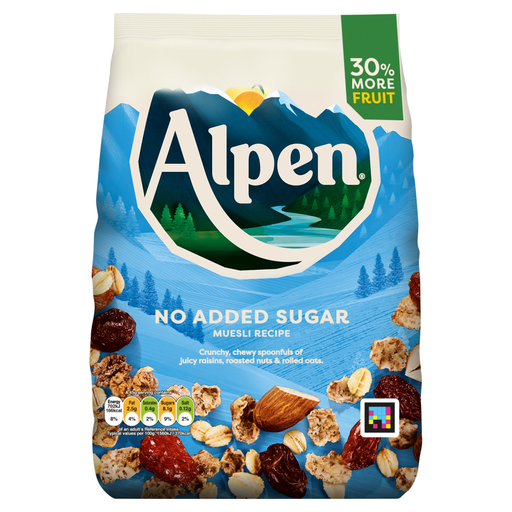
Alpen No Added Sugar Muesli 950g
A ready-to-eat fruit-and-nut muesli format for households that will consistently use this texture.
The listing gives a 45g serving and states 8.0g fibre, 18g sugars and 0.28g salt per 100g. It contains almonds, hazelnuts, milk, oats and wheat, and may contain other nuts.
Joybuy
Frequently asked questions
How do I calculate whether a family-size cereal pack will last a week?
Start with the manufacturer's stated serving, multiply it by the expected number of breakfasts, then allow for actual bowls to vary. Kellogg's says people commonly eat 30g to 50g of cereal in one bowl, while Quaker lists a 40g dry-oat serving and Weetabix Original lists two biscuits, or 37.5g, per serving.
Should I compare cereal nutrition per serving or per 100g?
Use both. Compare products per 100g for a consistent basis, then use the labelled serving to understand one expected bowl. GOV.UK says traffic-light labels, where present, can help compare calories, fat, saturates, sugars and salt at a glance.
Can one bulk cereal serve everyone in the household?
Only if every intended eater can consume its current ingredients and is willing to eat that format regularly. Weetabix Original lists wheat and barley; Quaker Traditional Rolled Oats may contain wheat and barley; Alpen Original includes wheat, oats, milk, almonds and hazelnuts and may contain other nuts, so check the current pack every time.
How should opened cereal be stored?
Follow the instructions on the specific pack. The inspected Weetabix 72-pack page advises a cool, dry and odourless place, while the inspected Quaker Jumbo Rolled Oats page advises a cool, dry place and says to reseal tightly once opened.


