Who this suits

Households with mixed breakfast routines

Cooked breakfast may be the main meal on some mornings, while cereal is a lighter alternative, a separate course or an option for only some people. Plan from expected cereal portions, as Kellogg’s UK notes that bowls commonly range from 30g to 50g.

Families comparing wholegrain and fibre

The NHS identifies plain wholewheat biscuits, plain shredded wholegrain cereal and porridge oats as higher-fibre breakfast choices within a varied diet.

Allergen-aware shared households

A bulk pack is only practical when the current on-pack ingredients and allergen information work for everyone likely to eat it, including people avoiding gluten-containing cereals, nuts or milk.

Buying priorities

Large plain rolled-oat pack

Choose it when: Several people regularly eat porridge and flexible portions matter. Quaker Traditional Rolled Oats is sold in 500g, 1kg and 1.5kg packs.

Consider: Oats need cooking or microwave preparation, and oat products may still contain wheat or barley.

Wholegrain ready-to-eat cereal

Choose it when: A quick bowl is wanted alongside or instead of a cooked breakfast, with clearly labelled portions and ingredients.

Consider: Serving sizes vary between products, so compare per-serving and per-100g figures rather than box size alone.

Fruit-and-nut muesli

Choose it when: Regular eaters specifically want a cold cereal with fruit, nuts and seeds.

Consider: Muesli recipes can include nuts and milk, and the stated sugars per serving should be compared on the same basis as other cereals.

Priority What to check Your needs
Portion-led pack sizing Use the labelled serving weight and servings per pack. Kellogg’s UK says bowls commonly range from 30g to 50g; labelled examples can be 37.5g, 40g or 45g. I want enough cereal for the people who will actually choose it, without sizing the pack for every cooked-breakfast guest.
Wholegrain and fibre Check the cereal type and fibre declaration. The NHS highlights plain wholewheat biscuits, plain shredded wholegrain cereal and porridge oats as higher-fibre breakfast choices. A convenient cereal with wholegrain ingredients and stated fibre matters in our regular breakfast routine.
Like-for-like label comparison Compare sugars, fibre and salt both per 100g and per labelled serving. Account for different serving weights before comparing products. I need to compare cereals fairly when different boxes suggest different portion sizes.
Allergen suitability Read the current ingredients, allergen declaration and precautionary statements. Check any gluten-free statement on the exact pack. One pack needs to work for the regular eaters, including anyone avoiding particular cereals, nuts or milk.
Keeping the pack fresh Check that you have cool, dry storage and a way to seal the inner bag or use an airtight container. Best-before dates relate to quality. A larger pack only makes sense if we can keep it in good condition until it is used.

Common buying pitfalls

  • Sizing the box for breakfast guests rather than cereal eaters

    A full Scottish breakfast does not mean everyone will have cereal. Brand examples use portions from 37.5g to 45g, while Kellogg’s UK notes that actual bowls can range from 30g to 50g.

    Calculate likely cereal bowls per week using the labelled serving size before choosing a larger pack.

    An oversized pack can lose quality if it is not finished while the household still wants it fresh.

  • Choosing by flavour cues or packaging alone

    Recipes differ in sugars, fibre and allergens. For example, Alpen Original lists 9.5g sugars per 45g serving and Dorset Tasty Toasted lists 8.5g per 45g; both contain nuts.

    Compare fibre, sugars and salt on the same basis, then check that the ingredients suit the people who will eat the cereal regularly.

  • Assuming oats are automatically suitable for gluten-free needs

    Oat products may contain wheat and barley, while cereals can also contain milk, peanuts or nuts. In the UK, food labelled gluten-free must contain no more than 20mg/kg gluten.

    Read the current pack’s ingredients, emphasised allergens and precautionary statements whenever the product or pack changes.

  • Buying in bulk without a freshness plan

    Nestlé Cereals advises cool, dry storage and sealing opened packs because air, heat and humidity contribute to staleness. A best-before date concerns quality rather than the safety meaning of a use-by date.

    Choose a family pack only when there is suitable cupboard space and a practical way to reseal or store it.

    Exposure to air, heat or humidity can affect texture and quality before a large pack is finished.

Relevant cereal brand references

Weetabix

Ready-to-eat wheat-biscuit cereal for households seeking a simple wholegrain breakfast format.

  • Weetabix Original is described by the manufacturer as 100% wholegrain wheat, with 3.8g fibre and 1.6g sugars per two-biscuit 37.5g serving.
  • It contains wheat and malted barley extract, so it does not suit people avoiding gluten-containing cereals.

Quaker

Porridge-oat route for households able to prepare a hot breakfast and seeking larger pack formats.

  • Quaker Traditional Rolled Oats is available in 500g, 1kg and 1.5kg packs and lists 3.6g fibre per 40g dry serving.
  • The manufacturer states it may contain wheat and barley, and preparation takes longer than a ready-to-eat bowl.

Nestlé Cereals

Ready-to-eat wholegrain wheat cereal option represented by Shreddies Original.

  • Shreddies Original lists 4.8g fibre and 5g sugars per 40g portion and is made with 96.1% wholegrain wheat.
  • It contains wheat and barley malt extract and may contain peanuts and nuts; the manufacturer advises checking the pack because recipes can change.

Kellogg’s

A broad ready-to-eat cereal range where serving size and label comparison matter across formats.

  • Kellogg’s UK advises starting with serving size and says people tend to eat 30g to 50g of cereal in one bowl.
  • Rice Krispies is only one example within the range, so its 30g serving values should not be treated as applying to all Kellogg’s cereals.

Alpen

Cold muesli for households wanting fruit, oats and nuts in one bowl.

  • Alpen Original contains wholegrain wheat, wholegrain rolled oats, raisins, milk ingredients and almonds or hazelnuts, with 3.5g fibre per 45g serving.
  • Its nut and milk content limits suitability for some shared households; it lists 9.5g sugars per 45g serving.

Dorset Cereals

Fruit-and-nut toasted muesli for households seeking a textured cold cereal.

  • Dorset Tasty Toasted contains oats, wheat, barley, dried fruit, nuts and seeds, and lists 3.2g fibre per 45g serving.
  • It may contain other gluten-containing cereals and nuts, so the current pack needs an allergen check before a shared purchase.

Joybuy cereal options

Joybuy product options for planning family-size cereal around a full Scottish breakfast, including ready-to-eat wheat biscuits, plain porridge oats and fruit-and-nut muesli.

Weetabix Super Size 72 Pack 1.52kg

Weetabix Super Size 72 Pack 1.52kg

A bulk ready-to-eat option for households that regularly serve cereal alongside or instead of a cooked breakfast.

Stated as 72 biscuits and 1.52kg, with 95% wholegrain wheat, 1.7g sugars and 0.10g salt per two-biscuit serving.

Contains barley and wheat. Store in a cool, dry, odourless place and plan how the large pack will be kept fresh.

Joybuy
Scotts Porage Oats Original Porridge Oats 1kg

Scotts Porage Oats Original 1kg

A plain hot-cereal option for regular porridge eaters who can prepare breakfast rather than pour a ready-to-eat bowl.

The 1kg pack states 25 portions; each 40g serving lists 3.6g fibre, 0.4g sugars and no stated salt.

May contain wheat and barley. The product guidance advises using an airtight container after opening and using within two months for best quality.

Joybuy
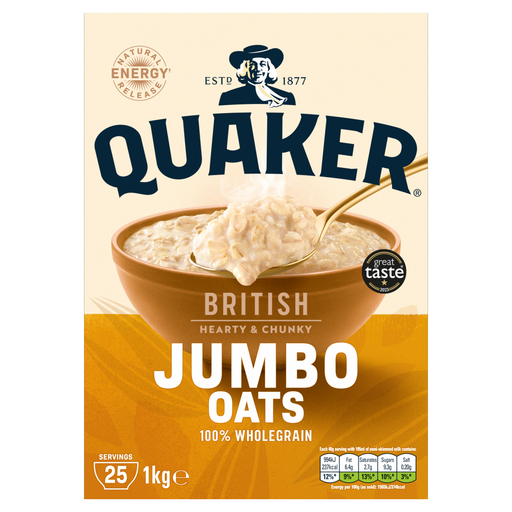
Quaker Jumbo Rolled Oats 1kg

Quaker Jumbo Rolled Oats 1kg

A 1kg plain-oat pack for households making porridge, overnight oats or baking from the same cereal base.

It states 100% wholegrain oats, with 9g fibre, 1g sugars and 0.01g salt per 100g.

It contains oats and may contain traces of wheat. Check the current pack’s serving guidance when calculating household demand, and reseal after opening.

Joybuy

Flahavan's Organic Porridge Oats 1kg

Flahavan’s Organic Porridge Oats 1kg

A plain porridge base for households that prefer to add their own toppings to a hot breakfast.

The 1kg pack contains 100% organic wholegrain oat flakes; a 40g serving lists 3.3g fibre and 0.4g sugars.

Oats are declared as an allergen. Check the current pack statement if gluten-free suitability is required, and allow time for porridge preparation.

Joybuy
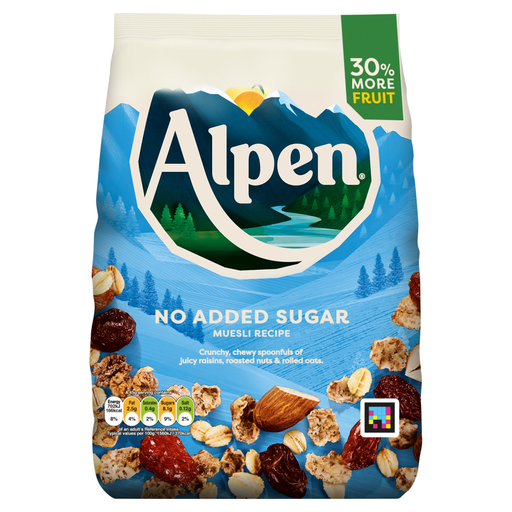
Alpen No Added Sugar Muesli 950g

Alpen No Added Sugar Muesli 950g

A larger cold muesli option for households that regularly want fruit-and-nut texture at breakfast.

The 950g pack includes wholegrain wheat, rolled oats, raisins and roasted nuts. Its 45g serving lists 3.6g fibre; per 100g it lists 8g fibre and 18g sugars.

Contains almonds, hazelnuts, milk, oats and wheat, and may contain other nuts. Check storage practicality before choosing the larger pack.

Joybuy

Frequently asked questions

How do I tell whether a family-size cereal pack is too large?

Estimate the cereal bowls your household expects to eat, rather than counting everyone having a full Scottish breakfast. Multiply the labelled serving weight by planned bowls per week, then compare that total with the pack weight; examples range from Weetabix Original’s 37.5g serving to 40g for Quaker Traditional Rolled Oats and 45g for Alpen and Dorset products.

Should cereal be served with a full Scottish breakfast?

Cereal can be a separate option, a lighter alternative or a different-day breakfast if that is what the household prefers. Size any larger cereal pack around actual cereal consumption rather than assuming everyone at the breakfast table will have both.

What should I compare first on cereal labels?

Start with serving size, then compare fibre, sugars, salt, ingredients and allergens both per serving and per 100g. This matters because cereal portions differ, and a smaller stated serving can make per-serving figures difficult to compare directly.

Is oat cereal automatically gluten-free in the UK?

No. Oats are not automatically suitable for a gluten-free requirement: Food Standards Agency guidance says food labelled gluten-free must contain no more than 20mg/kg gluten, and oats must still be emphasised as an allergen where applicable. Check the exact pack statement rather than relying on the ingredient category.

How should an opened family cereal pack be stored?

Keep it cool, dry and away from heat, sunlight and damp, then fold and clip the inner bag or use an airtight container. A best-before date relates to expected quality rather than the safety meaning of a use-by date.