Families trying breakfast with a fussy child
Choose plain oats and offer a small serving with familiar optional toppings instead of insisting on a new flavour. NHS guidance recommends small portions, repeated offering and avoiding pressure to eat.


Start with plain, individually portioned oats when you need a familiar base that can be served in a small amount and changed with optional toppings. Move to a 20- or 22-sachet pack only once that particular product is regularly accepted; flavoured family packs are more convenient for rushed mornings but commit every serving to the same recipe.
Choose plain oats and offer a small serving with familiar optional toppings instead of insisting on a new flavour. NHS guidance recommends small portions, repeated offering and avoiding pressure to eat.
If the product is already accepted, compare the number and dry weight of servings and the preparation method before choosing a 20- or 22-sachet box for shared weekday breakfasts.
Check the exact pack label rather than assuming all oats are suitable. The Food Standards Agency notes that oats remain an allergen even where a product is labelled gluten-free.
Choose the flavour route first, then decide how many portions are sensible for the household. A larger box works best when the exact recipe is already known to be accepted.
| Priority | What to check | Your needs |
|---|---|---|
| Familiar flavour and texture | Check whether the oats are plain or fixed-flavour; choose a portion size that can be served in a small amount; confirm how the product is prepared. | I want to introduce breakfast without making every bowl unfamiliar. NHS guidance supports small portions and repeated, pressure-free offering for fussy eaters. |
| Pack commitment | Count the portions in the box; compare dry weight per portion; consider whether all servings have the same flavour. | A smaller box gives us a way to try a product before storing a larger supply of one recipe. |
| Ingredient control | Read the ingredient list for the exact flavour; distinguish plain oats from recipes containing sugar, flavourings or salt; check whether toppings can be added separately. | I may prefer a plain base so each family member can have familiar toppings, while a ready-flavoured sachet only makes sense if that flavour is already welcome. |
| Allergen suitability | Check the current allergen statement and any may-contain wording; use a gluten-free-labelled product only where it meets the individual requirement; do not assume plain oats suit every diet. | I need the exact pack to match an individual dietary requirement. The Food Standards Agency states that a UK gluten-free claim means no more than 20mg/kg gluten, while oats remain an allergen. |
A large pack means more meals are tied to one taste and texture. NHS guidance recommends small portions, repeated exposure and no pressure to eat.
Try a smaller pack or plain oats first, then scale up once the prepared product is regularly accepted.
Unused sachets can leave the household needing another breakfast option.
The cited plain products list oats alone or 100% oats, while the cited golden-syrup recipe includes sugar, natural flavourings and salt.
Read the ingredients and nutrition panel for the exact flavour. Choose plain oats when you want control over additions and toppings.
Gluten-free labelling and oat allergy are separate questions. The Food Standards Agency says oats must still be emphasised as an allergen even where a product is gluten-free.
Use only the exact product that meets the individual requirement, check the current pack label when buying, and do not substitute a standard oat product for a specifically required gluten-free option.
Instant-oat packs can differ in sachet count and dry portion weight, so boxes are not directly comparable by size alone.
Compare the number of servings, weight per serving and whether the household is likely to use the selected flavour before its best-before date.
A widely available instant-porridge option with plain sachets, larger original packs and flavoured family packs.
Quaker's microwaveable sachet range is relevant when fixed portions and quick preparation matter.
A supermarket own-label route for plain instant-oat sachets and a separate Free From variety pack.
A UK supermarket route with own-label porridge options alongside different pack sizes of branded sachets and loose oats.
A food retailer offering portioned traditional porridge sachets and a separate gluten-free traditional oat option.
An oat specialist with plain quick oats and organic natural oat sachets for households wanting a minimally flavoured base.
Joybuy product options for families comparing smaller trial packs, plain oats and larger fixed-flavour sachet packs for breakfast.
 No image available
A lower-commitment plain option for trial breakfasts where toppings may need to vary.
Six 38.5g original-oat sachets; stated preparation is 2½ minutes with water or milk.
The larger-than-standard sachet may be more than a child wants for a first serving. Contains oats; check the current label for dietary requirements.
 No image available
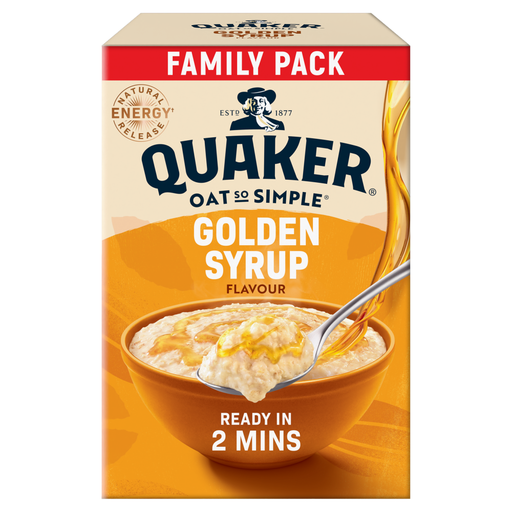
A family-size option for busy mornings once golden syrup is already an accepted flavour.
20 individually portioned 36g sachets with stated two-minute microwave preparation.
The recipe includes sugar, natural flavourings and salt, with 6.4g sugars per 36g dry sachet. Contains oats and may contain barley, wheat and soy; check the current label.
 No image available
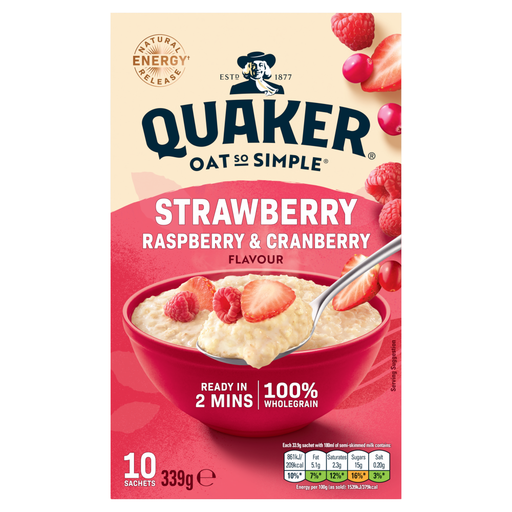
A smaller fixed-fruit-flavour pack for checking acceptance before committing to a larger box.
Ten 33.9g portions with a stated two-minute microwave method using milk.
The recipe contains sugar and natural mixed-berry flavouring, so it offers less flavour control than a plain-oat base. Check the current label for allergen information.
 No image available
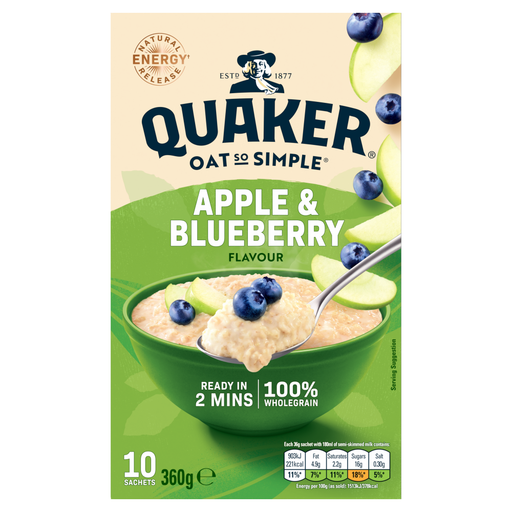
A smaller option when apple and blueberry are already familiar flavours for the child.
The listing states 10 portions, a 36g serving and two-minute preparation with water or milk.
The recipe includes sugar, dried apple, dried blueberry, natural flavour and salt. Confirm whether the pack contains sachets or cups before buying, and check the current allergen label.
 No image available
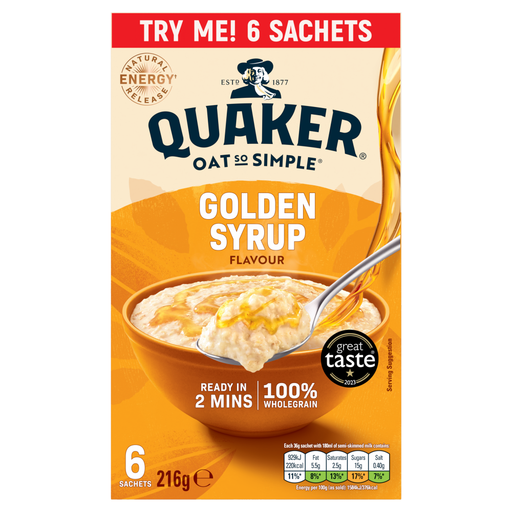
A smaller golden-syrup trial pack before moving to a larger fixed-flavour family box.
Six 36g sachets with a stated two-minute microwave method using milk or water.
The ingredient list includes sugar, natural flavourings and salt, with 6.5g sugars per 36g dry sachet. Check the current on-pack ingredient, nutrition and allergen information.
Usually, start with a smaller plain pack or another small format when acceptance is uncertain. Move to a 20- or 22-sachet box once that particular product is regularly eaten; NHS guidance supports small portions and repeated, pressure-free offering.
Yes, when you need to change toppings, sweetness or texture gradually. The cited plain products list oats alone or 100% oats, while the cited Golden Syrup sachets include sugar, flavourings and salt; choose a fixed flavour when it is already accepted.
Compare sachet count, dry weight per portion, preparation method and the ingredient list for the exact recipe. A bigger box does not necessarily mean it contains more suitable breakfasts if every serving has a flavour the household may not use.
No. The Food Standards Agency states that a UK gluten-free claim means no more than 20mg/kg gluten, but oats remain an allergen in their own right. Check the exact current pack, including suitability statements and may-contain wording, and follow clinical advice where relevant.
NHS guidance says occasional food refusal can be normal when a child is active, gaining weight and otherwise well. If eating is affecting growth or health, seek advice from an appropriate health professional rather than relying on breakfast-product changes alone.