Households sharing weekday breakfasts
For shoppers deciding whether a 950g to 1kg bag will be used quickly enough by several regular breakfast eaters, rather than buying multiple smaller packs.


Buy a 950g to 1kg muesli pack when several people will eat it regularly and its allergen information works for everyone sharing it. Compare the net weight with realistic bowl sizes, then choose a no-added-sugar, grain-led or fruit-and-nut recipe according to the household's preferences and the exact pack label.
For shoppers deciding whether a 950g to 1kg bag will be used quickly enough by several regular breakfast eaters, rather than buying multiple smaller packs.
For households looking for a no-added-sugar muesli while still comparing ingredients, allergens and nutrition information on the exact pack.
For households where one person's compatibility with wheat, oats, barley, milk, soya or nuts determines whether a large shared pack is appropriate.
Start with how quickly the household will use the bag, then compare the current label for recipe details and allergen information.
| Priority | What to check | Your needs |
|---|---|---|
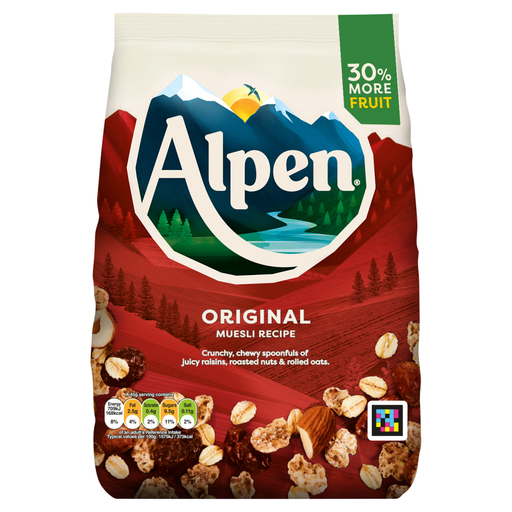
| Pack size and use rate | Compare net weight with regular eaters and usual bowl sizes. Alpen Original and Jordans Natural Muesli use a 45g serving reference; 950g is about 21 servings and 1kg about 22 at that reference. | A larger bag makes sense when several people eat muesli often enough to finish it while it remains at its preferred quality. |
| Added-sugar preference | Check whether the exact recipe is labelled no added sugar, then read the ingredients list and nutrition panel. Compare the product variant rather than relying on a front-of-pack phrase. | I want a recipe that fits our preference on added sugar, without overlooking the rest of the ingredients and nutrition information. |
| Allergen compatibility | Read highlighted allergens and any precautionary statement on the current pack. Check cereals containing gluten, milk, nuts and any relevant soya information before choosing one shared bag. | Everyone likely to eat the muesli needs to be able to have the exact recipe safely, including any relevant “may contain” statement. |
| Recipe and texture | Compare the grain base with fruit, nuts and seeds. A simpler grain-led mix and a more ingredient-rich mix can suit different tastes, while both may still contain allergens. | We need a flavour and texture that regular eaters will want to finish, not just the largest bag on the shelf. |
A larger bag only works for a weekly shop if enough people will eat it regularly. A 45g reference serving suggests roughly 21 servings from 950g and 22 from 1kg, but actual portions vary.
Estimate how many bowls the household eats each week, then check the best-before date and storage instructions on the exact pack.
An unfinished bag can mean wasted food if the household does not use it while it remains at its preferred quality.
Muesli recipes may contain wheat, oats, barley, milk, soya or nuts, and some packs include precautionary allergen statements. A shared bag is unsuitable if its exact label conflicts with one intended eater's requirements.
Make the current ingredient list, highlighted allergens and any “may contain” wording the deciding check before buying.
This label describes a specific product route; it does not replace comparison of the full ingredients, allergen information and nutrition panel. Recipes and nutrition values vary by product and variant.
Use no added sugar to narrow the choice, then compare the current label for the precise pack you plan to buy.
Availability and final pack details can change before checkout.
Check the retailer's current availability, final product details and price at checkout.
A mainstream muesli choice with Original and No Added Sugar routes that can be relevant to shared breakfast shopping.
A muesli-focused range for households choosing a fruit-, nut- and seed-led breakfast mix.
A specialist breakfast-cereal brand with granola and muesli products in its range.
A grain-led muesli route for shoppers seeking a familiar mix of wholegrain cereals, fruit and nuts.
An organic, plant-based muesli route with a broad mix of grains, fruit, nuts and seeds.
A supermarket own-label route for households comparing larger no-added-sugar muesli packs during a weekly shop.
Joybuy product options for a larger shared-breakfast muesli pack.
 No image available
A 950g option for households planning regular shared breakfasts.
Use the manufacturer's serving size as a planning reference, not a rule. Alpen Original and Jordans Natural Muesli both show a 45g serving; at that amount, 950g is about 21 servings and 1kg is about 22 servings. Adjust the estimate for your household's bowl sizes and number of regular eaters.
No. It identifies a product route, but you should still read the current ingredients list and nutrition panel. Government guidance for prepacked food requires ingredients, allergens, net quantity and nutrition information among the information shown on the label.
Check the exact current pack, including highlighted ingredients and any precautionary “may contain” statement. Muesli examples discussed here include combinations of wheat, oats, barley, milk and nuts; Jordans states that its Natural Muesli is made in a location handling a variety of nuts.
Follow the storage wording on the exact pack and use the best-before date as a quality guide. Alpen's No Added Sugar muesli instructions state that it should be stored in a cool, dry, odour-free place, while GOV.UK explains that best-before dates relate to quality rather than food safety.
Government guidance says that prepacked food packaging must show, among other information, ingredients including allergens, net quantity and a best-before or use-by date. The Food Standards Agency's allergen guidance applies to England, Northern Ireland and Wales, and the exact pack remains the practical information to check before purchase.