Who this is for

Families sharing cottage breakfasts

Work out the grams needed from the labelled portion weight and the number of breakfasts, rather than relying on “family-size” wording. Tesco Groceries lists 45g portions for Alpen Original and Jordans Natural, and 50g for Tesco Swiss Style.

Mixed-preference holiday groups

Different recipes can make breakfast easier to organise when tastes or dietary needs vary. The supplied examples use differing combinations of gluten cereals, nuts and milk ingredients.

Cottage hosts stocking a breakfast cupboard

Choose shelf-stable cereal with clear ingredient information, and plan how an opened pack will stay dry between guest stays. Food Standards Agency guidance explains that food businesses must provide allergen information when regulated allergens are used as ingredients.

Buying priorities

One 950g–1kg pack

Choose it when: the group expects similar breakfasts and needs no more than about 20–22 standard portions.

Consider: one recipe may not suit everyone, particularly where listed allergens or preferences differ.

Two smaller or different packs

Choose it when: guests have mixed tastes, the stay is short, or a separately suitable cereal is needed.

Consider: two packs take more cupboard room and can leave more leftovers.

More than one large pack

Choose it when: the group calculation exceeds a single pack’s stated portions, such as six people staying for five breakfasts.

Consider: plan for unopened or leftover cereal, and keep opened packs cool, dry and sealed.

Priority What to check Your needs
Enough for the stay Multiply guests × breakfasts × the exact labelled serving size. Compare net pack weight in grams, serving size and any stated portions per pack. I want enough bowls for the whole stay without carrying home an unnecessarily large leftover bag.
A recipe the group can use Read the current ingredient list and allergen declaration for gluten cereals, nuts and milk. Check precautionary allergen statements as well as front-of-pack recipe claims. I need to know whether one shared muesli is appropriate for everyone at breakfast, or whether separate packs are more practical.
Storage after opening Check whether the cottage has a cool, dry cupboard and a clip or airtight container. Tesco Groceries advises storing its Swiss Style Muesli in an airtight container after opening. I want an opened bag to remain usable across several breakfasts in an unfamiliar kitchen.

Common buying pitfalls

  • Calling a bag “family size” without calculating breakfasts

    Large packs can use different serving bases: Alpen and Jordans list 45g portions, while Tesco Swiss Style lists 50g. The same pack mass can therefore cover a different number of breakfasts.

    Calculate guests × breakfast days × the selected product’s labelled serving weight, then decide whether larger bowls justify extra cereal.

  • Using one shared muesli without reading allergens

    The checked examples contain, or may contain, gluten cereals and nuts, and some list milk ingredients. “No added sugar” does not establish suitability for an allergy or intolerance.

    Ask about necessary dietary restrictions before shopping, check the physical pack’s current label and provide a separately suitable breakfast where needed.

  • Buying a large pack without a way to keep it dry

    A partly used bag is harder to manage in a busy or damp shared kitchen. Tesco’s storage guidance for Swiss Style Muesli specifies a cool, dry place and an airtight container after opening.

    Bring a food clip or airtight container if the cottage may not provide one, and close the pack after each breakfast.

  • Treating an online listing as guaranteed availability

    A suitable pack format may not be available when it is time to shop or travel.

    Check current retailer stock before travelling and keep a second suitable pack size or brand in mind.

Relevant muesli brands

Alpen

A mainstream muesli option with a 950g Original pack for groups whose calculation is close to 21 standard 45g servings.

  • Tesco Groceries lists Alpen Original as a 950g pack with a 45g serving.
  • Its listed recipe includes wheat, oats, skimmed milk powder, whey powder, almonds and hazelnuts, so it is not a shared default where those ingredients must be avoided.

Jordans

A 1kg muesli route for groups planning around a stated 45g portion basis.

  • Tesco Groceries lists Jordans Natural Muesli as 1kg, while Jordans describes one bowl as a 45g portion.
  • The recipe includes wheat, oats, barley, almonds and hazelnuts; Jordans also warns that it is made where a variety of nuts are handled.

Tesco

An own-label Swiss-style 1kg option with a clearly labelled 50g serving basis.

  • A 1kg pack at a 50g serving basis works out to about 20 standard bowls.
  • Tesco Groceries listed its Swiss Style Muesli as out of stock at the time referenced, so check current local availability and the pack label.

Dorset Cereals

A 500g-pack option for groups that prefer to split flavours or use more than one recipe.

  • Dorset Cereals lists Tasty Toasted Muesli as a 500g pack with a 45g portion basis, which is about 11 standard portions.
  • The listed recipe contains oats, wheat, barley, nuts and pumpkin seeds, and may contain other gluten cereals and nuts.

Rude Health

An alternative for groups prioritising a broad fruit, grain, nut and seed recipe rather than a confirmed family-size pack format.

  • Rude Health describes The Ultimate Muesli as an organic, plant-based wholegrain recipe.
  • Its listed ingredients include oats, barley, rye, almonds and hazelnuts, and it may contain milk; confirm the retail pack weight and allergen panel before sharing it with a group.

Joybuy muesli options

Joybuy product options for shared holiday-cottage breakfasts using the one 950g–1kg mainstream-pack route.
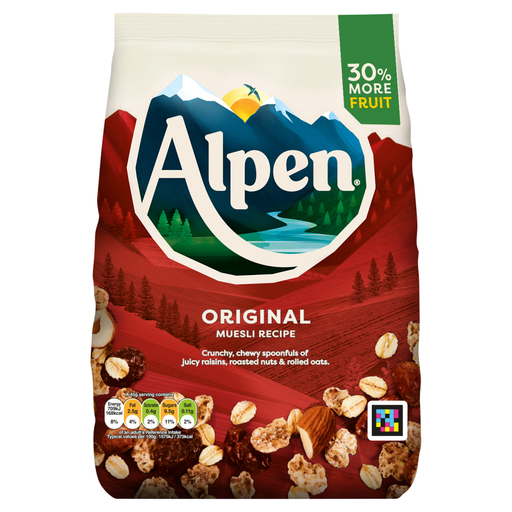
Alpen Original Muesli 950g

Alpen Original Muesli 950g

For shared cottage breakfasts requiring about 21 standard 45g bowls.

950g pack with a stated 45g serving. Check the current pack’s ingredient and allergen information before serving a mixed group, and make sure suitable dry storage is available after opening.

Joybuy
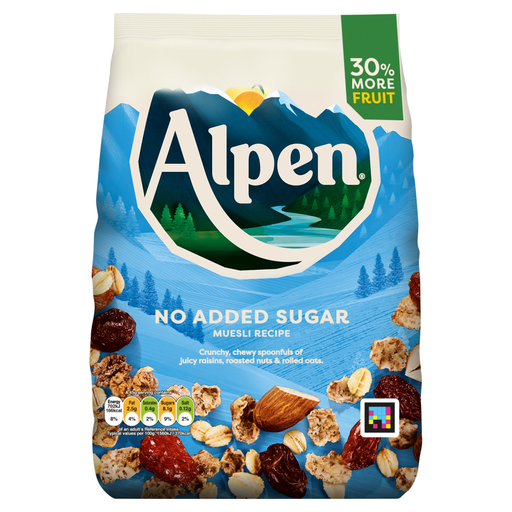
Alpen No Added Sugar Muesli 950g

Alpen No Added Sugar Muesli 950g

For shared cottage breakfasts requiring about 21 standard 45g bowls.

950g pack with a stated 45g serving and a no-added-sugar recipe claim. Check the physical pack for current ingredients, allergen statements and suitable post-opening storage.

Joybuy

Frequently asked questions

How much muesli should I buy for a holiday cottage?

Multiply the number of guests by the number of breakfasts and the labelled serving weight. Four people staying for five breakfasts need 900g at a 45g serving, or 1,000g at a 50g serving; allow extra only if larger bowls or second helpings are likely.

Will one 1kg pack feed a family for a week?

It depends on group size and the product’s serving size. Jordans states approximately 22 portions for its 1kg Natural Muesli at 45g, while a 1kg Tesco Swiss Style pack gives 20 portions at its 50g serving basis, so one bag can suit four people for around five breakfasts at labelled portions.

Can I assume muesli is suitable for guests with nut, dairy or gluten allergies?

No. The examples discussed contain regulated allergens including cereals containing gluten and tree nuts, while Alpen Original and Tesco Swiss Style also list milk ingredients. Check the physical pack’s current ingredients and precautionary statements before serving it; Jordans says people with a nut allergy should not eat its Natural Muesli because it is made where a variety of nuts are handled.

How should opened muesli be stored in a cottage?

Keep it cool and dry, and close it securely after each breakfast. Tesco Groceries specifies an airtight container after opening for its Swiss Style Muesli, while Jordans advises rolling down the bag, using a clip and storing it in a cool, dry place.

Do UK food-allergen rules matter if I provide cereal to paying cottage guests?

Yes, if you operate as a food business and provide food: Food Standards Agency guidance states that food businesses must provide allergen information for regulated allergens used as ingredients. Requirements can differ according to whether food is prepacked, loose or prepared and packed for direct sale, so check the relevant FSA guidance or local-authority advice for the service arrangement.