Buying priorities
Start with the number of bowls and brunches a pack must cover, then compare the declared serving size, ingredient list and unit price on the same basis.
| Priority |
What to check |
Your needs and respondent views |
| Value and avoiding waste |
Compare pack weight with the declared portion size; compare unit prices in £/kg; check whether the fruit, nut and seed mix will be eaten. |
I want enough muesli for repeat bowls without leaving an unfamiliar mix unfinished. In Weetabix Food Company research among 300 UK parents of children aged 2–14, 65% ranked price as their top reason for choosing cereal, while 59% said they generally choose what their children will eat. |
| Nutrition panel and serving choice |
Read fibre and sugars per declared serving; distinguish a no-added-sugar claim from total sugars; consider what milk, yoghurt or plant drink will be served alongside it. |
I want to compare the nutrition panel with the portion I expect to serve. In Weetabix’s 2025 survey of more than 2,000 UK respondents aged 16+, 35% named health and nutrition as a breakfast motivation, 31% named keeping full until lunch, and 44% of the parent sample in Weetabix Food Company research said health content influences cereal choice. |
| Taste, texture and serving |
Check the fruit, nut, seed and toasted-flake mix; choose between a crisp bowl with milk and a softer bowl with yoghurt; match pack size to the number of guests. |
A relaxed brunch needs a mix guests will enjoy and a serving format that suits the morning. In Weetabix’s 2025 survey of more than 2,000 UK respondents aged 16+, 34% named taste and enjoyment and 34% named convenience or quick preparation as breakfast motivations. |
| Allergen and ingredient suitability |
Read the full ingredient list; check emphasised allergens and any “may contain” wording; recheck the physical pack immediately before serving. |
I need a bowl that is suitable for everyone sharing the table, or a separately verified alternative where it is not. Do not rely on a product name or a retailer listing for this decision. |
Joybuy muesli options
Joybuy options for the 950 g mainstream branded muesli route, suited to repeat shared brunches where a near-1 kg pack is appropriate.
 No image available
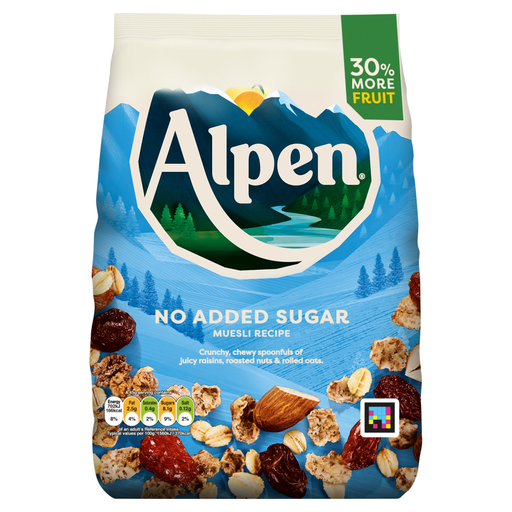
Alpen No Added Sugar Muesli 950g
A near-family-scale option for repeat brunches: the stated 950 g pack and 45 g serving size provide roughly 21 declared servings before allowing for larger bowls.
Stated ingredients include wholegrain wheat and oats, raisins, almonds and hazelnuts.
Contains almonds, hazelnuts, milk, oats and wheat, and may contain other nuts. Check the physical pack’s current ingredient and allergen statement before serving guests.
Joybuy
 No image available
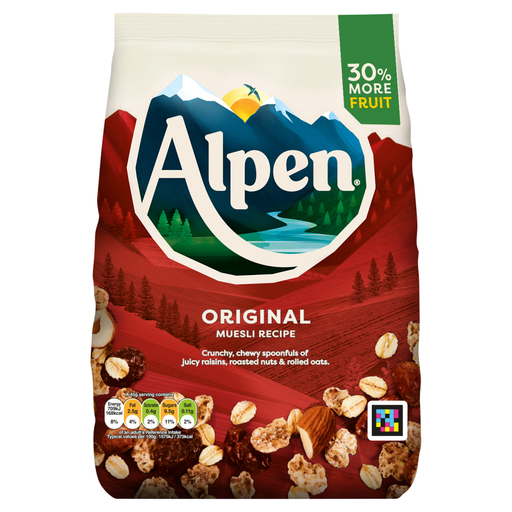
Alpen Original Muesli 950g
A 950 g option for a shared cold-milk or yoghurt brunch, with a stated 45 g serving size that works out at about 21 declared servings before larger bowls.
It lists wholegrain wheat and oats, raisins, almonds and hazelnuts, with 21 g sugars per 100 g stated in the product information.
Contains wheat, oats, milk, almonds and hazelnuts, and may contain other nuts. Verify the physical pack’s current ingredients and allergen statement before serving guests.
Joybuy
Frequently asked questions
How much muesli should I buy for a family Sunday brunch?
Use the declared serving size rather than assuming all bowls are the same. A 1 kg pack labelled as 50 g per serving provides 20 declared servings, while a 1 kg pack labelled as 45 g per serving provides about 22; for four people, those figures can cover several occasions if portions remain near the label and muesli is one part of a wider brunch.
Is “no added sugar” the same as low sugar?
No. A no-added-sugar claim does not mean that a product contains no sugars, because dried fruit contributes naturally occurring sugars. Compare the nutrition table as well as the front-of-pack claim: the checked Tesco Swiss Style No Added Sugar muesli lists 6.7 g sugars per 50 g serving, while Alpen Original lists 9.5 g per 45 g serving.
Can I serve standard fruit-and-nut muesli to guests with nut, milk or gluten allergies?
Do not assume that you can. The products discussed here contain different combinations of oats, wheat, barley, milk, almonds and hazelnuts, and some carry precautionary statements for peanuts, other nuts, milk or soya; check the exact physical pack and the guest’s individual medical advice. The Food Standards Agency notes that tree nuts and peanuts are distinct allergen categories.
How should an opened family-size muesli pack be stored?
Follow the pack instructions. The checked Tesco 1 kg product says to store it in a cool, dry place and, once opened, in an airtight container, which is particularly useful when a larger pack stays open across several brunches.
What allergen information is required for prepacked-for-direct-sale food?
In England, Wales and Northern Ireland, the Food Standards Agency states that prepacked-for-direct-sale food must show the food name and a full ingredients list, with allergenic ingredients emphasised. For supermarket muesli, use the on-pack ingredient and allergen information as the purchase-time check, especially where a recipe may have changed.


