Who this is for

Shared-breakfast households managing diabetes

For households using one larger cereal pack across several breakfasts where at least one person monitors carbohydrate intake or uses carbohydrate counting. Portion-specific nutrition information matters more than front-pack wording alone, in line with Diabetes UK and NHS guidance.

Families comparing no-added-sugar mueslis

For shoppers choosing between 950g and 1kg mueslis containing grains, dried fruit and nuts. Compare total carbohydrate, sugars, fibre, ingredients and price per kilogram on the current product page or pack.

Allergy-aware households

For homes where one shared cereal also needs to work around allergies or intolerances. Many mueslis contain cereals containing gluten, nuts and sometimes milk, so check the current ingredients and allergen statement before choosing a large pack.

What to check before buying

Start with the nutrition panel for the amount actually served, then check whether the recipe and pack size work for everyone who will eat it.

Priority What to check Your needs
Carbohydrate per bowl Compare total carbohydrate per 100g and per stated serving. Weigh a usual bowl and calculate milk, yoghurt, fruit or toppings separately where carbohydrate counting is used. A stated 45g serving may not match the bowl I normally eat. I want figures that let me work out the carbohydrate in my own portion.
Sugars, fibre and ingredients Read sugars and fibre alongside total carbohydrate. Check the ingredient list for dried fruit and do not treat no-added-sugar wording as a full nutrition assessment. I want to compare recipes consistently rather than relying on one front-pack claim. Dried fruit can contribute naturally occurring sugars.
Family-pack suitability Check the pack size, storage instructions, ingredients and allergen statement. Consider whether the household will finish the cereal while it remains suitable to eat. A 950g or 1kg pack suits regular shared breakfasts only if everyone can eat it and the recipe is likely to be used before it goes stale.

Common buying pitfalls

  • Equating no added sugar with low carbohydrate

    All carbohydrate affects blood glucose, and dried-fruit mueslis can contain naturally occurring sugars even when no sugar has been added. Diabetes UK and East Lancashire Hospitals NHS Trust advise using total carbohydrate when carbohydrate counting.

    Read total carbohydrate, sugars and fibre per 100g and for your usual bowl. If you use insulin or a prescribed carbohydrate plan, use the current pack label alongside your individual clinical advice.

  • Assuming the suggested serving suits everyone

    A manufacturer portion can differ from the amount served at home, changing the carbohydrate, sugars and energy in the meal.

    Weigh a typical bowl at least once and use the per-100g panel to calculate it where needed. Account separately for milk, yoghurt, fruit and toppings.

  • Buying a large pack before checking allergens

    Researched recipes include combinations of wheat, oats, barley, nuts and milk. A cereal intended for several people may not be suitable for every household member.

    Check the live ingredient list and allergen statement before each purchase, rather than relying on an older pack or listing.

    An unsuitable large pack can lead to avoidable food waste.

  • Choosing only by price per kilogram

    A larger pack can offer value, but price does not establish its carbohydrate profile, fibre content, allergen suitability or whether the household will finish it while fresh.

    Use price per kilogram after checking nutrition, ingredients, portions and storage. Choose a smaller pack if taste acceptance, allergy safety or consumption rate is uncertain.

Relevant brand references

Jordans

A family-size route through Jordans Natural Muesli 1kg, a fruit-and-nut cereal listed as no added sugar, high in fibre and with no added salt.

  • The Tesco Groceries listing gives 30.6g carbohydrate, 4.7g sugars and 4.1g fibre per 45g portion.
  • Contains wheat, oats, barley, dried fruit and nuts; assess total carbohydrate as well as the no-added-sugar claim.

Alpen

A mainstream muesli option with a researched 950g No Added Sugar pack, close to a 1kg family-size format.

  • The researched product is labelled wholegrain and high in fibre, with 8.1g sugars per 45g portion on the Tesco Groceries listing.
  • Contains wheat, oats, milk and nuts, and includes dried raisins; compare the full current nutrition panel before purchase.

Tesco

A supermarket-own-brand route for households considering a 1kg pack, including Tesco Swiss Style No Added Sugar Muesli 1kg.

  • The researched recipe includes wholegrain oat and wheat flakes, raisins, whey powder and nuts.
  • Recheck the current pack label for carbohydrate, sugars, fibre and allergens before including it in a diabetes-conscious meal plan.

Dorset Cereals

A smaller-pack choice for households that prefer a no-added-sugar fruit-and-nut muesli but do not need a 1kg pack.

  • The researched Fruit & Nut No Added Sugar Muesli comes in a 500g pack and is listed as high in fibre.
  • It contains naturally occurring sugars from dried fruit, with 30g carbohydrate and 8.6g sugars per 45g portion, and contains several nuts.

Rude Health

An organic, ingredient-dense smaller-pack option represented by The Ultimate Muesli 400g.

  • The product is marketed as organic, high fibre and whole grain, with no refined sugars.
  • Its 400g pack is less convenient for high-volume breakfasts and its ingredients include oats, rye, barley and multiple nuts.

Lizi's

A lower-sugar cereal comparison option, represented by a 400g nuts-and-seeds granola rather than a like-for-like family-size muesli.

  • The researched listing gives 24.3g carbohydrate, 1.7g sugars and 4.0g fibre per 50g portion.
  • It is granola rather than muesli and has a higher listed fat and energy value than the researched mueslis.

Joybuy muesli options

Joybuy product options for a regular shared breakfast using family-size muesli packs.
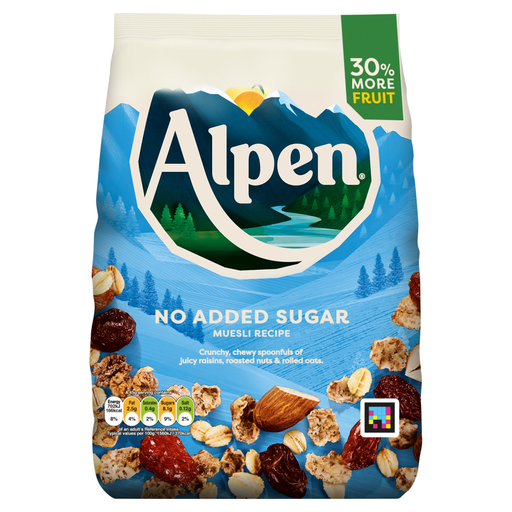
Alpen No Added Sugar Muesli 950g

Alpen No Added Sugar Muesli 950g

A 950g muesli option for regular shared breakfasts where a weighed serving is used for carbohydrate-aware meal planning.

The label states 65g carbohydrate, 18g sugars and 8g fibre per 100g. Store in a cool, dry place.

Contains milk, wheat, oats, almonds and hazelnuts, and may contain other nuts. Include the total carbohydrate from any milk, yoghurt or fruit served with it.

Joybuy
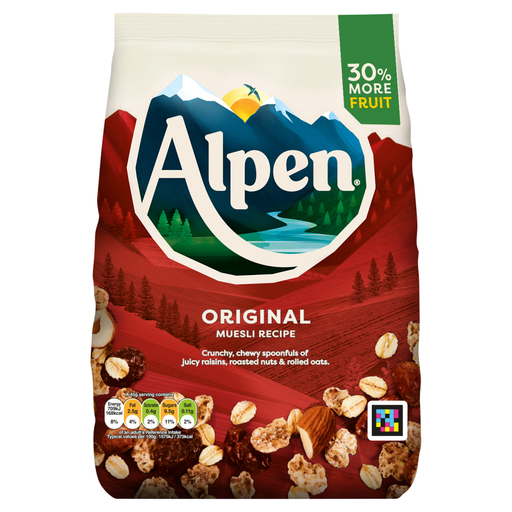
Alpen Original Muesli 950g

Alpen Original Muesli 950g

A 950g muesli pack for shared breakfasts when the household wants to calculate portions from per-100g values.

The label states 66g carbohydrate and 21g sugars per 100g. The recipe includes added sugar.

Contains wheat, oats, milk, almonds and hazelnuts, with a may-contain-nuts statement. Check the current pack label when comparing fibre with other mueslis.

Joybuy

Frequently asked questions

Is no-added-sugar muesli automatically suitable for someone with diabetes?

No. No-added-sugar wording does not show the total carbohydrate in the bowl or remove naturally occurring sugars from dried fruit. For carbohydrate counting, use total carbohydrate for the actual portion rather than only the “of which sugars” figure, and include relevant milk, yoghurt or fruit additions.

What size portion should a household use for muesli?

Use the stated serving as a comparison point, but weigh the amount actually served because it may differ from a usual bowl. A Sheffield Teaching Hospitals NHS Foundation Trust guide gives 30g muesli with 100ml milk as an example, but an individual diabetes plan may require a different amount.

How should I compare two family-size mueslis?

Compare carbohydrate, sugars, fibre and salt per 100g first, then calculate the figures for the serving you will eat. The NHS explains that nutrition labels provide information per 100g and sometimes per portion; it defines high sugars in foods as more than 22.5g per 100g and low sugars as 5g or less per 100g.

What allergens are common in muesli?

The researched mueslis commonly contain cereals containing gluten, nuts and sometimes milk. Check the current ingredients and precautionary allergen statement every time, especially before buying a large pack for everyone in the household.

Are food claims regulated in the UK?

Yes. Nutrition and health claims on food are subject to UK food-labelling rules. Treat claims such as high fibre or no added sugar as specific label information, then check the nutrition panel and ingredients rather than assuming a product suits a particular medical need.