What to check before buying
Plain rolled oats in 1kg to 1.5kg packs
Choose this when: You want flexible bowl sizes and control over milk, fruit and other toppings for a shared breakfast.
Keep in mind: A larger pack changes how many portions you have, not the carbohydrate in the measured oat portion.
Bulk jumbo oats
Choose this when: Porridge is eaten regularly and the household prefers a thicker, more textured oat.
Keep in mind: Jumbo oats can take longer to cook, and a bulk pack needs dry, cool storage and steady use.
Fruit-and-nut muesli
Choose this when: The household specifically wants a ready-mixed cereal with fruit, seeds and nuts.
Keep in mind: It is not a like-for-like substitute for plain oats, so compare its ingredients, allergens and total carbohydrate separately.
Start with the bowl you expect to serve, then work back to pack size. NHS guidance supports checking total carbohydrate per 100g and weighing the dry portion rather than judging a cereal by a front-of-pack claim alone.
| Priority |
What to check |
Your needs |
| Total carbohydrate in the bowl |
Compare total carbohydrate per 100g and for the weighed dry portion. Add milk, fruit, seeds and other toppings where relevant. |
I want the calculation to reflect the portion I actually eat, not only the sugars figure on the label. |
| Pack size and storage |
Use the pack weight and stated portion guidance to estimate household use. Check that the pack can be resealed and stored dry and cool. |
We eat porridge often enough to finish the pack steadily, but I do not want a large opened pack sitting in the cupboard. |
| Plain ingredients and oat format |
Check whether the product is plain rolled oats, jumbo oats or a mixed cereal. Compare nutrition on the same serving basis. |
I prefer to identify the oats first and decide separately what to add to each bowl. |
| Allergens and mixed ingredients |
Read the current ingredient list, allergen statement and any may-contain warning. Check for a specific gluten-free label where that requirement applies. |
Someone in our household needs us to check oats, wheat, barley, nuts or other ingredients before we buy a larger pack. |
Joybuy product options
Joybuy product options for shared breakfasts, with plain-oat packs for measured portions alongside one individually portioned flavoured option.
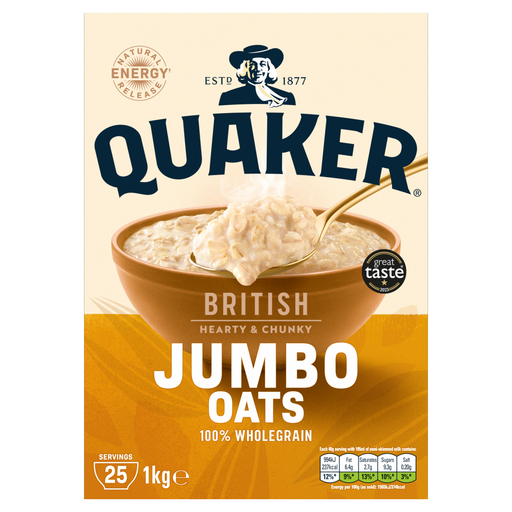 Image unavailable
Quaker Jumbo Rolled Oats 1kg
A plain 1kg option for shared breakfasts where the dry oat quantity can be weighed before additions.
100% wholegrain oats; 60g carbohydrate and 9g fibre per 100g. Reseal and store cool and dry. May contain traces of wheat; check the current allergen panel where gluten-related requirements apply.
View on Joybuy
 Image unavailable
Flahavan's Organic Porridge Oats 2kg (2 x 1kg)
Two separately packed 1kg units can suit frequent breakfasts while leaving one pack unopened until needed.
100% organic wholegrain oat flakes; 26g carbohydrate and 3.3g fibre per 40g serving. Store cool and dry. Check suitability where gluten-related requirements apply, and calculate milk and toppings separately.
View on Joybuy
 Image unavailable
Flahavan's Organic Porridge Oats 1kg
A manageable family starting size for households trying a plain organic oat option before moving to a larger quantity.
100% organic wholegrain oat flakes; 26g carbohydrate, 3.3g fibre and 4.5g protein per 40g serving. Store cool and dry, and calculate additions separately.
View on Joybuy
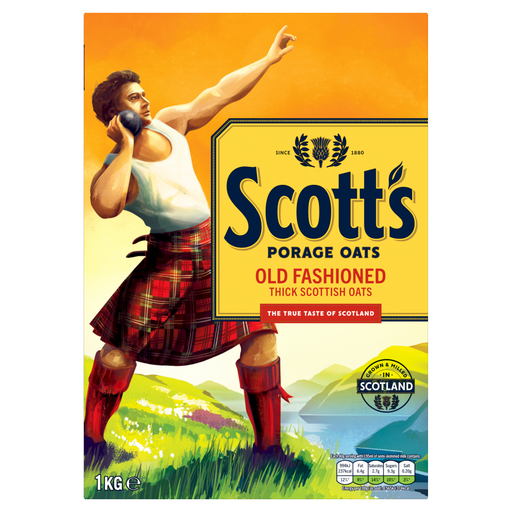 Image unavailable
Scotts Porage Old Fashioned Porridge Oats 1kg
A 1kg plain-oat option with a stated 40g preparation guide for adjustable family bowls.
100% rolled oats; 60g carbohydrate and 1.1g sugars per 100g. The listing advises an airtight container after opening and use within two months for best quality. May contain wheat and barley.
View on Joybuy
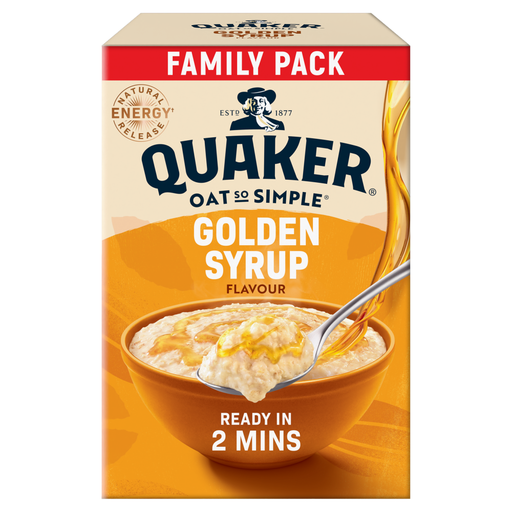 Image unavailable
Quaker Oat So Simple Golden Syrup Family Pack, 20 Sachets
Individually portioned sachets may suit busy shared breakfasts where a fixed dry quantity is useful.
20 x 36g sachets; 24g carbohydrate and 6.4g sugars per dry sachet, with a two-minute microwave method. It contains added sugar and flavouring, and the suggested milk is not included in the dry-sachet values.
View on Joybuy
Frequently asked questions
Does “no added sugar” mean a porridge product is low in carbohydrate?
No. For carbohydrate counting, use the total-carbohydrate figure rather than only “of which sugars”. University Hospitals Coventry and Warwickshire NHS Trust also advises weighing the portion because a pack serving can be smaller than the amount actually eaten. Dorset Simply Delicious Muesli, for example, is labelled no added sugar but lists 27.7g carbohydrate and 6.6g sugars per 45g serving.
How many breakfasts can a family-size oat pack provide?
Use the dry-oat portion you actually serve. At a 40g starting point, Quaker states that its 1kg pack contains 25 servings, while Mornflake says its 3kg jumbo pack contains about 75 servings. A household of three using 40g each day would use about 21 servings in a week, so a 3kg pack suits regular use and appropriate storage.
How should a large oat pack be stored after opening?
Follow the exact pack label. Mornflake advises keeping its oats in a sealed container in a dry, cool place, and Flahavan's also specifies cool, dry storage. Use the printed best-before date as the product-specific guide.
Are ordinary porridge oats automatically suitable for someone avoiding gluten or managing an oat allergy?
No. GOV.UK lists oats among cereals containing gluten for allergen-labelling purposes, and a gluten-free claim has specific conditions. Check the exact pack: Quaker traditional oats state that they may contain wheat and barley, while Mornflake says its standard jumbo oats are not suitable for wheat or barley allergy sufferers because of manufacturing methods.
Should a person with gestational diabetes use the same oat portion as everyone else in the family?
Not necessarily. An East Kent Hospitals University NHS Foundation Trust leaflet suggests 25–30g of uncooked whole oats with a protein addition for gestational diabetes and advises avoiding instant or finely ground oats. This is condition-specific dietetic guidance rather than a rule for all diabetes types, so follow the person’s maternity diabetes team or dietitian where applicable.


