For mainly reading and supervised entertainment, a child-focused tablet with a child profile may simplify the initial setup. If school apps or adult sharing matter, consider a standard tablet with a separate child account, but check the required apps and controls on the exact model. UK government guidance says parental controls cannot fix everything, so content review and conversations remain part of the arrangement.
Who is this arrangement for?
Parents setting up a younger child’s first tablet
A child profile, entertainment limits and a case may matter more at first than a broad choice of apps. A child-focused Fire tablet is one route, but an adult still needs to review its profile and content settings.
Families sharing a tablet with adults
Think about whose account the child will use before choosing a device. Apple advises a separate Child Account for Family Sharing; Google also offers supervision for a child’s own Google Account. These arrangements help avoid handing over an adult sign-in.
Households using the tablet for schoolwork
Check the school’s required apps and the exact tablet’s compatibility before choosing between a child-focused and a standard model. Writing or drawing plans also make storage and accessory fit worth checking.
What should you check before choosing?
Child-focused Fire tablet
Consider it: For a younger child mainly using supervised reading and entertainment; Amazon UK lists a case with its Fire HD 10 Kids Pro bundle.
Keep in mind: Amazon says Fire parental controls do not remove mature or adult-rated content from every location, so review the child profile and available content.
Standard iPad
Consider it: If the household uses Apple devices and wants a general-purpose tablet managed through Family Sharing and a Child Account.
Keep in mind: Apple says family controls depend on separate accounts and compatible software; check required school apps and select protection for the exact iPad.
Standard Android or Galaxy tablet
Consider it: If the household uses Google services and wants to manage a child’s own Google Account with Family Link.
Keep in mind: Google’s app limits require Android 7 or later and exclude system apps; Samsung says its Galaxy child-account controls require One UI 6.1 or later.
| Priority |
What to check |
Your needs |
| Separate accounts |
Check how the child gets their own account or profile, who approves downloads and purchases, and how the adult switches back to their own account. |
I want the child to use the tablet without using an adult’s sign-in or mixing up family members’ activity. |
| Working controls |
Check the exact model and software version for time limits, app controls and content settings. Google excludes system apps from app limits; Samsung’s cited Galaxy child-account controls require One UI 6.1 or later. |
The limits need to fit our routine, and I need to know which settings I can actually manage on this device. |
| School and leisure |
Confirm required school apps and video-call tools on the chosen tablet. Check storage and compatibility with any keyboard, stylus or headphones you plan to use. |
School tasks and entertainment will share the same device, so both need to work on the model we choose. |
| Everyday setup |
Check what protection and accessories are included, whether a case fits the exact model, and whether any included service has a limited duration. |
A case that fits and a manageable handover matter when the child will carry or share the tablet. |
| Content review |
Test settings before handover, review available apps and revisit the arrangements as the child grows. UK government guidance says parental controls cannot fix everything. |
I want the child to know they can ask for help, rather than relying on a filter to handle every online experience. |
What is easy to overlook?
-
Leaving the tablet signed into an adult account
The child may then use the adult’s account for activity and downloads. Apple advises giving a child their own Child Account within Family Sharing.
Set up the intended child account or profile and review purchase approvals and access settings before handover.
-
Assuming every platform version has the same controls
Google says app limits require Android 7 or later and cannot be applied to system apps. Samsung says its Galaxy child-account controls require One UI 6.1 or later.
Check the exact model, installed software and controls you intend to use, rather than relying on the platform name alone.
-
Treating a child profile as complete protection
UK government guidance says parental controls cannot fix everything. Amazon also warns that Fire parental controls do not remove mature or adult-rated content from every location.
Review the child’s apps and content, test the settings and agree how they can ask for help with something upsetting online.
-
Assuming the tablet includes the whole setup
Amazon UK lists a case and one year of Amazon Kids+ with the cited Fire HD 10 Kids Pro bundle. Other tablets and bundles need their own accessory and inclusion checks.
Confirm the included case, charger and services, then check the fit of any separate protection or schoolwork accessory against the exact model.
Which platform features are relevant?
Apple
An iPad is a standard-tablet route for households considering Family Sharing, a Child Account and Screen Time alongside school and leisure apps.
- Apple says each family member should have their own Apple Account, and a child should use a Child Account for the family arrangement.
- Check software compatibility across the Family Sharing group, the school’s apps and protection for the exact iPad model.
Samsung
Galaxy tablets are an Android route for households considering a Samsung child account and Google Family Link.
- Samsung describes child-account settings for web navigation, app and game age ratings, downloads and purchases on supported Galaxy devices.
- Samsung says these child-account parental controls can only be managed and applied on Galaxy devices running One UI 6.1 or later.
Amazon Fire
Fire Kids tablets centre on an Amazon Kids child profile; the cited UK Fire HD 10 Kids Pro bundle includes a case and a limited period of Amazon Kids+.
- Amazon Parent Dashboard offers daily limits, category restrictions, pause and bedtime settings within the Amazon Kids experience.
- Amazon warns that Fire parental controls do not remove mature or adult-rated content from every location, so adults still need to review content.
Child-focused tablet options on Joybuy
These child-focused tablets are options to examine if a dedicated device suits the household. For either one, check how its account and supervision features work on the exact model before relying on them for a shared-family arrangement.
 No image available
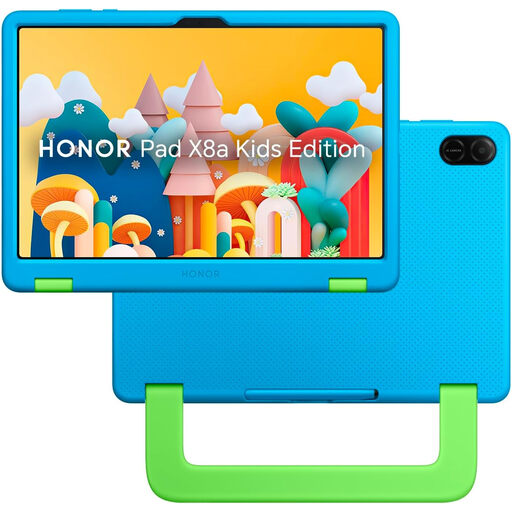
HONOR X8A Kids 11-inch WiFi, 128GB, Space Grey
For a child-focused setup where an 11-inch screen is wanted, the listing specifies a Full HD display, 4GB RAM and 128GB storage. It describes child-account and time controls; confirm how they work on this model, whether required school apps run, and what protection is included.
Joybuy
 No image available
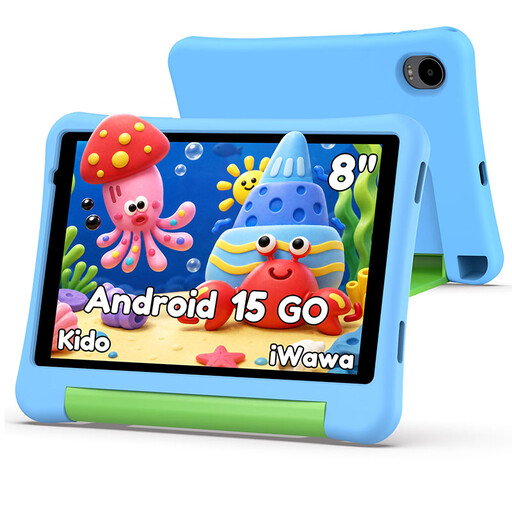
Alldocube Kido 8-inch Android 15, 3GB+32GB, blue case
For a first child-focused tablet with an included protective case, the listing states an 8-inch display, 3GB RAM, 32GB storage and a 5000mAh battery. It describes a child lock; check its account and limit settings against your plans, along with school-app compatibility. An adapter is not included.
Joybuy
Questions about shared family tablets
Should a child use a parent’s Apple Account on a shared iPad?
No, not for a Family Sharing and Screen Time arrangement. Apple says each family member needs their own Apple Account and a child should have a Child Account rather than share another family member’s sign-in.
Can parental controls make a shared tablet safe on their own?
No. UK government guidance says parental controls are helpful but cannot fix everything. Test the settings, review apps and content, and keep talking with the child about their online experiences.
What should I check for Family Link on an Android tablet?
Check that the child will use a supervised Google Account and that the exact device supports the controls you need. Google says Android app limits require Android 7 or later and exclude system apps; Samsung says its Galaxy child-account controls require One UI 6.1 or later.
Is a Fire Kids tablet only for very young children?
No. Amazon UK positions the cited Fire HD 10 Kids Pro bundle for ages 6–12. Check whether its child-profile environment supports the child’s actual apps and activities rather than choosing by the age label alone.


